
This article was published in Scientific American’s former blog network and reflects the views of the author, not necessarily those of Scientific American
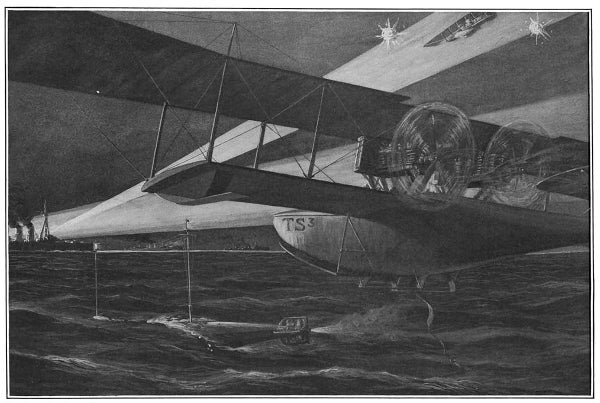
In 1915 piloted airplanes had only been flying for 12 years. The role for these inventions rapidly expanded, including being a naval weapon when launched from ships at sea. Here at the end of 1915 is an idea to arm a flying boat with an anti-ship torpedo.
The writer of the article may not have known that the inventive British Royal Navy and the Italian Regia Marina had been experimenting with airplane-dropped torpedoes since 1913, and by August 1915 the technology was advanced enough for a British flyer to sink a Turkish supply ship in the Sea of Marmora. Evidently the news did not travel far: I suspect the British would have been rather quiet about it and the Turks might have been reluctant to advertise the British success as well.
The idea in this article goes one step further, though. The torpedo (not built, but proposed) has two upright posts with lights on top that could be tracked at night, and the torpedo guided into the target by wireless radio.
On supporting science journalism
If you're enjoying this article, consider supporting our award-winning journalism by subscribing. By purchasing a subscription you are helping to ensure the future of impactful stories about the discoveries and ideas shaping our world today.
In 2015, we’re using all sorts of air and water missiles guided by wire, heat, magnetic and acoustic signature, radar, GPS, computer, video, laser spotting and so on. This idea from 100 years ago was ahead of its time and there are problems with the concept. But here is a good example of a concept just waiting for technology to catch up.
-
Our full archive of the war, called Scientific American Chronicles: World War I, has many articles from 1914–1918 on technical advances in the First World War. It is available for purchase at www.scientificamerican.com/products/world-war-i/