
This article was published in Scientific American’s former blog network and reflects the views of the author, not necessarily those of Scientific American
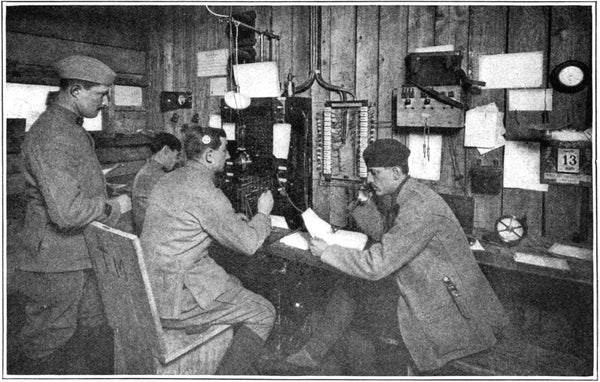
The first long-distance telephone conversation in the world had occurred in 1876. By the time the Great War in Europe had broken out, telephones and telegraph machines had been incorporated into the command, control and communication infrastructure of the military. Radio was on the way, but the large, heavy receiver/transmitter units had limited range and were just barely portable. In the static trench warfare that prevailed in 1916, a web of telephone and telegraph wires crisscrossed the battlefields and the areas behind the front lines, allowing real-time conversations.
Our article from today 100 years ago quotes Lord Northcliffe, the politically powerful British newspaper magnate, who was fond of scientific and technical inventions, and who spoke highly of the use of this invention:
In giving his personal impressions of a visit he had just made to the British front in France, Lord Northcliffe recently said of the British telephone system behind the lines: ‘It is no mere collection of temporary wires strung from tree to tree. The poles and wires are in everyway as good as those of the Post Office at home. Marching with the army and linking up a thousand essential points is a telephone system that cannot be bettered. To-day it would be quite possible for theCommander-in-Chief, if he so desires, to call up London from beyond Fricourt. Where necessary the English telephones are linked up with trunk lines of the French government, for which interpreters are placed in the exchanges. The speed of communication is remarkable.’
On supporting science journalism
If you're enjoying this article, consider supporting our award-winning journalism by subscribing. By purchasing a subscription you are helping to ensure the future of impactful stories about the discoveries and ideas shaping our world today.
Where the system broke down, unfortunately, was during an attack: advancing troops laid temporary telephone lines in the line of advance. But wires strung across shell-torn battlefields were particularly vulnerable to being cut anywhere along their length, quickly plunging troops and commanders back into the “fog of war.”

A French telephone station, showing the neat and systematic
arrangement of the incoming wires, 1916. Credit: Scientific American, September 9, 1916
-
Our full archive of the war, called Scientific American Chronicles: World War I, has many articles from 1914–1918 on warfare and communication on the Western Front in the First World War. It is available for purchase at www.scientificamerican.com/products/world-war-i/