
This article was published in Scientific American’s former blog network and reflects the views of the author, not necessarily those of Scientific American
Zeppelins seemed to many military strategists like the perfect weapon: they could stay in the air for hours, rain death onto whatever targets they liked and could fly high and fast enough that fighter aircraft could not catch them. Strategically, it was hoped the Zeppelin could hopscotch over the mighty British Royal Navy and threaten Britain itself. The new “super-Zeppelins” (pictured below) looked as if they had enough defensive armament to defeat any attacker.
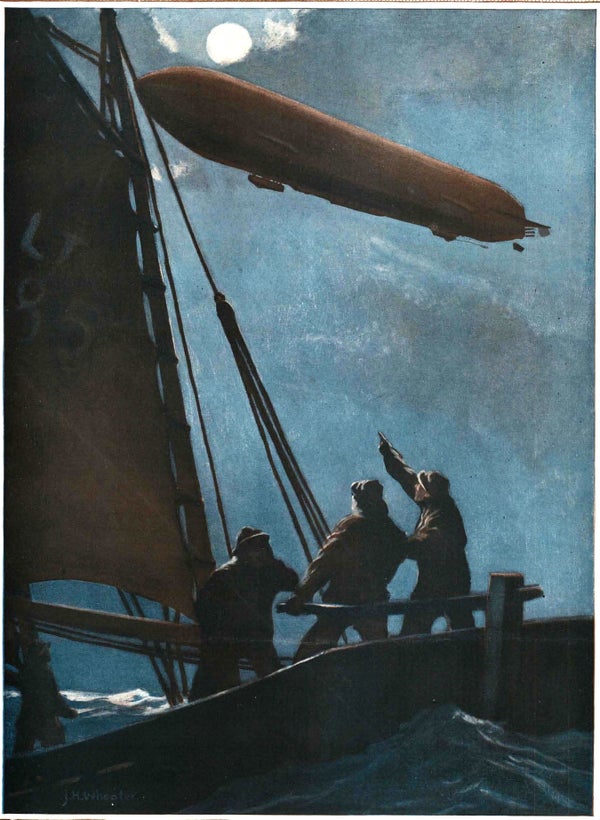
The first Zeppelin bombing raid was only a few days after war was declared, on August 5, 1914, against the civilian town of Liège, Belgium. Almost all of the casualties were civilians. It seemed as if the Zeppelin could really make a huge impact in the war. The first attacks on England caused much panic, as you can see from the alarmed occupants of the night-time fishing vessel. Even if the attacks caused little damage.
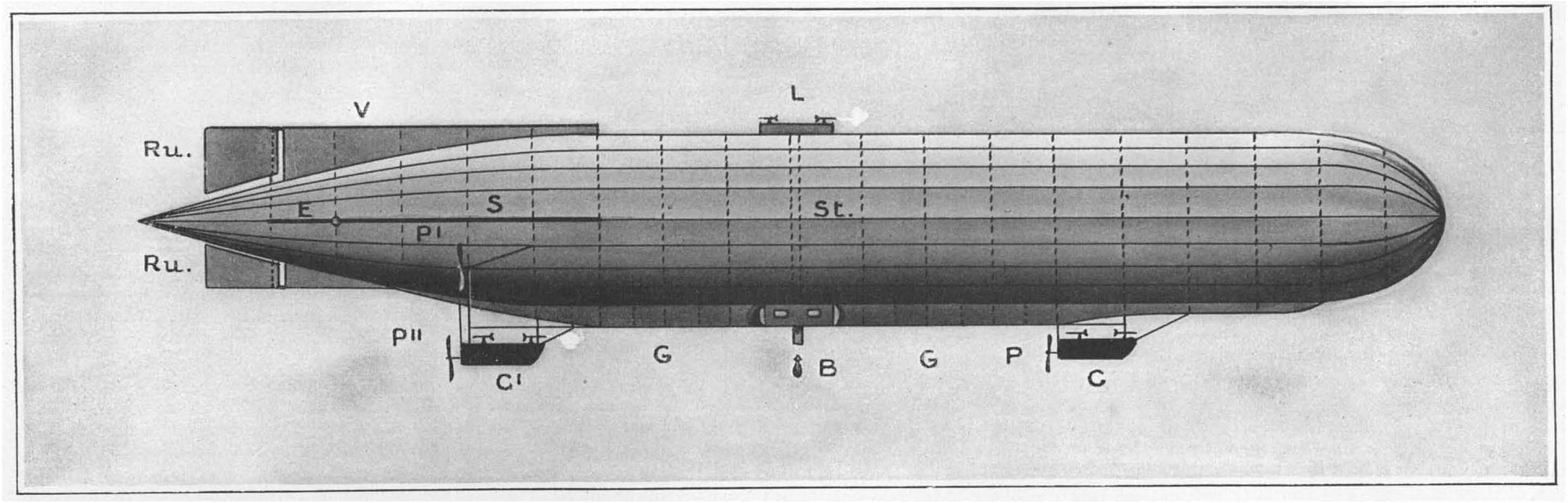
A “super-Zeppelin,” larger and able to carry a heavier bomb load and more defensive armament, 1916. It was still carried aloft by flammable hydrogen gas.
Image: Scientific American, May 13, 1916
On supporting science journalism
If you're enjoying this article, consider supporting our award-winning journalism by subscribing. By purchasing a subscription you are helping to ensure the future of impactful stories about the discoveries and ideas shaping our world today.
Very quickly, these huge frames filled with flammable hydrogen gas started to exhibit weaknesses. Artillery fired from the ground proved quite effective, so Zeppelins had to fly higher and higher. Daytime proved to be riskier, so Zeppelins flew at night. By September 1916, effective incendiary bullets were being used that set fire to the hydrogen, being fired by more powerful fighter airplanes that could reach the Zeppelins’ altitude more quickly. Zeppelin casualties soared, and they were withdrawn from service.
-
Our full archive of the war, called Scientific American Chronicles: World War I, has many articles from 1914–1918 on aviation in the First World War. It is available for purchase at www.scientificamerican.com/products/world-war-i/