
This article was published in Scientific American’s former blog network and reflects the views of the author, not necessarily those of Scientific American
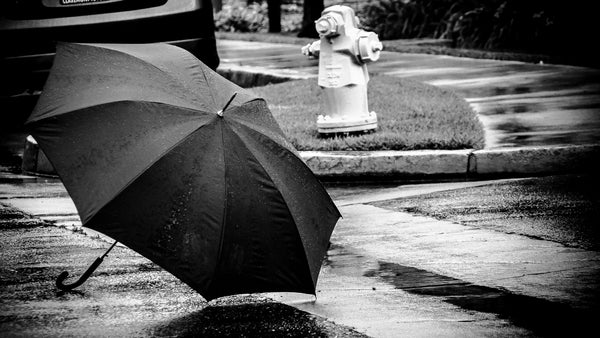
A nor'easter recently dumped two days worth of rain in New York City which made for some interesting pedestrian traffic patterns. The deluge of water created massive puddles in low lying areas so crossing the street and using the sidewalk became a strategic exercise. And then there were the umbrellas. Navigating crowded city streets during peak times with an umbrella is no mean feat. Umbrellas become an extension of human anatomy as they bob along with their users; some are taller than others, some more colorful than others, and some are larger than others, but all require the user to dart and weave and shift to accommodate other umbrella owners. It’s almost poetic. But there’s something more to it: the coordinated efforts of umbrella users can help us discuss the complexities of public interaction.It’s not quite clear when tool use was introduced in our evolutionary history. The oldest identified tools come to us from the Oldowan Gorge in Tanzania approximately 2.6 million years ago. They were choppers: stone cores with flakes removed to create a sharpened edge. They were likely used for cutting, chopping, and scraping. We’ve come a long way since then. Today, our tools cover a range of functions—many of which we take for granted. In this regard, i am always reminded of the wonder in which Chuck Noland regards a lighter following his eventual rescue in Castaway. Umbrellas fall into this category. You truly realize their importance when you’re missing one.In the quest to remain dry while in pedestrian transit in New York City, there are two targets: getting under the ubiquitous scaffolding in this city or getting into a subway entrance. In both of these instances, you will meet and need to pass individuals with umbrellas. These places are sites of change where umbrellas are closed and opened as their users enter new environments. Given the varied sizes of umbrellas, the coordination must be precise. And despite this attempted exactness, it can be complicated.For example, some people will close their umbrellas when they encounter scaffolding, which preserves space in already tight quarters but means that they may be opening and closing their umbrella repeatedly depending on their route. Given the inconvenience, closing your umbrella is probably the height of public politeness. Still others opt not to close their umbrella at all, which necessitates both umbrella carriers and non-umbrella carriers having to dodge the umbrella wielder. In the case where two umbrellas need to pass each other, one may be lifted higher than the other. It’s understood that the taller person will raise his or her umbrella. Where both individuals are the same height, the person on the side of the street may shift slightly or raise her umbrella to allow passage. The "natural" flow of traffic dictates that we pass each other on the right which places the burden of response on the person traveling on the side of the street.This “stay-to the-right” tendency dictates our orientation when people enter the subway as well. This flow of traffic separates people as they are entering and exiting the subway and helps to stagger umbrella usage in this situation: people traveling down the stairs are closing their umbrellas at or about the point when people who are traveling up the stairs are opening their umbrellas. Unless, of course, the downpour is so heavy that people try to keep their umbrellas open as long as possible in which case these social rules are meaningless.The size of one's umbrella matters too: it should be proportionate to the height of the person, unless you want to draw the ire of your fellow pedestrians. A shorter person carrying a golf umbrella occupies a greater radius on the sidewalk—which is a big deal when it’s raining and people are looking to move as quickly as possible to their destinations. They also make it difficult to adhere to the subconscious rules that guide umbrella encounters. Given the berth, a golf umbrella should be lifted above oncoming traffic as a courtesy, but it may be harder to do that for a shorter person in this instance. Honestly, golf umbrellas may just generally be problematic. Even if used by a taller person, they may wind up dripping on an unsuspecting person standing on the fringes of the umbrella’s radius.There are also individuals who forego umbrellas entirely. They rely on raincoats, jacket hoods, or other makeshift coverings. Or they simply go without if possible. This tactic offers the greatest flexibility in navigating rainy days, although it’s the least comfortable. These individuals seem to receive the most leeway from umbrella carriers in general. There is an overall understanding that these people are wet and deserve to perhaps cut in front of pedestrian traffic to get under cover.Umbrellas are tools. They’re portable coverings that protect us from the elements. They don’t do anything fancy, such as allowing us to calculate restaurant tips or find directions or update our Facebook statuses on-the-go. They don’t allow us to record our thoughts on paper or carry liquids over distances for later consumption. They provide the simple convenience of staying dry. They are highly visible (but simple) tools. The development of tools in our evolutionary history necessitated cognitive and social development. Early human ancestors very likely passed the success of tool usage onto offspring and shared this knowledge with other group members. The successes and survival of the group may have depended on shared information. Umbrellas don't protect us from predators, or allow us to feed ourselves, but anyone who’s been caught out in the rain without an umbrella knows the benefit of having a friend who does have one. Umbrellas facilitate relationships and cooperation. In sharing cover from the rain with you, your friend has weighed the benefits of cooperation and, consequently, your relationship. It’s not a conscious calculation, but there is something about the nature of your relationship that encourages sharing. You might be less likely—and possibly find it rather uncomfortable—to share such a close space with someone you didn’t know very well. Have something to say? Do you have an umbrella story to share? Comments have been disabled on Anthropology in Practice, but you can always join the community on Facebook.
--
You might also like:
On supporting science journalism
If you're enjoying this article, consider supporting our award-winning journalism by subscribing. By purchasing a subscription you are helping to ensure the future of impactful stories about the discoveries and ideas shaping our world today.
How our love affair with reality television created Megalodon
When the lights go down in the City
Spin Cycle: The Social Realm of the Laundromat
—
Image Credit: Ian D. Keating