
This article was published in Scientific American’s former blog network and reflects the views of the author, not necessarily those of Scientific American
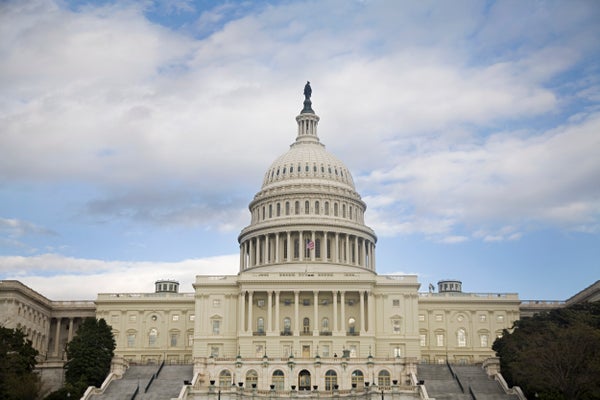
As part of an ongoing series to connect experts in the scientific community directly with lawmakers on Capital Hill, Scientific American and Nature Research—part of Springer Nature—will host the second “Science on the Hill” event, sponsored by Congressman Jerry McNerney (CA-09).
The panel discussion entitled “AI, Robotics and Your Health” will take place on June 14, 2018, at 9 AM in room 2043 of the Rayburn House Office Building. The event will provide insights on how advances in artificial intelligence and robotics can affect your health, with the experts weighing in on how AI can improve diagnoses and cut costs, how robots could help serve as caregivers and the role that mobile health systems and platforms will play in the future of medicine.
Speakers for the panel discussion include Pedro Domingos, University of Washington, and author of The Master Algorithm: How the Quest for the Ultimate Learning Machine Will Remake Our World; Suchi Saria of Johns Hopkins University, who is working on diagnostic and treatment planning tools; and Pamela Hepp of Buchanan, Ingersoll & Rooney, who is looking at data security, healthcare regulations and digital health records.
On supporting science journalism
If you're enjoying this article, consider supporting our award-winning journalism by subscribing. By purchasing a subscription you are helping to ensure the future of impactful stories about the discoveries and ideas shaping our world today.
Mariette DiChristina, editor in chief of Scientific American, will moderate the panel and Congressman McNerney, who is one of only two scientists in Congress, will provide opening remarks.
“New technologies and medical advancements are emerging every day,” said Congressman McNerney. “Bridging the gap between policymakers and those in the scientific community, who are at the forefront of innovation, will ensure that we in Washington have the resources and knowledge to effectively craft policy that enables modernization efforts to continue to improve Americans’ quality of life.”
“In the near future, AI is going to play a larger role in how we approach healthcare and medicine,” says DiChristina. “We are excited to partner with Rep. McNerney on this event where our expert panelists will provide helpful insights on this topic to a congressional audience.”
The first “Science on the Hill” event “Energy Solutions for a Sustainable Future,” occurred November 15, 2017. The event was also featured in this podcast.