
This article was published in Scientific American’s former blog network and reflects the views of the author, not necessarily those of Scientific American
To really change the future of education for the better, we need a combination of creative vision powered by the social entrepreneurship of education leaders and teachers. This is why the annual South by Southwest EDU (SXSWedu) conference is so unique and valuable — a time when thousands of entrepreneurs, educators, policy makers and thought leaders from all over the world convene to learn, discuss and tackle some of the largest issues facing education today, together.
At this year’s SXSWedu, Scientific American and Macmillan Education co-hosted a “Science of Learning” panel with Harvard professor Robert Lue and University of Illinois at Urbana-Champaign professor Tim Stelzer to discuss how we can use emerging technology and data analysis to improve efficacy and apply more rigor to instructional methods in school. We then partnered with Google for Education to continue the conversation at the Austin Fiber Space after-hours with more teachers, ed tech visionaries, media and developers. Hands-on demos from Google Translate, CS First, Classroom, and the Edu teams working on Chromebooks, Android and Google Play for Education made the evening both insightful and fun.
|
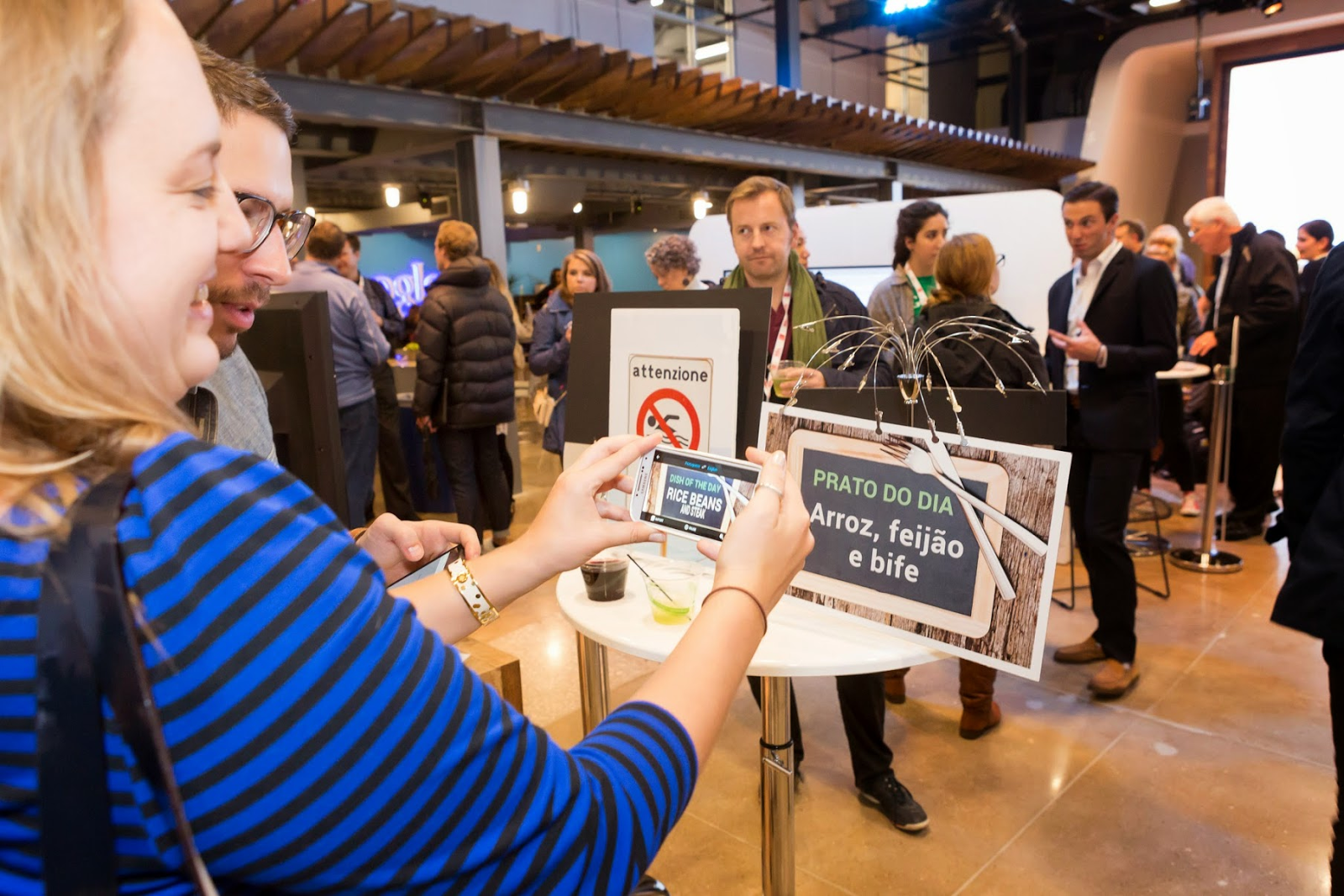
The Google Translate app helps SXSWedu-ers learn local eats |
On supporting science journalism
If you're enjoying this article, consider supporting our award-winning journalism by subscribing. By purchasing a subscription you are helping to ensure the future of impactful stories about the discoveries and ideas shaping our world today.
During the evening, Professor Lue demonstrated his Visual Synthesis animations in Macmillan’s LaunchPad, an online learning space for the textbook How Life Works. Each animation allows biology students to interact, zoom and explore biological processes. And Professor Tim Stelzer demonstrated FlipIt Physics, which enables college instructors to flip their classroom by redefining the interaction between students, instructors and course content. Stelzer also gave us a sneak peek at IOLab, a new technology he developed to let students watch their physics experiment and data graphed in real time.
|
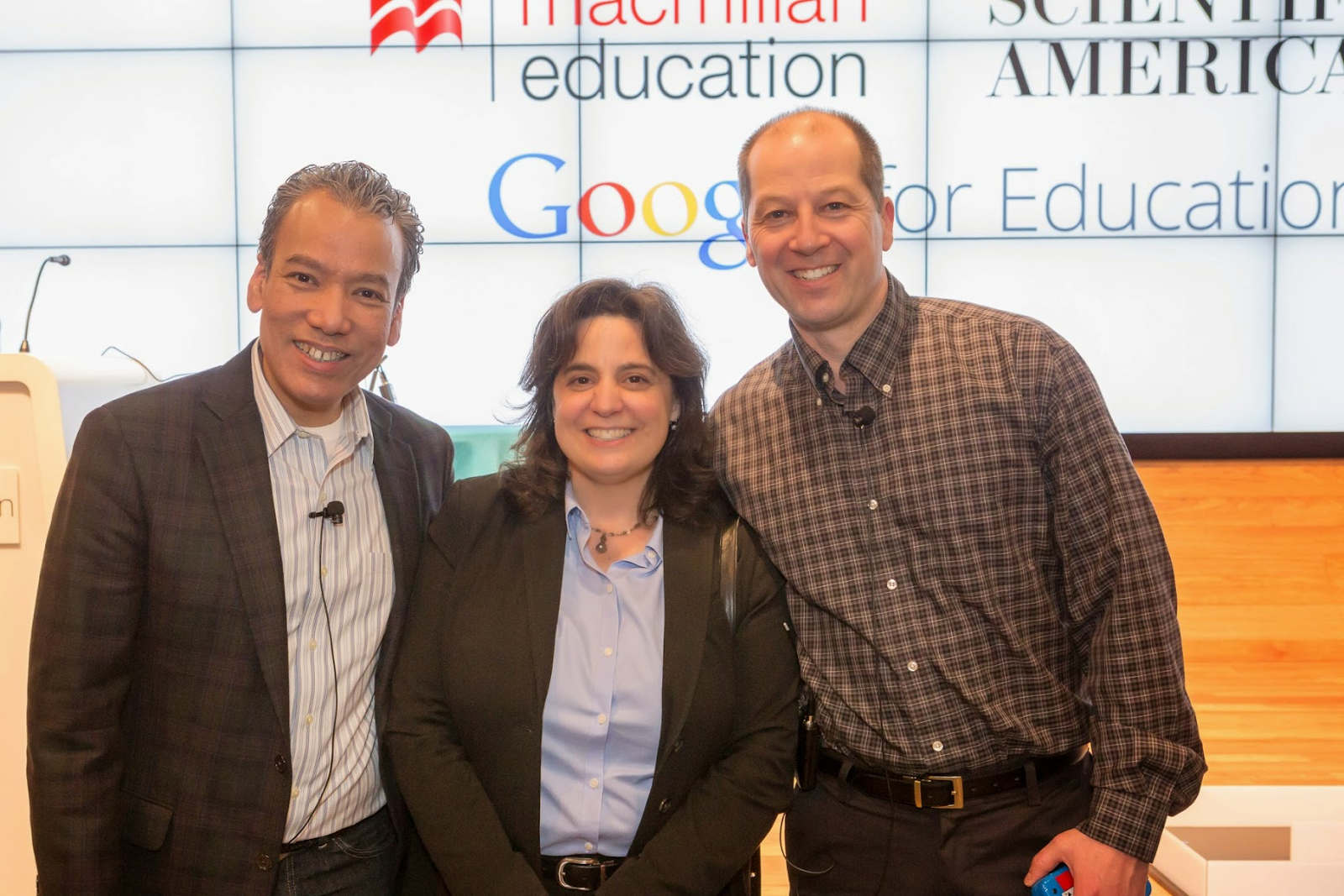
Here I am! Between Professor Lue (left) and Professor Stelzer (right) |
As an experimental twist to create a living collaborative resource for the community, we took a digitized version of the visual notes taken during our Science of Learning panel and opened this up to public commenting and editing. I hope you’ll find these notes useful and that you’ll add your own insights, videos, and citations so that we can all continue the learning. And if you aren’t with us at SXSWedu this week, you can still listen and add your voice to the conversations. Inside these Google Drive folders, you can view, comment, and collaborate in the fun and lively SXSWedu discussions (here’s a great one on Diversity Needs in Technology).
Another example of how we can use online tools to power student-centered initiatives for kids anywhere in the world is the Google Science Fair, going on now for the fifth year. I’m particularly fond of this program, for which Scientific American is a partner, along with LEGO Education, National Geographic, and Virgin Galactic, and I’m also honored to be the chief judge. This year, we’re challenging students around the world to try something. Something imaginative, or maybe even unimaginable. Something that might just change the world. From now through May 18, students ages 13-18 can submit projects online across all scientific fields, from biology to computer science to psychology and everything in between. As always, I’m really looking forward to seeing this year’s submissions, which continue to impress me year after year.
Another big online learning moment coming up in May that we can all create together is Education on Air. This free online conference from Google will take place May 8-9 and will feature more than 100 educator speakers and focus on leading for the future and shaping the classroom today. Hope you can tune in, so make sure to register today to get the best seat in the house (your own!).
There’s no end to what we can achieve if we all start sharing, working, and learning together, to help prepare our students for a future that is ever changing. I, for one, can’t wait to see what we’ll come up with next–together!