
This article was published in Scientific American’s former blog network and reflects the views of the author, not necessarily those of Scientific American
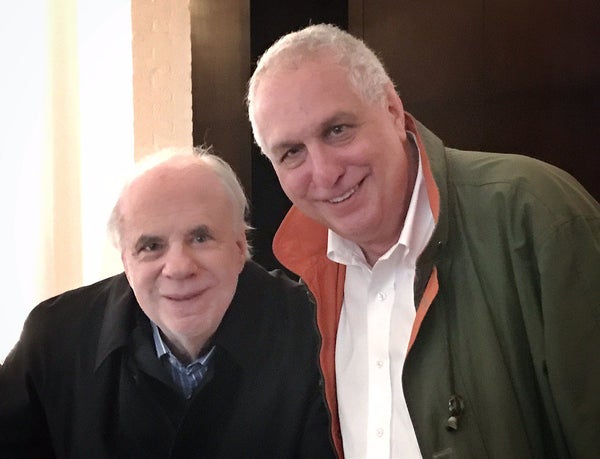
Last month, in a post titled “Did Thomas Kuhn Help Elect Donald Trump?”, I wrote about filmmaker Errol Morris’s antipathy toward Kuhn, the influential philosopher of science. In a recent podcast, “The Ashes of Truth,” Morris, who studied under Kuhn in the early 1970s, criticizes the skeptical outlook that Kuhn promulgated in his classic 1962 book The Structure of Scientific Revolutions. In his “angrier moments,” Morris says, he blames Kuhn for contributing to “the debasement of truth.” He adds, “I see a line from Kuhn to Karl Rove and Kellyanne Conway and Donald Trump.” In my post, I argue that Morris attributes too much influence to philosophy in general and Kuhn in particular. If Structure “had never been published,” I conclude, “roughly the same number of Americans would reject the theory of evolution, vaccines and climate change, and Trump would still be in the White House.” I softened my position in a follow-up post, “Second Thoughts: Did Thomas Kuhn Help Elect Donald Trump?” By then Morris had responded to my first post with an email and photo (above) of him and philosopher Saul Kripke. According to Morris, Kuhn once ordered him not to attend lectures by Kripke, but Morris went anyway. Here is Morris’s email. –John Horgan
Hilary Putnam, after reading part of my essay on “Twin Earth,” said, “I know you admire Kripke, but do you have to make me look stupid?” He was right. I admire Hilary Putnam and if I made him look stupid, that was bad. I corrected it. I would make a similar complaint about your article about me and Kuhn in the Scientific American.
You’re right, I find Kuhn revolting. But I hope I refrained from making a causal connection between The Structure of Scientific Revolutions and the Trump travel ban or Kellyanne Conway’s alternative facts. This is what I said (you quote it correctly in the article): "I started to think about, in some of my angrier moments, about politics, left and right. And I often think, at Princeton, while people were demonstrating against the IDA [Institute for Defense Analyses], there was Kuhn ensconced in his office at the Institute for Advanced Study writing about how there is no such thing as truth. And I actually find it deeply repellant. Ultimately I believe he just became involved in an elaborate process of lying, misrepresentation, evading and avoiding. It became, for me, despicable. Even today, when you talk about Kuhn, people will backtrack very, very quickly... I don't believe he gave up any of these tenets, particularly the truly nonsensical tenets of Structure. In my angrier moments, I see him as not entirely responsible for the debasement of science and the debasement of truth, but I see a line from Kuhn to Karl Rove and Kellyanne Conway and Donald Trump.”
On supporting science journalism
If you're enjoying this article, consider supporting our award-winning journalism by subscribing. By purchasing a subscription you are helping to ensure the future of impactful stories about the discoveries and ideas shaping our world today.
Since you didn’t quote me inaccurately, just what is my beef here, if any? In part, I think it’s my worry that I committed a post hoc ergo propter hoc fallacy. Was Kuhn merely an expression of a 60s/70s zeitgeist, one among many? Probably. The line that makes me a little queasy is “But I can’t blame Kuhn for Trump, as Morris does.” You suggest this is going too far, and I agree with you. If Kuhn had never lived, in that possible world where Kuhn was never born, there might still be a President Donald Trump. These are counterfactuals I’m not prepared to deal with. On the other hand, do I feel that Kuhn did the world any good by undermining the concept of truth? No, I don't. I’ll leave it to God to decide on the ultimate disposition of his soul. – Errol
Further Reading:
Did Thomas Kuhn Help Elect Donald Trump?
Second Thoughts: Did Thomas Kuhn Help Elect Donald Trump?