

This article was published in Scientific American’s former blog network and reflects the views of the author, not necessarily those of Scientific American
Once again, a mass shooting has erupted in the United States, this time in Orlando, Florida, where a gunman reportedly killed more than 50 people in a nightclub before being killed by police. Some authorities and media are describing the massacre as a possible act of Muslim terrorism.*
The incident is a symptom of a problem more serious than terrorism: the lack of effective gun control in the U.S. As I have reported previously, between 1970 and 2007, a total of 3,292 people in the U.S. were killed by terrorists, resulting in an annual risk of one in 3.5 million. Almost all those deaths occurred on a single day, 9/11/01.
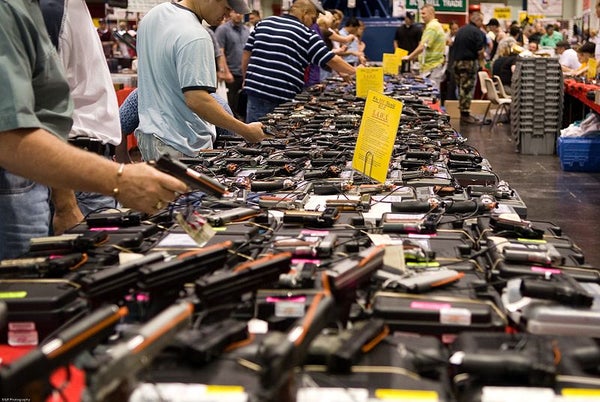
In contrast, more than 32,000 Americans are shot to death every year, according to the Brady Campaign to Prevent Gun Violence. Of those, more than 11,000 people are murdered and almost 20,000 kill themselves. The U.S., which has more firearms per capita than any other nation, has rates of gun-related killings much higher than any other developed nation.
On supporting science journalism
If you're enjoying this article, consider supporting our award-winning journalism by subscribing. By purchasing a subscription you are helping to ensure the future of impactful stories about the discoveries and ideas shaping our world today.
The American fetish for guns hurts non-Americans, too. The U.S. is the world’s leading source for small arms—defined as weapons that can be carried and operated by a single person—as it is for larger, more expensive weapons, such as tanks and jet fighters.
Small arms, which range from pistols and rifles to rocket-launched grenades and shoulder-fired missiles, are the biggest killers in wars around the world. The International Action Network on Small Arms estimates that more than 600 million are in circulation.
The Action Network lobbies for tighter national and international controls on the manufacture and trade of small arms, but the National Rifle Association has successfully blocked international as well as domestic gun control.
If the U.S. devoted as much effort to gun control as it does to countering terrorism, the world would be a much safer place.
[*This is a lightly edited version of a post I wrote in response to a mass shooting in San Bernardino, California, last year.]
Further Reading:
Will Connecticut Massacre Give Politicians the Guts to Take on the Gun Lobby?
Question for Gun-Rights Fanatics: Have You No Sense of Decency?
More Guns Have Not Produced More Killings, But We Still Need Gun Control.
Would Global Violence Decline Faster If U.S. Was Less Militaristic?
Violent U.S. Response to 9/11 Attacks Hurt More Than Helped.