
This article was published in Scientific American’s former blog network and reflects the views of the author, not necessarily those of Scientific American
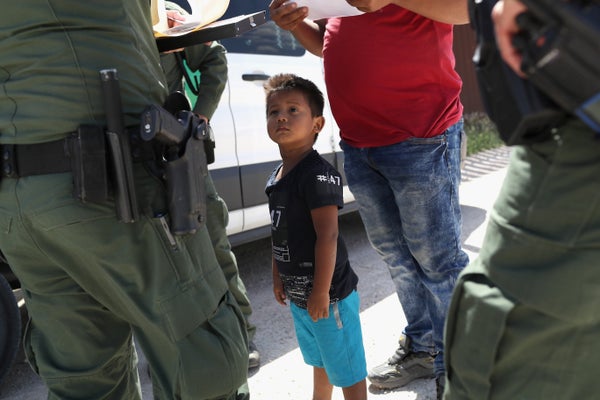
Like many Americans, conservatives and liberals alike, I am appalled by recent reports about the treatment of children of alleged illegal immigrants. U.S. officials have separated thousands of children from parents arrested for illegal entry into the U.S. and detained them in holding facilities described as “cages.”
But to my mind, this controversy highlights the inconsistency of Americans’ moral attitudes and reactions to the suffering of others. Since 9/11 military operations of the U.S. and its allies have inflicted enormous harm on children and other civilians in Afghanistan, Iraq, Libya, Syria, Yemen and elsewhere.
According to the Costs of War project, U.S. wars in Iraq, Afghanistan and Pakistan have resulted in the direct (via bombs and bullets) or indirect (from displacement, disease, malnutrition) deaths of more than 1.1 million people. Most of the victims are civilians, including children. Roughly 10 million people in these war zones have been displaced and are living in “grossly inadequate conditions.”
On supporting science journalism
If you're enjoying this article, consider supporting our award-winning journalism by subscribing. By purchasing a subscription you are helping to ensure the future of impactful stories about the discoveries and ideas shaping our world today.
The watchdog group Airwars.org estimates that U.S.-coalition attacks have killed at least 6,321 civilians in Syria and Iraq since anti-ISIS operations began in 2014. According to Iraq Body Count, between 2003 and 2011 U.S. coalition forces killed at least 1,201 children in Iraq alone. In a previous column, I quoted Neta Crawford, a political scientist who contributes to Costs of War.She told me that counting children harmed by U.S. military operations invariably leads to under-estimates:
“Most children killed and injured directly by U.S. forces and their allies were killed the same way as their parents: they died when bombs fell; when they were caught in ‘cross-fire’; shot in night raids; shot at check-points and run over by U.S. convoys who speed through the streets and roads. The roadside deaths are often not recorded unless the U.S. gives some compensation to the families.” Crawford added that “the harm to children in war is also indirect--morbidity and mortality due to the destruction of infrastructure which impairs delivery of medical care, makes drinking water unsafe, and makes food scarce.”
U.S. and allied forces are of course not the only armed groups harming children. A recent report from Save the Children, an international nonprofit, notes that some militant groups have intentionally killed and maimed children as well as enslaving and raping them. U.S. military officials insist that they do not intend to harm children, and occasionally they apologize when they do. But apologies ring hollow when you keep committing the same “mistake” over and over again.
This month, Amnesty International reported that recent U.S./allied attacks on the Syrian city of Raqqa “killed hundreds of civilians, injured many more and destroyed much of the city.” As usual, many of the casualties were children. The attacks “failed to take the precautions necessary to minimize harm to civilians” and “violated international humanitarian law.”
The U.S. should set a higher moral example for the rest of the world. Its callous attitude toward children and other innocent people in war zones lowers the bar for other groups, making it easier for them to commit atrocities. According to Save the Children, “children are more at risk in conflict now than at any time in the last 20 years.”
Returning to the recent controversy over immigrant children: Yes, please protest policies that result in kids being separated from parents at our borders. But please also demand an end to policies that that have killed, sickened, maimed and displaced hundreds of thousands of children overseas.
Further Reading:
Where Is Outcry Over Children Killed by U.S.-Led Forces?
War Is Our Most Urgent Problem--Let’s Solve It
We Need a New Just-War Theory, Which Aims to End War Forever