
This article was published in Scientific American’s former blog network and reflects the views of the author, not necessarily those of Scientific American
You might be thinking "What's this about cats? This is DOG Spies. A blog on the science behind the dog-human relationship."
Yes, but…
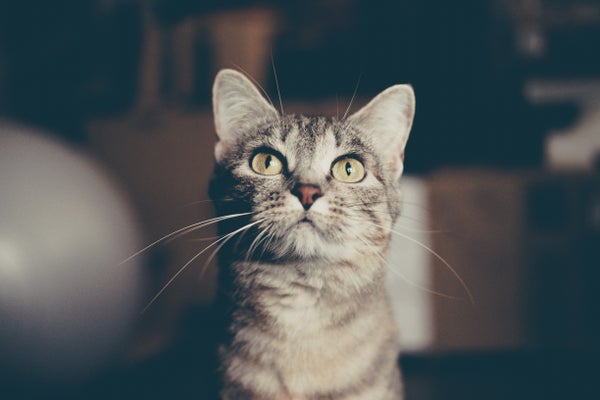
My background is in applied animal behavior and welfare — the study of animals who find themselves under our care or management. Dogs are one such species. Cats are another. And it just so happens I live with a cat. Josh The Cat.
On supporting science journalism
If you're enjoying this article, consider supporting our award-winning journalism by subscribing. By purchasing a subscription you are helping to ensure the future of impactful stories about the discoveries and ideas shaping our world today.
In the last few years, I've learned more about cat behavior, cognition, welfare, and relationships with people. And although more researchers are taking on cat questions — such as, is meowing a reliable way to measure personality in cats? or what kinds of scratching posts do cats prefer? — numerous questions remain, particularly when it comes to cats' interactions with people.
A while back, I made a completely made-up chart comparing the amount of attention given to "Dog," "Cat," and "Dog and Cat" behavior and cognition research. While studies of companion cats are increasing, this chart is still pretty accurate, for a made-up chart.

Credit: Julie Hecht
Do you play with your cat? Join the science.
I believe the era of cat science is now. But we can't do it without your help!
My PhD research explores our interactions with cats, particularly what cats and their people do together in the name of play. Play can mean different things for different species, and after previously studying play between people and dogs with Alexandra Horowitz, I'm now running an international, online, citizen science* project to learn how cats and their people play together. You and your cat are invited to participate!
Project: Play With Your Cat is worldwide and entirely online at CatsDoScience.com Participants must be 18 or older and play with their cat.
Participation is simple:
Visit CatsDoScience.com
Make — and share — a short video of you and your cat playing
Complete a short survey
That's it!
A Science article recently caught my attention. The headline read, "Cats rival dogs on many tests of social smarts. But is anyone brave enough to study them?"
"Brave?" I thought. That's one way to look at it.
Or maybe cats and their people are more than ready to show off their lives together. They've just been waiting to be asked.
If you're 18 or older and play with your cat, consider visiting CatsDoScience.com for all information and to participate by June 30, 2019. Cats Do Science is also on Facebook and Twitter.
The era of cat science is now. Thank you for playing!
*Citizen science is the involvement of the public in scientific research. To learn about other citizen science projects — often for all age groups — check out SciStarter.org. And CitizenScience.org is an association for all those interested in citizen science.