
This article was published in Scientific American’s former blog network and reflects the views of the author, not necessarily those of Scientific American
Comfy dog pajamas? Check. Coffee in dog mug? Check. Computer charged and ready to go? Check.
This is how I get ready to watch a movie, but it's also how I sometimes prep for dog science conferences. It's not that I show up in dogcentric pajamas (although I'd be happy if there were a collective movement in that direction), it's that dog researchers and practitioners are increasingly connecting with the dog-loving public, and in some cases you don't even have to leave home.
These dog conferences and talks explore who dogs are and address questions that affect the everyday lives of dogs and their human companions. For example, why are dogs so into what we do? Looking at us all the time, attending to what we do. Is it a product of their past, or is it something that developed during domestication and artificial selection?
On supporting science journalism
If you're enjoying this article, consider supporting our award-winning journalism by subscribing. By purchasing a subscription you are helping to ensure the future of impactful stories about the discoveries and ideas shaping our world today.
What would happen if you hand-raised wolf cubs like dog puppies? How will these wolves respond to people? This is what the Family Dog Project in Budapest asked:
More recently, dogs show off their memory skills in a pretty funky maze at the Canine Science Collaboratory in Arizona, where they find dogs are not equally adept in their memory skills.
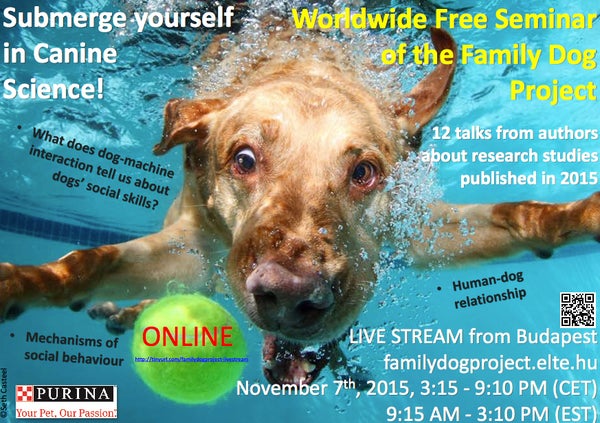
This is just the tip of the iceberg. The Family Dog Project and Canine Science Collaboratory have conferences this Saturday, November 7, 2015, and there are other opportunities to get dog science straight from the mouths of researchers and practitioners. In some cases, you can even show up in your pajamas. Here's more info:
Family Dog Project Seminar 2015
Saturday, November 7
Free, online, live, one-day conference, starts at 9:15 AM EST
Hosted by the Family Dog Project, Eötvös Loránd University
Facebook, Twitter
This conference originates from Budapest, Hungary and broadcasts world-wide. Researchers present their work on 1) dog-robot interactions (yes, really) and what this tells us about dogs’ social skills, 2) the underlying mechanisms of dog social behavior, and 3) topics we think about most often, like dog personality, their sense of smell, and of course, all that barking.
Going to the Dogs Too
Saturday, November 7
Phoenix, Arizona
One-day, in-person conference in Phoenix, AZ at the Arizona Humane Society
10:00 AM - 5:00 PM
Hosted by the Canine Science Collaboratory, Arizona State University
Registration and Tickets
Facebook, Twitter
Researchers present their latest on breed labeling, shelter interventions, play and aggression, behavior in dog parks, separation anxiety, and odor detection. You bet they'll cover controversial topics like shock collars, dominance and more. Program here.

After this Saturday, canine science continues!
Social relationships and cognitive competences in the domestic dog: Bridging science and education
November 16 - 21, 2015
Multi-day, in-person conference in Erice, Sicily
Canine researchers from many research groups and countries will present at this multi-day conference. Topics include 1) evolution, genes and environment, 2) learning and emotions, and 3) dogs social bonds to humans and conspecifics. Program details here.

CAABChat Webinars
Online, monthly and ongoing
Pet behavior scientists discuss topics crucial to well-being
Sign up to be notified of upcoming chats
Free to listen live or a fee to listen later
Facebook, Twitter
Each month, Certified Applied Animal Behaviorists and invited guests 'chat' online about topics important to our dogs. Hosted by Drs. Suzanne Hetts and Dan Estep of Behavior Education Network, examples of past chats include 'Is It All About The Genes? Exploring the relationship between genes and behavior,' 'Pampered Pets or Stressed-Out, Over-Burdened Companions?,' 'Puppy Classes – Getting From Good To Great and Avoiding The Bad.'

For a regular influx of canine science research, while staying in your pajamas, check out these blogs:
Of course I could add to this list, but someone has to get out of her dog pajamas and go to a meeting.