
This article was published in Scientific American’s former blog network and reflects the views of the author, not necessarily those of Scientific American
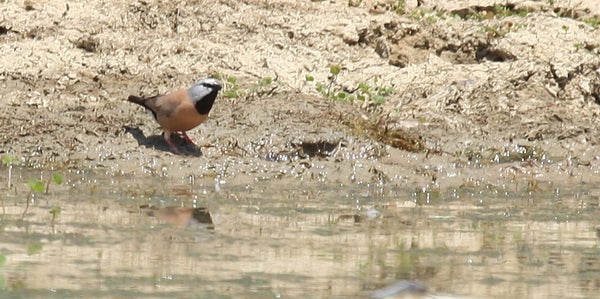
Australia’s bird-lovers just got some bad news. The New South Wales Scientific Committee has identified the southern black-throated finch (Poephila cincta cincta) as a likely extinction within the state. The tiny, 15-gram bird hasn’t been seen in NSW since 1994. Its disappearance has been blamed on a mix of habitat loss, invasive plants, altered fire regimes, agriculture, mining and invasive rabbits.
We don’t need to completely mourn this bird yet, as it still barely holds on outside of NSW. “The subspecies does still occur in limited numbers in the far north of its range in Queensland so it is not entirely extinct,” reports Mark Eldridge, chair of the NSW Scientific Committee, “but it is not doing well.”
That might be an understatement. Agriculture has already reduced black-throated finch habitat in Queensland by at least 80 percent, and it’s about to shrink even more. Six coal mines planned for central Queensland could wipe out half of the bird’s remaining habitat, according to a paper published earlier this year in PLOS One. Habitats affected by the mines’ construction would include some of the primary grasslands the birds need as ground-based seed eaters. Conservationists hope to use the rare birds to block the mines, but so far there hasn’t been much progress.
On supporting science journalism
If you're enjoying this article, consider supporting our award-winning journalism by subscribing. By purchasing a subscription you are helping to ensure the future of impactful stories about the discoveries and ideas shaping our world today.
Looking elsewhere, the northern subspecies of black-throated finch (P.c. atropygialis) appears to doing quite well is not currently considered to be at risk. They may even carry some of the southern subspecies’ genes, as the two groups were known to hybridize in the past. That won’t be enough to save the southern black-throated finch from extinction, but at least some small part of them might survive inside of their cousins to the north.