
This article was published in Scientific American’s former blog network and reflects the views of the author, not necessarily those of Scientific American
Two and a half years ago Iran sent out a pretty serious warning to the people living along the Caspian Sea: don’t swim or bathe in its waters. The sea, officials said, is heavily polluted with crude oil from deep-sea drilling, as well as industrial waste and raw sewage. Contact with these toxic substances in the water could pose a danger to human health.
Too bad nobody told the animals that swim in and around the sea.
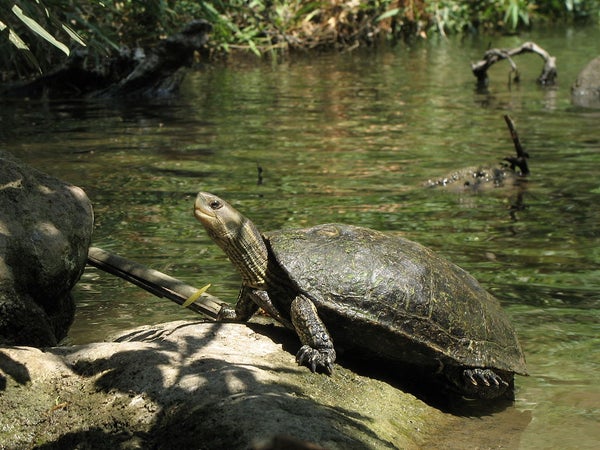
A new study by a team of Iranian and Mexican researchers shows just how bad things have become. According to a paper published Dec. 21 in the journal Environmental Science and Pollution Research, Caspian turtles (Mauremys caspica) the live in two rivers off of the Caspian Sea contain dangerously high levels of mercury, lead and cadmium. The heavy metals were most strongly present in the turtles’ livers, followed by their shells and muscles.
On supporting science journalism
If you're enjoying this article, consider supporting our award-winning journalism by subscribing. By purchasing a subscription you are helping to ensure the future of impactful stories about the discoveries and ideas shaping our world today.
The researchers called the lead levels they found particularly worrying and noted that it could cause a range of health problems, including infertile eggs, slow growth, changes in behavior and ultimately reduced chances of survival. Mercury levels in the turtles’ livers were also quite high—1.4 to 3.6 times higher than had previously been reported in three other sea turtle species. Similar levels in humans can cause a variety of neurological disorders.
Caspian turtles are fairly high up the food chain—they reach about 25 centimeters in length—so they accumulate heavy metals in their bodies over time from smaller prey and the environment itself.
According to the paper, the most likely sources of these pollutants were agriculture and industrial activity along the riverbanks which resulted in pesticides, organophosphates and manufacturing waste entering the water.
As the authors wrote, these toxins pose a threat not just to the turtles but “also for others organisms that develop in the region, including humans.” They added, “maybe our turtle species can serve as sentinels for the quality of health of aquatics ecosystems and make contributions to the environmental authorities, who should also monitor the health of human society and make good solutions to reduce the disposal of industrial and toxic waste water to watershed of Caspian Sea and prevent the accumulation of heavy metals in coastal areas.”