
This article was published in Scientific American’s former blog network and reflects the views of the author, not necessarily those of Scientific American
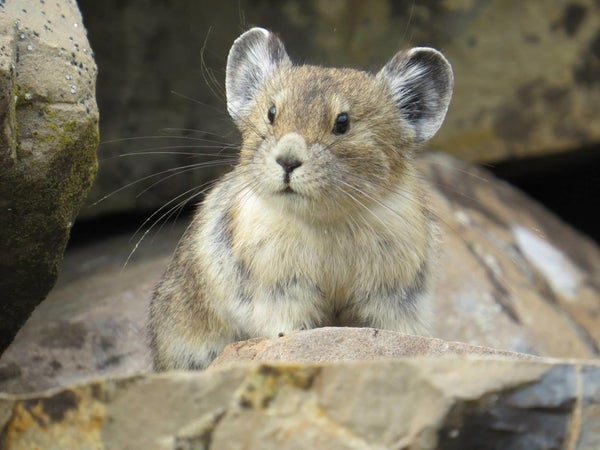
The American pika (Ochotona princeps) just can’t catch a break. Just weeks after a new study from the U.S. Geological Survey confirmed that the cold-adapted, mountain-dwelling rabbit relatives are disappearing from some of their habitats due to the effects of climate change, the U.S. Fish and Wildlife Service took the unexpected move of denying a petition to protect the species under the Endangered Species Act.
This is actually the second time that FWS has denied the opportunity to protect the pika. The first came back in 2010 when the agency decided that protecting the species was not, at the time, warranted. This time FWS said that the latest petition to protect the species—filed the past April by high school student Timothy Eng—did not contain enough new science, references, maps or other details (although it did contain numerous personal observations of pika decline in Rocky Mountain State Park). The agency wrote that the petition “fails to present any substantial new information or analysis that might alter the conclusions of the Services’ prior determination” following the 2010 denial of protection.
The USGS, meanwhile, had just days before called the pika “an ‘indicator species,’ which helps alert scientists to a change in the biological condition of a particular ecosystem.” Much like the polar bear, the pika depends on specific conditions that are changing due to global warming. The species is uniquely adapted for cold environments and actually dies if temperatures rise above 25.5 degrees Celsius for just a few hours.
On supporting science journalism
If you're enjoying this article, consider supporting our award-winning journalism by subscribing. By purchasing a subscription you are helping to ensure the future of impactful stories about the discoveries and ideas shaping our world today.
Those warmer conditions, the USGS found, have become more and more common. Their study found “evidence of widespread reduction in pika range in three mountainous regions including the Great Basin, southern Utah and northeastern California.” The study found evidence that pikas no longer persisted in several of their former habitats, including Zion National Park and Cedar Breaks National Monument.
Shaye Wolf, climate science director for the Center for Biological Diversity (one of the organizations whose original petition was denied in 2010), says this new study illustrates a “very disturbing pattern” for pikas, noting that several previous studies have also documented their decline. “The Fish and Wildlife Service has yet again opted to ignore and downplay these findings and deny listing to one of the poster children for climate change,” she says.
Although this most recent petition has now failed, Wolf says she feels the USGS study provides enough new science for a potential third petition, especially for a subspecies called the gray-headed pika (O.p. schisticeps). “That’s the pika subspecies that inhabits the areas where the new USGS study shows these rapid and large-scale pika disappearances due to climate change.”
Eng’s original petition contains a rather touching closing argument: “The loss of biodiversity, including the pika, will weaken the planet and everyone on Earth, human or not.” Wolf, who says she now sees the cute little animals less frequently during her hikes in northern California, echoed that sentiment. “Pikas are so lovely and funny and charismatic,” she says. “They’re such an important part of taking a hike in the west in high elevations. It’s just devastating that you go back to these places and you don’t see them anymore. We’re creating a lonelier planet by extinguishing these creatures.”