
This article was published in Scientific American’s former blog network and reflects the views of the author, not necessarily those of Scientific American
If “Miami Vice” were remade today, the villains wouldn’t be drug kingpins. They’d be wildlife traffickers.
A massive new report published this week by the United Nations Office on Drugs and Crime (UNODC) proves what conservationists have been saying for years: smuggling of wildlife products is huge business.
The report—compiled from records of 164,000 seizures related to wildlife crime in 120 countries—details the illegal trade in flora and fauna used to create furniture, fashion items, cosmetics, food and medicine, and jewelry, as well as the rampant smuggling of live animals for the pet trade and entertainment venues.
On supporting science journalism
If you're enjoying this article, consider supporting our award-winning journalism by subscribing. By purchasing a subscription you are helping to ensure the future of impactful stories about the discoveries and ideas shaping our world today.
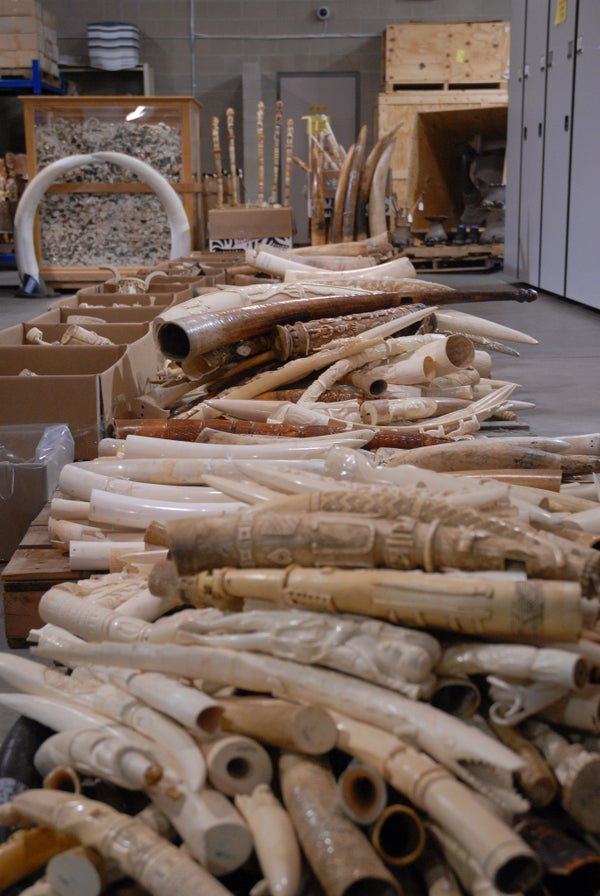
One of the most powerful elements of the report comes from its chapter on elephant ivory, which it compares and contrasts to cocaine trafficking. Both crimes involve huge international syndicates, but ivory trafficking often involves enormous shipments, each carrying more than 500 kilograms of tusks, something that drug smugglers would never even try to attempt.
The report also notes that ivory and many other products made from rare and endangered species have become investment items, something that I wrote about last year. This puts a bigger price tag on elephants’ heads than ever before. “Speculation limits the prospects for generalized demand reduction,” the report said, “because the value of the commodity is effectively de-linked from end use demand. Unlike cocaine or heroin, there is an absolute limit on the amount of ivory that can be produced, so there is a danger of a vicious cycle ensuing, where each elephant poached increases scarcity, and thus the incentives for poaching another.”
Of course, ivory is just the tip of the iceberg, and this pricing speculation affects many other species. The full trade in illegal wildlife products affects nearly 7,000 species according to the report, while the trade in millions of additional species is not regulated.
This remains a worldwide problem. The U.S., as many studies have shown, is a major market for illegal wildlife products. So is just about every other country. As UNODC executive director Yury Fedotov said in launching this report, “One of the critical messages to emerge from this research is that wildlife and forest crime is not limited to certain countries or regions. It is not a trade involving exotic goods from foreign lands being shipped to faraway markets.”
This report serves as a call to action to the world governments to do more to address the illegal wildlife trade. Of course, criminals will take advantage of every crack in the system that they can find, but the more of them that we close the better off the world’s wildlife will be in the future.
Previously in Extinction Countdown: