
This article was published in Scientific American’s former blog network and reflects the views of the author, not necessarily those of Scientific American
Habitat fragmentation affects different species in different ways. One of the most striking recent illustrations of that comes from a study published this month in the journal Folia Primatologica which looked at how three monkey species have adapted to life in and around a cattle ranch in Colombia’s Magdalena Valley. The region is home to the white-fronted capuchin (Cebus albifrons), the Venezuelan red howler (Alouatta seniculus), and the brown spider monkey (Ateles hybridus), the last of which is one of the 25 most endangered primates on the planet.
For the study, researchers visited 10 forest fragments that had become isolated from each other by cattle pastures, the San Juan River and natural savanna. They studied each area for signs of the three monkeys and the health of the forest itself.
The capuchin, which they call a highly adaptable species, seemed to fare the best. It existed in all but the smallest forest fragment and the researchers observed 130 different groups of the monkeys. This particular species eats everything from fruits to small mammals, and it is capable of traveling great distances, so the researchers concluded that the species is “not strongly affected by anthropogenic disturbance.” They even observed groups of capuchins traveling between forest fragments, supporting that hypothesis.
On supporting science journalism
If you're enjoying this article, consider supporting our award-winning journalism by subscribing. By purchasing a subscription you are helping to ensure the future of impactful stories about the discoveries and ideas shaping our world today.
The howler monkeys also did well, although not quite as well as the capuchins. The researchers note that the howlers are extremely slow-moving primates that are very careful about the way they exert their energy, but that serves them well. They’re primarily leaf-eaters, but they’re also generalists and can adapt to different food sources. The researchers saw 87 groups of red howlers, but groups tended to be made up of the greatest numbers of individuals among the three species. Again, they appeared in all but the smallest of the 10 forest fragments, but this time they had a tendency to appear mostly around bigger trees.
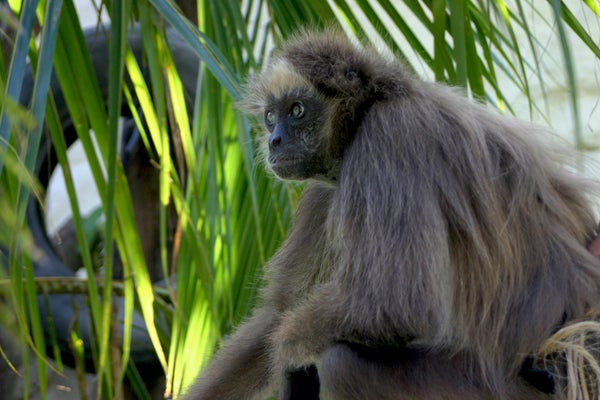
The critically endangered spider monkeys were by far the worst off. This particular species only eats ripe fruits, so its diet is extremely limited, as are the types of habitat it can inhabit. The researchers only made 33 observations for this species. Those sightings occurred in the best five forest fragments, all of which had higher quality canopy density that supported the highly arboreal primates.
Based on these observations, the researchers concluded that forest fragment quality may be more important for some species than the size of the fragment or how isolated it is from other forests. Size did matter, though. The smallest fragment, which was only 0.7 hectares, had no monkeys of any species. That suggests that there must be a threshold beneath which a forest fragment becomes inhospitable for primates.
Although the capuchins appear to have adapted fairly well, the researchers did note that the forest fragmentation in the Magdalena Valley was fairly recent, so long-term negative effects may still wait in the wings. Meanwhile, the study offers important clues as to how to move forward to protect the critically endangered brown spider monkey, which is also threatened by hunting and the illegal pet trade. As the 2014 “Primates in Peril” report points out, the species is restricted to less than 18 percent of its historic habitat in Colombia, and less than 1 percent of that habitat is protected. This study may provide conservationists with some of the information necessary to pick which of those remaining habitats need to be protected now, before it is too late.
Previously in Extinction Countdown: