

This article was published in Scientific American’s former blog network and reflects the views of the author, not necessarily those of Scientific American
There’s one clear way to make both wolves and livestock owners happy: Make sure that predators have enough natural prey.
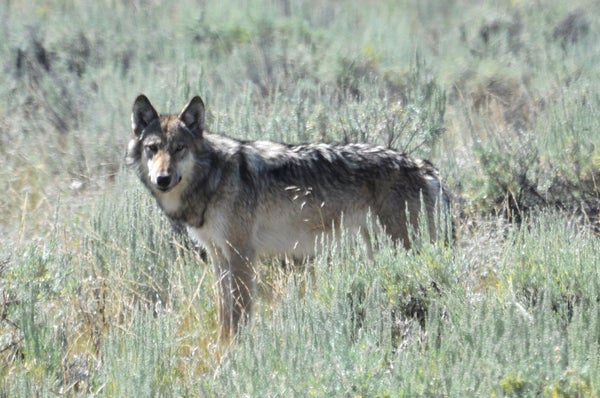
That may seem like an obvious answer, but now we have data to back it up. A team of researchers combed through nearly 120 previously published studies about the diets of gray wolves (Canis lupus) and found that in most cases the predators purposefully select wild prey when it’s available—even when livestock is nearby and abundant.
The paper, published March 20 in the journal Biological Conservation, pulled from research conducted in 27 countries and found consistent results across three continents.
On supporting science journalism
If you're enjoying this article, consider supporting our award-winning journalism by subscribing. By purchasing a subscription you are helping to ensure the future of impactful stories about the discoveries and ideas shaping our world today.
Another conclusion: Owners who leave their livestock out to graze freely, especially in small groups, found their herds more vulnerable to predation. Sites that kept livestock under supervision and penned their animals, especially at night, suffered fewer losses. Using non-lethal deterrent methods such as fences and guard dogs also improved conditions. Not protecting herds, they found, increased the likelihood of predation by up to 78 percent.
The study also found that wolves show a tendency to eat native species that have their own defense mechanisms—horns, antlers and other sharp bits. Previous research has shown that wolves coevolved with antlered ungulates, making them the ideal, preferred prey.
These results offer clear guidance, according to the authors, who write that “wild prey populations should be maintained and restored wherever possible to provide enough food for grey wolves and to minimize the likelihood that they will attack livestock.” They add that their study may have relevance for reducing conflict between humans and other large carnivores around the world.
Of course, restoring prey populations presents its own set of challenges, but this research illustrates the value of having a healthy ecosystem: It keeps both humans and their domesticated animals safer.
This essay first appeared on The Revelator on May 14, 2020.