
This article was published in Scientific American’s former blog network and reflects the views of the author, not necessarily those of Scientific American
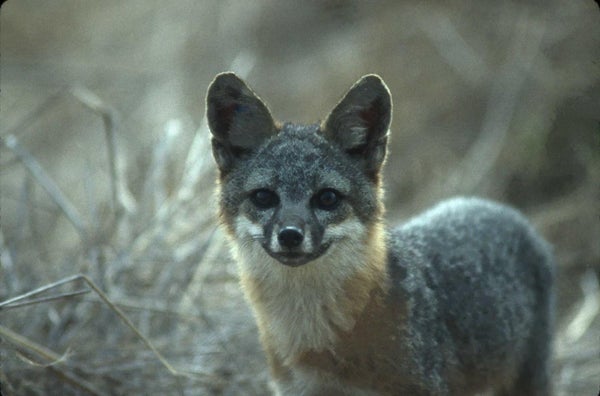
Just two months ago, the U.S. Fish and Wildlife Service made an historic announcement: three island fox (Urocyon littoralis) subspecies living off the coast of California have recovered and may no longer need the protection of the Endangered Species Act.
It has only been 12 years since four out of the six Island fox subspecies were added to the ESA, so this represents a remarkable conservation achievement for a group of animals that nearly went extinct at the end of the 20th century. FWS director Dan Ashe credited the collaboration of many private and government partners for the success. “The speed at which these subspecies have recovered points to the strength of the ESA in focusing conservation attention and catalyzing recovery actions, and demonstrates what we can achieve together,” he said.
But all is not ship-shape for all island foxes. Two new studies confirm that one of the subspecies that never even made it onto the ESA is actually highly endangered. In fact, according to the most recent study, published last week in the journal Current Biology, the San Nicholas Island fox (U.l. dickeyi) may have the lowest genetic variability of any other wild animal species on the planet.
On supporting science journalism
If you're enjoying this article, consider supporting our award-winning journalism by subscribing. By purchasing a subscription you are helping to ensure the future of impactful stories about the discoveries and ideas shaping our world today.
The paper calls this “genomic flatlining” and notes that the last 300 or so San Nicholas Island foxes have pretty much no genetic variation between them.
That could cost them in the near future. “The island fox populations suffer from both a lack of genetic diversity and the accumulation of damaging genetic variants, which is likely to worsen over time,” co-author Robert Wayne of the University of California, Los Angeles said in a prepared release.
This study comes less than a month after a similar study into the San Nicholas Island fox, published in the journal Molecular Ecology, concluded that the animals may need “genetic rescue” in order to survive. The authors of that paper suggested that bringing a few foxes of related subspecies from nearby islands could help to inject a new and healthier mix of genes into the San Nicholas population. Similar efforts decades ago saved the Florida panther from extinction.
“Low genetic diversity may lead to lower survival and reproductive success, and may reduce the ability of a population to adapt to climate change or new, introduced diseases,” lead author W. Chris Funk of Colorado State University said last month in a prepared release. “With a dwindling population of fewer than 300 adults, actions need to be taken quickly to preserve this important member of the Channel Islands ecosystem.”
Beyond genetics, the San Nicholas foxes need a lot more help. The nonprofit Friends of Island Foxes noted last year that the subspecies’ population had fallen 41 percent between 2012 and 2015 to an all-time low of 263 adults. Drought and an invasion of non-native plants were blamed for both the decline and the low body weight of the remaining animals.
Will the San Nicholas Island foxes continue to decline even as their cousins enjoy a much-celebrated recovery? Sadly, the future does not look bright for these critically endangered canines.
Previously in Extinction Countdown: