
This article was published in Scientific American’s former blog network and reflects the views of the author, not necessarily those of Scientific American
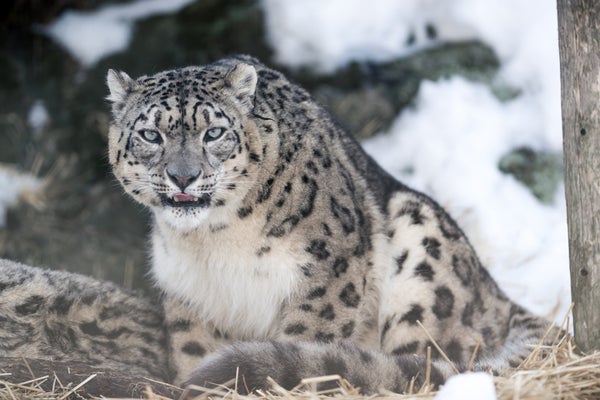
Can you imagine what the world would be like for snow leopards (Panthera uncia) if they didn’t have enough snow? I mean, come on, the word “snow” is right in their name. It’s kind of essential.
Well, that world is coming. According to a paper published this month in the journal Biological Conservation, climate change will make nearly two-thirds of snow leopards’ current habitat inhospitable by the year 2070.
Now, snow leopards are pretty hardy cats, and they don’t actually fully rely on snow. They’ve actually been shown to climb down from one mountain, cross through a desert, and then climb up another mountain. They already have 2.2 million square kilometers of habitat spread across more than a dozen countries in central Asia, so they could probably adapt if it were just a question of the world getting warmer. Heck, as the paper points out, leopards have lived on the Tibetan Plateau for about 7 million years and survived the last ice age.
On supporting science journalism
If you're enjoying this article, consider supporting our award-winning journalism by subscribing. By purchasing a subscription you are helping to ensure the future of impactful stories about the discoveries and ideas shaping our world today.
But according to the paper, warmer temperatures, increased precipitation, and changing vegetation patterns from climate change will have a big impact on the snow leopards’ prey species, which already exist at fairly low densities in those inhospitable mountain regions. In fact, that is already happening. As these changes progress, they will leave the snow leopards with a lot less food to eat.
Meanwhile, warmer weather will also drive more people and development higher into the mountains, putting humans and the cats on a collision path. This could only be accelerated if the large dams planned for parts of this region take a chunk of human habitat, pushing people and leopards closer together and fragmenting cat populations from each other.
The good news here is that the researchers have identified three mountain areas that won’t be hit as hard by climate change. The Altai, Qilian and Tian Shan-Pamir-Hindu Kush-Karakoram mountain ranges, they wrote, will serve as “climate refugia”—safe places for both the snow leopards and their prey. Protecting that land, which encompasses about 35 percent of current snow leopard habitat, now will be a priority.
“Substantial conservation challenges will emerge as vast areas of snow leopard habitat are lost and become increasingly fragmented as a result of climate change,” lead author Juan Li, a postdoctoral fellow at the University of California, Berkeley, said in a prepared release. “Getting ahead of and addressing these challenges now is imperative for snow leopards, their landscapes and all the unique wildlife those landscapes support.”
For one of nature’s most striking creatures, it’s amazing how little we still know about snow leopards, as I recently wrote for PBS’s Nature. That’s changing, but it’s a slow go. Unfortunately, this new research shows us that our timeline to learn more about these elusive big cats and how to conserve them just got a whole lot tighter.