
This article was published in Scientific American’s former blog network and reflects the views of the author, not necessarily those of Scientific American
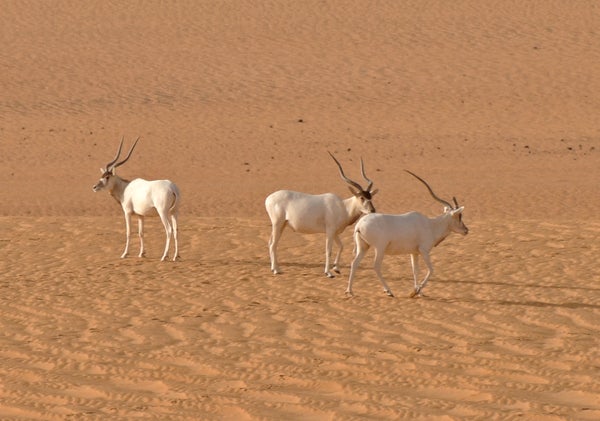
Is this the end for the addax (Addax nasomaculatus)? The IUCN reported today that extensive surveys of addax habitat in Niger found just three of these critically endangered antelopes left in the wild. The last animals were located after a 700 kilometer ground search, huddled together in what the IUCN described as a “very nervous” group.
The IUCN could not confirm if they were able to observe the sex of the three antelopes. They also declined to comment on if they think there might be more addax might be out that there that they were not able to count. The survey combined both ground and aerial searches and used infrared cameras and other technology to observe the animals, so it seems unlikely that they would have missed many.
The organization was, however, quite clear on the reason for the recent decline, playing the blame firmly on poaching by soldiers employed to protect Chinese-owned oil installations in Niger. Addax habitat and the surrounding region, the IUCN said, became a hotbed of drug smuggling, weapons trafficking, political insurgency and illegal wildlife trade following Libya’s collapse in 2011.
On supporting science journalism
If you're enjoying this article, consider supporting our award-winning journalism by subscribing. By purchasing a subscription you are helping to ensure the future of impactful stories about the discoveries and ideas shaping our world today.
“We are gravely concerned about this unfolding wildlife disaster in the desert,” Dave Mallon, chair of the IUCN Antelope Specialist Group, said in a prepared statement. “This species is simply unable to cope with the current levels of disturbance and illegal killing. Without urgent coordinated action at all levels we will very soon witness its demise.”
Thomas Rabeil of the Sahara Conservation Fund added that the companies with commercial interests in the region, notably China National Petroleum Corporation, should cooperate with wildlife authorities to contribute to addax conservation.
The IUCN is calling for additional efforts to monitor and secure addax in the wild, as well as a broad range of other conservation actions, including rebuilding wild populations with captive-bred animals. A few thousand of the animals live in captivity or semi-wild conditions in zoos, nature reserves, and breeding programs in Africa, Europe, Japan and Australia. Hundreds more can be found on private ranches in in Texas, where, ironically enough, they are legally hunted—which is kind of how the addax got to this terrible situation in the first place.
Related: