
This article was published in Scientific American’s former blog network and reflects the views of the author, not necessarily those of Scientific American
One of the rarest bird species in the United Kingdom has a very big problem: they’re going blind. And it’s killing them.
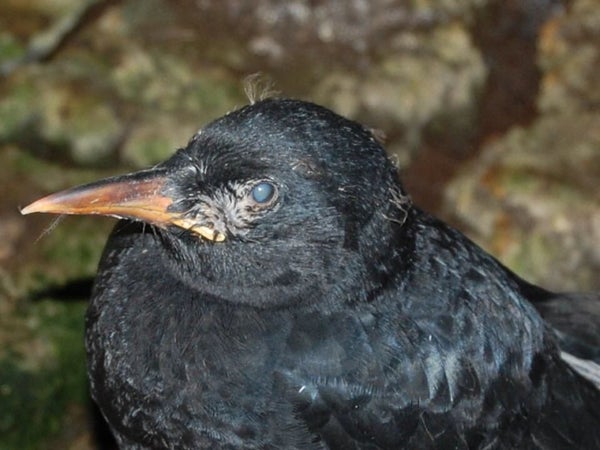
According to research published this month in the Journal of Animal Ecology, about 3 percent of the red-billed choughs (Pyrrhocorax pyrrhocorax pyrrhocorax) born in Scotland each year are blind or visually impaired. The chicks appear otherwise healthy, but the blindness carries an inevitable cost: “We’ve never seen a blind nestling survive post-fledging,” says Amanda Trask, a PhD student at the University of Aberdeen and the lead author of the study.
Scotland only has about 60 breeding pairs of red-billed choughs left, a number that shrinks every year, so this “lethal blindness” (as the paper puts it) creates serious questions about the viability of the species in the country.
On supporting science journalism
If you're enjoying this article, consider supporting our award-winning journalism by subscribing. By purchasing a subscription you are helping to ensure the future of impactful stories about the discoveries and ideas shaping our world today.
Chick blindness first turned up in 1998 but until now the cause remained a mystery. One theory suggested it could have involved an environmental factor, but the new paper proves that it has actually the result of a recessive gene that is spreading through the small, inbred population. It still only affects a small number of chicks, but Trask and her fellow researchers found that parents who carry the mutation actually have more offspring per year than unaffected birds, so it could become even more of a problem in coming years.

Healthy red-billed choughs
Importing additional choughs to Scotland from other areas could help inject healthier genes into the population, but options for that are extremely limited. The red-billed chough is an extremely widespread species, ranging all the way across Asia, but the subspecies in the UK exists in just a few fragmented pockets like the ones in Scotland. Trask says there are only 394 breeding pairs throughout the UK and the Isle of Man. Most of those other populations are stable at least, according to the recent State of the UK’s Birds report, but that doesn’t necessarily mean they could withstand the removal of any birds to supplement Scotland’s population.
Right now blindness levels are still fairly low, so Trask says the main priority for conserving the birds should be preserving their habitats on the Islands of Islay and Colonsay. Still, the risk remains. Managing the blindness and recessive genes in the future, she says, will be a necessary part of conservation strategies moving forward.
Previously in Extinction Countdown: