
This article was published in Scientific American’s former blog network and reflects the views of the author, not necessarily those of Scientific American
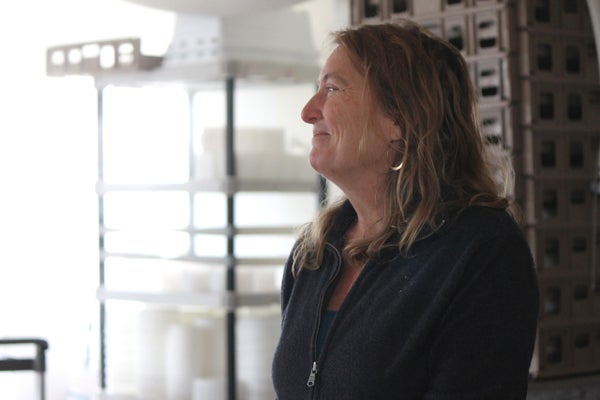
Lisa Gottreich's journey into cheesemaking happened like so many things in northern California--organically. A native of Marin County, Gottreich always had goats that she would milk and make cheese. Her family joked that she was the wrong “-ish,” Jewish instead of Omish. During a difficult period in her life, Gottreich says she felt like she was surrounded by death and decided to make a change. “I really just wanted to be around life. To me, just getting up and milking a goat and smelling the milk, the feeling was just so transcendent.”
Gottreich began sending samples to chefs and her friend Jim Reichardt, owner of Sonoma Poultry, offered to transport her cheese in his refrigerated truck to restaurants in the Bay Area. That was eight years ago. Her cheeses have been featured in renowned restaurants including French Laundry and Chez Panisse. Some of Gottreich’s cheeses like Boho Belle, which is made with organic Jersey cow milk in the Bel Paese tradition, have been served at the White House.

Gottreich’s Bohemian Creamery is on a seven acre farm nestled in the hills of Sebastopol, California. Credit: Sarah Hanna
On supporting science journalism
If you're enjoying this article, consider supporting our award-winning journalism by subscribing. By purchasing a subscription you are helping to ensure the future of impactful stories about the discoveries and ideas shaping our world today.

Last year, she opened a storefront. Credit: Sarah Hanna

There, she sells cheese (and more). Credit: Sarah Hanna

In addition to selling her cheeses, she also wanted a place to showcase all of the other uses of milk from goats like Rifka, Bohemian Creamery’s alpha goat. Credit: Sarah Hanna

They use goats’ milk to make soft serve frozen yogurt, whey soda, and soap. Credit: Sarah Hanna
As Gottreich explains, there are really just three kinds of cheese--natural rind, bloomy rind, and washed rind. For her, creating variations of these three types of cheese is similar to being an artist. She says, “It’s hard to know but I have an idea. It’s not a memory but it may kind of be like what people think when they paint; they have a vision of what it may look like and they are painting from that vision. It's the same for me with cheese but it’s not based on a flavor I’ve had before, it is a flavor I’m seeking.”
Gottreich gets her inspiration from different sources--sometimes it can stem from sheer stubbornness. She has spent time living in Italy where the combination of seafood and dairy is considered a culinary sin but images from her childhood on the California coast of goats eating salty grass stayed with her. Gottreich persisted with the pairing of dairy and sea and cleverly combined those components in her Surf and Turf, made with organic cow’s milk and strands of local dulse seaweed which is strewn through its center and lightly pressed into the rind.

Based on a spiced Sicilian cheese, Twist and Shout is a natural rind cheese that is made in a style unique to southern Italy--cooked in its own hot whey and then aged for at least three months. Credit: Sarah Hanna
Italy was also influential in the development of another one of her cheeses. Her saffron and peppercorn infused Twist and Shout is based off a 1,000 year old Sicilian recipe Norman king Ruggero presented to his wife as a remedy for her depression. Of course, there are more local inspirations, too--Gottreich’s current favorite cheese, Flower Power, was created after a farmer down the road asked her if there was anything she could do with bee’s pollen. She created a cheese that flows like milk and honey, threading the bee’s pollen throughout a French inspired organic cow’s milk cheese.

Gottreich’s assistant, Magdalena, prepares to pasteurize milk for a batch of Flower Power. Credit: Sarah Hanna

Romeo is the creamery’s longest-aged cheese, brined and tended to for 10 to 12 months to add complexity and crystallization. Credit: Sarah Hanna
One of her favorite parts of cheese making is watching the stages. “Cheeses are like people, they are living breathing amazing things that are constantly in flux and constantly in a state of change. Sometimes I remind my chefs I didn’t look like this when I was 10 but I’m still me. It's the same with cheese,” Gottreich tells me. “What I always like to say as you age you lose certain attributes and you gain other ones.”