
This article was published in Scientific American’s former blog network and reflects the views of the author, not necessarily those of Scientific American
The belief that a frightening experience during pregnancy can harm a woman’s unborn baby is one of the oldest of old wives’ tales. Genetic factors and prenatal exposure to alcohol, drugs, and other toxins are the primary causes of birth defects and miscarriages. But it also appears to be true that psychological stress during pregnancy caused by war, terrorism, mass shootings, natural disasters, or economic calamity can also cause the deaths of fetuses—especially if they’re male.
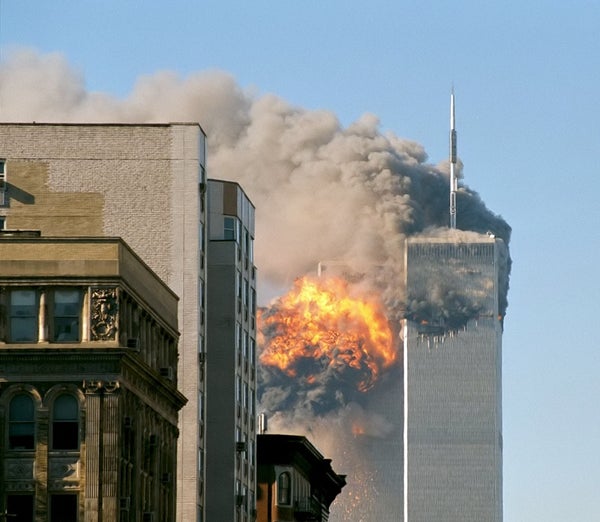
Normally, slightly more male babies are born than females. However, maternal stress lowers the male/female ratio of births in a population (the M/F ratio), and this is believed to be the result of selective miscarriage of male fetuses. A study published in 2015 found that the 9/11 attacks lowered the M/F ratio in the United States significantly a few months after the attack. The same phenomenon was observed previously in the aftermath of the assassination of John F. Kennedy in November, 1963. This finding was replicated in a study published last month, August, 2016, in the journal of Early Human Development by analyzing World Health Organization statistics.
Terrorist attacks in Northern Ireland, the Rodney King riots in April 1992, and the mass shootings by Anders Breivik in Norway in 2011, and in Sandy Hook in 2013 were all followed by a sharp and statistically significant drop in the M/F ratio at birth four to five months after each of these traumatic events. Fear in the aftermath of the Chernobyl nuclear reactor accident had a negative effect on male fetuses during the third month of prenatal development, resulting in a significantly lower M/F ratio of births in the Czech Republic. A drop in the M/F ratio in the United States also occurred after the Great Recession of 2007, presumably as a result of the economic stress the financial collapse caused families.
On supporting science journalism
If you're enjoying this article, consider supporting our award-winning journalism by subscribing. By purchasing a subscription you are helping to ensure the future of impactful stories about the discoveries and ideas shaping our world today.
A leading theory for lower than normal number of boys born after traumatic events is that a Darwinian natural selection process is at play. Physiological changes in the woman’s body triggered by stress during pregnancy can adversely affect both male and female fetuses, but males are especially vulnerable. This may lead to natural selection of the most robust male fetuses for survival during times of population stress by culling the less fit males before they are born. This theory was tested in the aftermath of the September 11, 2001 terrorist attack, by examining the fitness of young boys born shortly after the attack. Testing showed that the male children born in December 2001 scored significantly higher than expected in tests of cognitive ability.
It is clear that stress hormones in the mother during pregnancy have more severe consequences on male fetuses, but population stress also has negative effects on the reproductive biology of fathers. A decline in M/F birth ratio followed the 10-day war in Slovenia in 1991, but an analysis of men during this period also revealed a decrease in motility of their sperm .
The link between selective loss of male fetuses after such public catastrophes as war, terrorism, and natural disasters is easier to identify because of the large number of pregnant women affected by the emotionally traumatic event, but the same harmful effect on male fetuses likely occurs from individual stresses. For example, women who hold jobs with high levels of psychological stress are more likely to give birth to a daughter than to a son. This study of 16,384 births in Cambridge, UK, drew this conclusion after controlling for possible confounding effects, including maternal age, and her partner’s income or his job stress.