
This article was published in Scientific American’s former blog network and reflects the views of the author, not necessarily those of Scientific American
I joined the Peace Corps to teach with the Let Girls Learn initiative for the same reason I studied physics. I wanted to concern myself with fundamental things.
Just as physics forms the foundation for many scientific problems, the denial of education to 62 million girls lies at the root of many of society's problems.
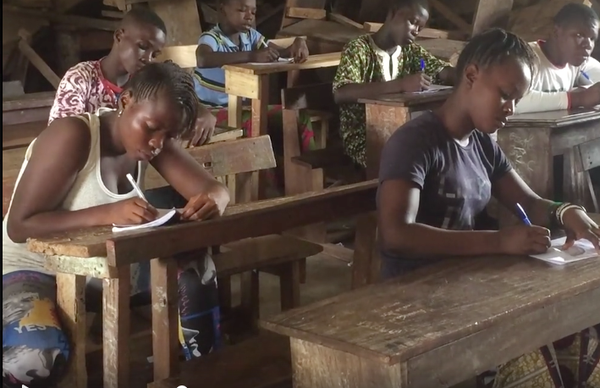
I write to you from a remote village in Guinea, where I am working as a physics educator for 820 seventh-tenth graders, only 198 of whom are girls. And while there are 115 girls in seventh, the eight grade has only 50.
On supporting science journalism
If you're enjoying this article, consider supporting our award-winning journalism by subscribing. By purchasing a subscription you are helping to ensure the future of impactful stories about the discoveries and ideas shaping our world today.
There are many reasons for these disparities, and I am becoming privy to the subtleties of this complex issue. Take this conversation with a 25-year-old man. With five adolescent female family members listening, he proclaimed, “Girls can’t do math & science, they aren't good at it." We discussed his beliefs in a two hour conversation that left me so fired up, I had to write a song about it. When I shared it with him, he was so convinced by my arguments that he wanted to help spread the message by working with me to record the song. Using candid footage from my time so far in Guinea, I created this video, and am thrilled to share it on the International Day of the Girl.
Let Girls LearnLet Girls Learn
Posted by Lisa Einstein on Facebook on Monday, October 10, 2016