
This article was published in Scientific American’s former blog network and reflects the views of the author, not necessarily those of Scientific American
If you’re a STEM (Science, Technology, Engineering, and Mathematics) graduate student or post-doc, and you have an itch to write science journalism for a major publication, an extraordinary opportunity is open to you. The AAAS Mass Media Fellowship program is accepting applications from now until January 15, 2017, and if you apply and get accepted, you could be writing for Scientific American next summer, just like I did last summer.
The program embeds about 15 scientists in major news organizations around the country. Last summer, the other fellows in the program wrote for WIRED, Slate, National Geographic, and NPR, as well as newspapers and television stations, and wrote articles that collectively were seen by millions of people. Some of us have decided to pursue careers in science journalism, while other hope to use the skills we acquired to be better science communicators inside and outside the academy.
I’d been an English major before coming to graduate school for Biophysics at the University of Rochester five years ago, and I knew I wanted to continue writing even as I developed as a scientist. I started several projects to do this, including a podcast about life in graduate school (The Bench Warmer’s Podcast) and an ongoing venture where I use a manual typewriter to write STEM-themed stories for children, but it wasn’t until I was accepted into the AAAS Mass Media program and came to the Manhattan offices of Scientific American that I felt that my writing was contributing to the important conversations going on in the world.
On supporting science journalism
If you're enjoying this article, consider supporting our award-winning journalism by subscribing. By purchasing a subscription you are helping to ensure the future of impactful stories about the discoveries and ideas shaping our world today.
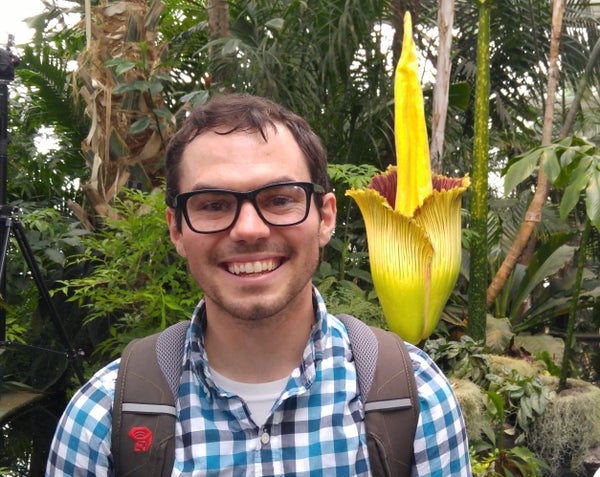
During the ten weeks of the fellowship, I got to interview scientists from France and Holland; a British Lord; and the retired former assistant unit commander of the LAPD’s S.W.A.T. team. I had to sprint to the New York Botanical Garden in the Bronx to catch the opening of a corpse flower and film the reactions of patrons who came to smell something terrible and did just that. I learned how to write under tight deadlines and how to get an interviewee to say something worth quoting.
I got to sit in on editorial meetings and hear what editors are looking for. I discussed how to balance narrative and scientific specificity with the other interns from our lunchroom, which happened to have a spectacular view of the Statue of Liberty. I got to write about swordfish, climate change, the pace of world record breaking, the nature of athletic practice, and killer robots. All told I wrote eight articles for ScientificAmerican.com, and two more that are currently in press for the print magazine.
The fellowship is paid, and includes a session in Washington, DC where current science writers share their expertise and tips on how to get started. If you are qualified and interested, be sure to apply. The experience changed my life, and I’m sure it will change yours.