This article was published in Scientific American’s former blog network and reflects the views of the author, not necessarily those of Scientific American
"Tell me something, my friend. You ever dance with the devil in the pale moonlight?"
("Batman" 1989)
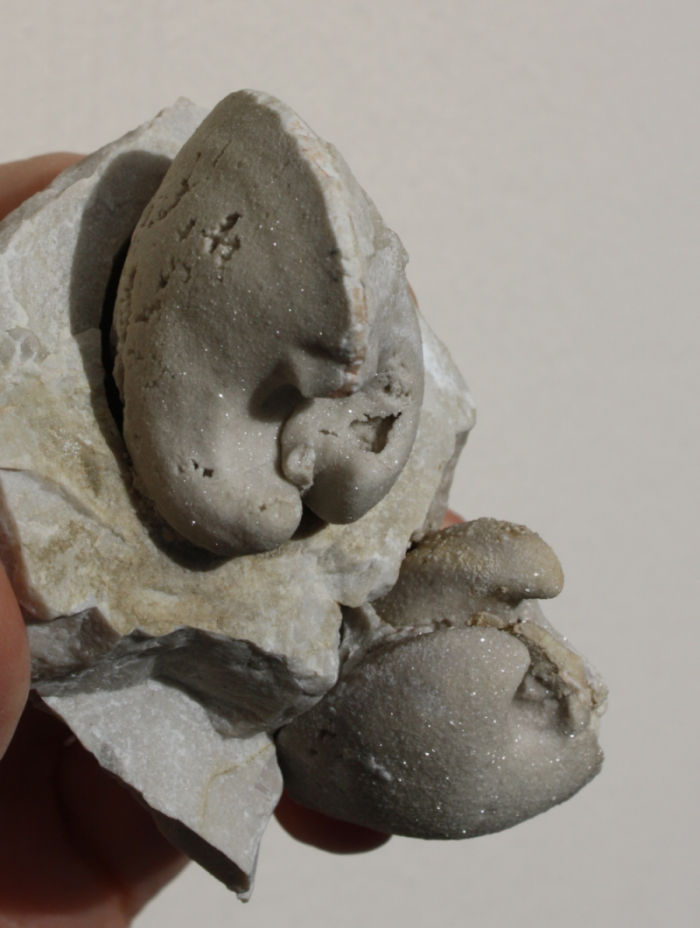
The night before December 6, belongs to the Krampus, a beast-like demon in the Alpine folklore - and strange marks can be found on some rocks in the Dolomites - resembling the imprints of an exceptional large cloven hoof.
On supporting science journalism
If you're enjoying this article, consider supporting our award-winning journalism by subscribing. By purchasing a subscription you are helping to ensure the future of impactful stories about the discoveries and ideas shaping our world today.
Ancient stories tell of these secret places, where witches, sorcerers and lesser demons gathered in a wild dance - and at midnight the devil himself, disguised as a black goat, would appear. But at sunrise even the mightiest evil force had to return to hell - on the rocks only the imprints of the devil's hooves remain as grim reminder.
The geologist explains the strange hoof-like figures as cross sections of large extinct bivalves of the genus Megalodus, but then, wasn't the greatest trick of the devil convincing the world he didn't exist...
Subscribe to Support Independent Journalism
Great science journalism requires human expertise, time, effort and creativity. And it costs money. That’s why I and the journalists here at Scientific American hope you’ll join our community.
When you subscribe, you are supporting staff and freelance journalists who are passionate about telling science stories that are true, important and compelling. Our editors and reporters are often experts in their fields, which means they understand the nuances of big discoveries and can untangle the breakthroughs from the hype. With a subscription, you are also supporting rigorous fact-checking to ensure the words we publish are precise and accurate. And you’re supporting original illustrations, graphics and photos that bring you closer to an advanced laboratory, an ice sheet in Antarctica or a space mission in orbit. You’re helping us craft other types of high-quality journalism as well: Our newsletters are carefully written, edited and curated by staffers you have or will come to know and love. Our Science Quickly podcast is based on original reporting, collaboration with editors and scientists and exacting production.
Subscriptions keep this engine running so we can continue to deliver thoughtful, rigorous and independent science journalism to you. In an era of viral misinformation, this work is crucial. If you value what we do, I hope you’ll consider joining us as a subscriber