
This article was published in Scientific American’s former blog network and reflects the views of the author, not necessarily those of Scientific American
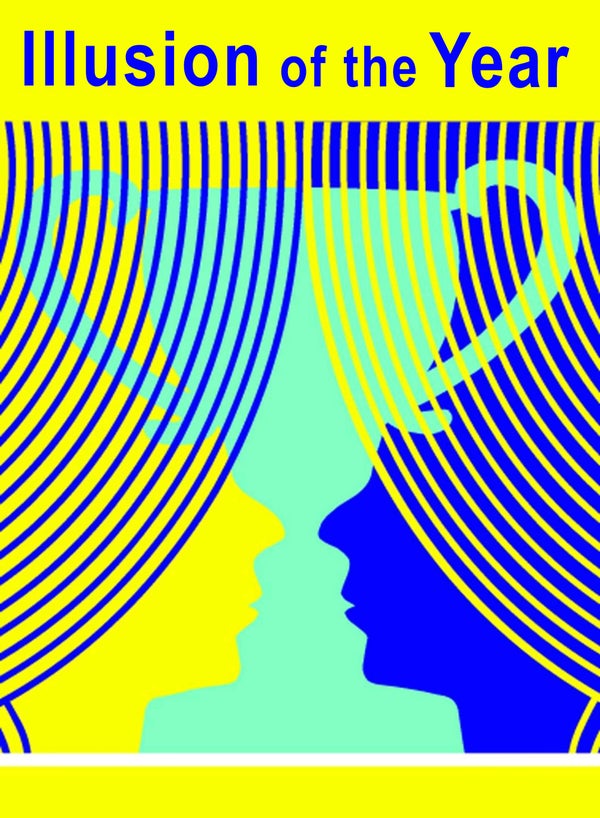
The Best Illusion of the Year Contest, hosted by the Neural Correlate Society, is now an annual online event, in which anybody with an internet connection (that means YOU!) can vote to pick the Top 3 Winners from the current Top 10 List.
Ten novel illusions, submitted from six different countries, and selected by an international judge panel from dozens of entries, will compete for first, second, and third placement on June 29th-30th. The final rankings will be decided by worldwide online voting.
The winning illusions will receive a $3,000 award for 1st place, a $2,000 award for 2nd place, and a $1,000 award for 3rd place.
On supporting science journalism
If you're enjoying this article, consider supporting our award-winning journalism by subscribing. By purchasing a subscription you are helping to ensure the future of impactful stories about the discoveries and ideas shaping our world today.
Worldwide voting will take place on the Best Illusion of the Year Contest website, from 4pm EST June 29th to 4pm EST June 30th. The Top 10 finalist illusions, listed below, will be publicly revealed at that time!
- Jose-Manuel Alonso: “Lights and Darks in Vision.” State University of New York, USA
- Peter Brugger and Rebekka Meier: “A New Illusion At Your Elbow.” University Hospital Zurich, Switzerland
- Vebjørn Ekroll, Bilge Sayim, Ruth Van der Hallen and Johan Wagemans: “The Shrunken Finger Illusion.” University of Leuven, Belgium
- Mathew T. Harrison and Gideon P. Caplovitz: “Motion Integration Unleashed: New Tricks for an Old Dog.” University of Nevada Reno, USA
- Arthur G. Shapiro: “Remote Controls.” American University, USA
- Mike Pickard and Gurpreet Singh: “The Dalesmen Singers Illusion.” Sunderland University, UK
- Kokichi Sugihara: “Ambiguous Cylinder Illusion.” Meiji University, Japan
- Christine Veras: “Silhouette Zoetrope.” Nanyang Technological University, Singapore
- Mark Vergeer, Stuart Anstis and Rob van Lier: “Caught Inside a Bubble.” University of Leuven, Belgium, Radboud University Nijmegen, The Netherlands, and UC San Diego, USA
- Sylvia Wenmackers: “Millusion.” University of Leuven, Belgium