
This article was published in Scientific American’s former blog network and reflects the views of the author, not necessarily those of Scientific American
A walkthrough of the new exhibit—Our Senses—at The American Museum of Natural History may not be as easy as it sounds. The 11-room whirlpool of perceptual delights is a completely novel experience in sensory perception. In it you will experience the five senses not only as a human, but also as animals with different sensory domains. You will see in infra-red like a snake and in ultra-violet like a butterfly.
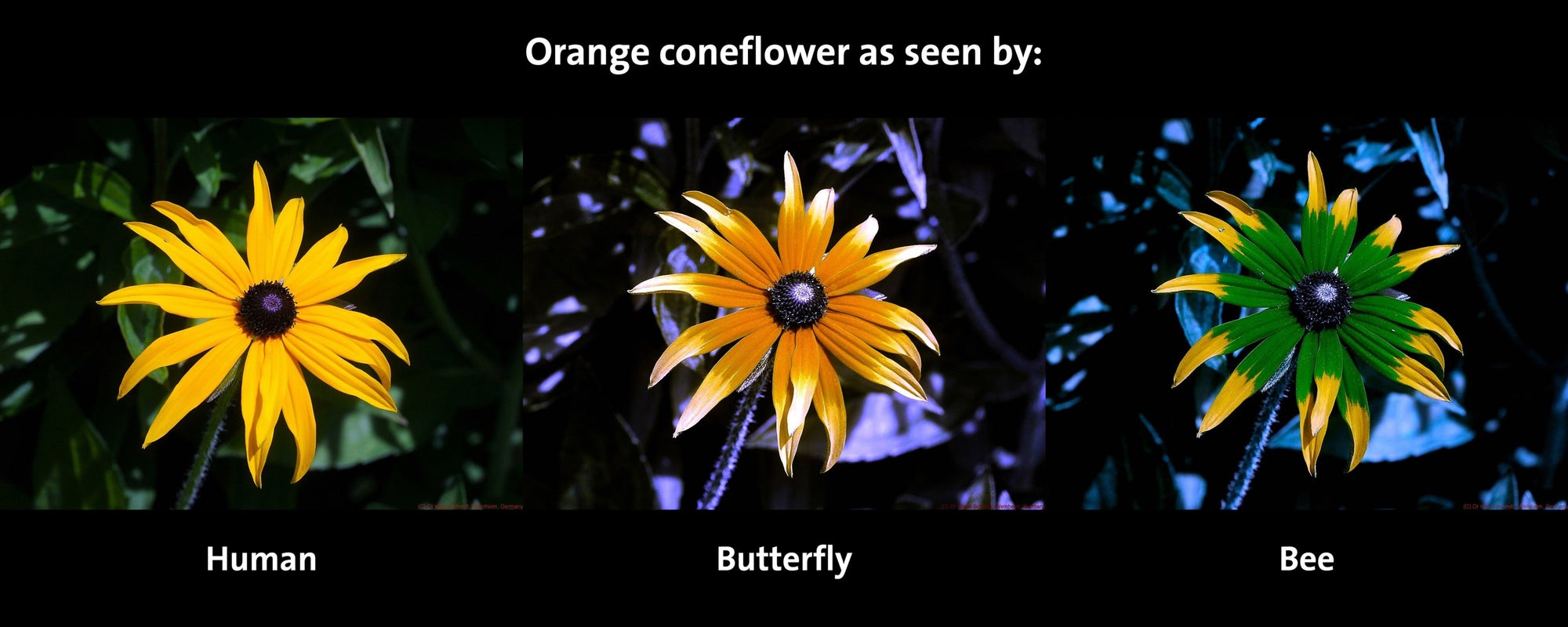
Visitors to the exhibition are able to explore how different species experience the world, in this case, seeing the same flower in very different ways. ©Dr. Klaus Schmitt, uvur.eu
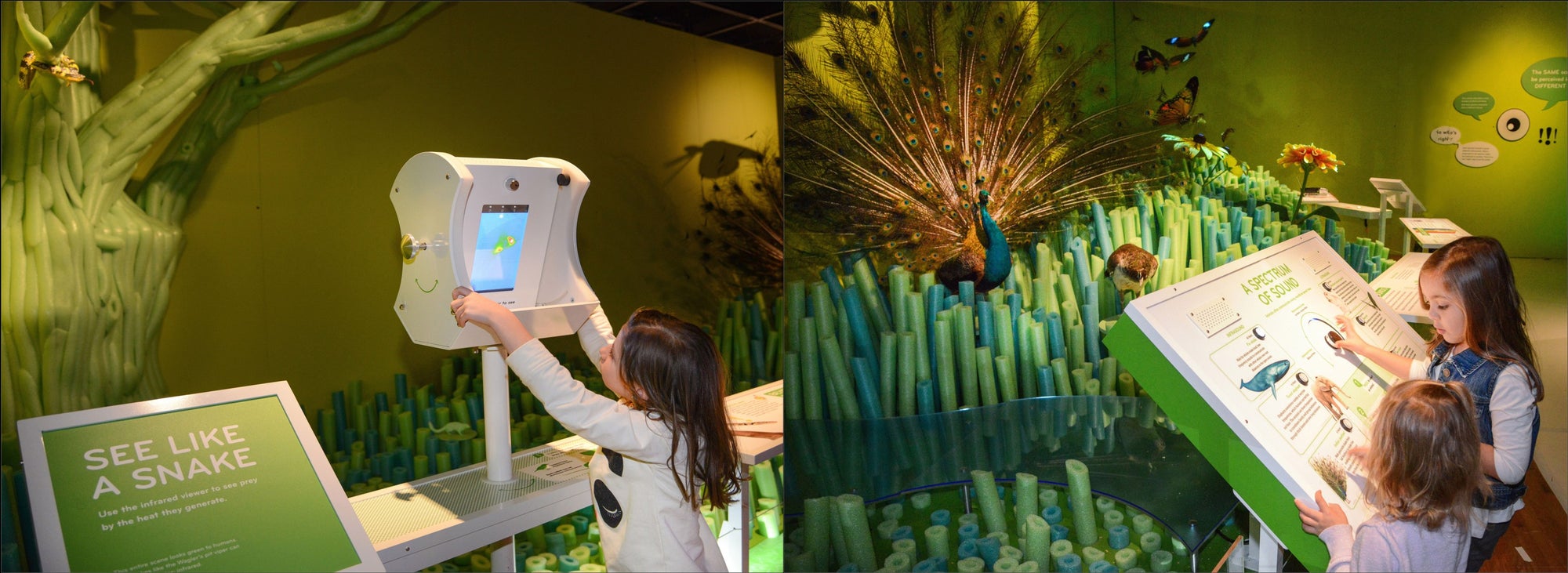
(left) An infrared viewer allows visitors to hunt like a snake and find prey by the heat they generate. ©AMNH/R. Mickens
(right) Humans evolved to detect only certain frequencies, while some animals, including mice and rats, communicate at ranges we can’t perceive without the aid of technology. Visitors turn a dial to hear a variety of animal sounds normally outside the range of our detection, revealing soundbite calls from a fin whale, forest elephant, house mouse, and an Indiana bat. ©AMNH/R. Mickens
On supporting science journalism
If you're enjoying this article, consider supporting our award-winning journalism by subscribing. By purchasing a subscription you are helping to ensure the future of impactful stories about the discoveries and ideas shaping our world today.
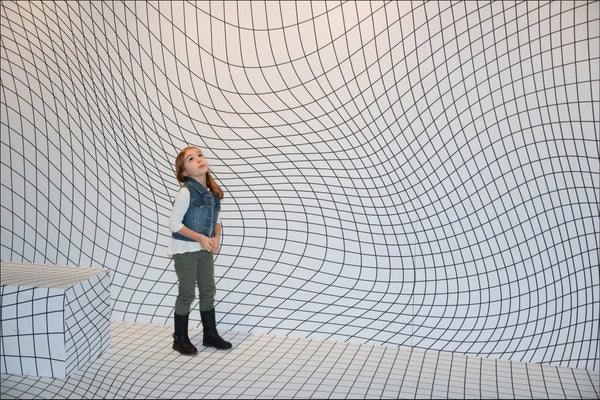
The exhibit goes beyond basic sensation and perception to explore the integration of your perceptual systems. In the Balance room, your visual and vestibular systems—one sees light and one detects the direction of gravity as downwards—compete for dominance. The walls of the room are painted in wavy curves, but the Earth’s gravity remains exactly the way it should: your brain has a hard time reconciling the two inputs because your visual system is used to walls being straight up-and-down affairs. It’s a positively barfalicious and thrilling epiphany to realize that your vision--even illusory vision--contributes so strongly to your balance in the gravity well of our planet. Further still, the exhibit explores and explains other aspects of perception that are traditionally not discussed as sensory percepts; though they should be. For example, your eye movements and attention are revealed as critical to your experience of basic visibility, and unified chocolatey odors are revealed as being made up of a miasma of distinct components typically available only to perfumers and wine connoisseurs. And then there are the illusions themselves. The Senses exhibit provides both novel illusory adventures as well as some of the finest demonstrations to date of classical illusions.
A main highlight of the exhibit is the immersive contrast perception in the “Color” room. The room’s walls display a myriad of superimposed images when the lighting is white (leftmost multicolored image below). . But as the lights cycle in wavelength to blue, green, and red, the images separate from each other and become distinct and non-superimposed animal shapes—revealing how vision relies on differences in reflectance between the surface on an object versus the background, as a function of the contrast created by the color of the light source. A remarkably powerful demonstration of a complex visual process!
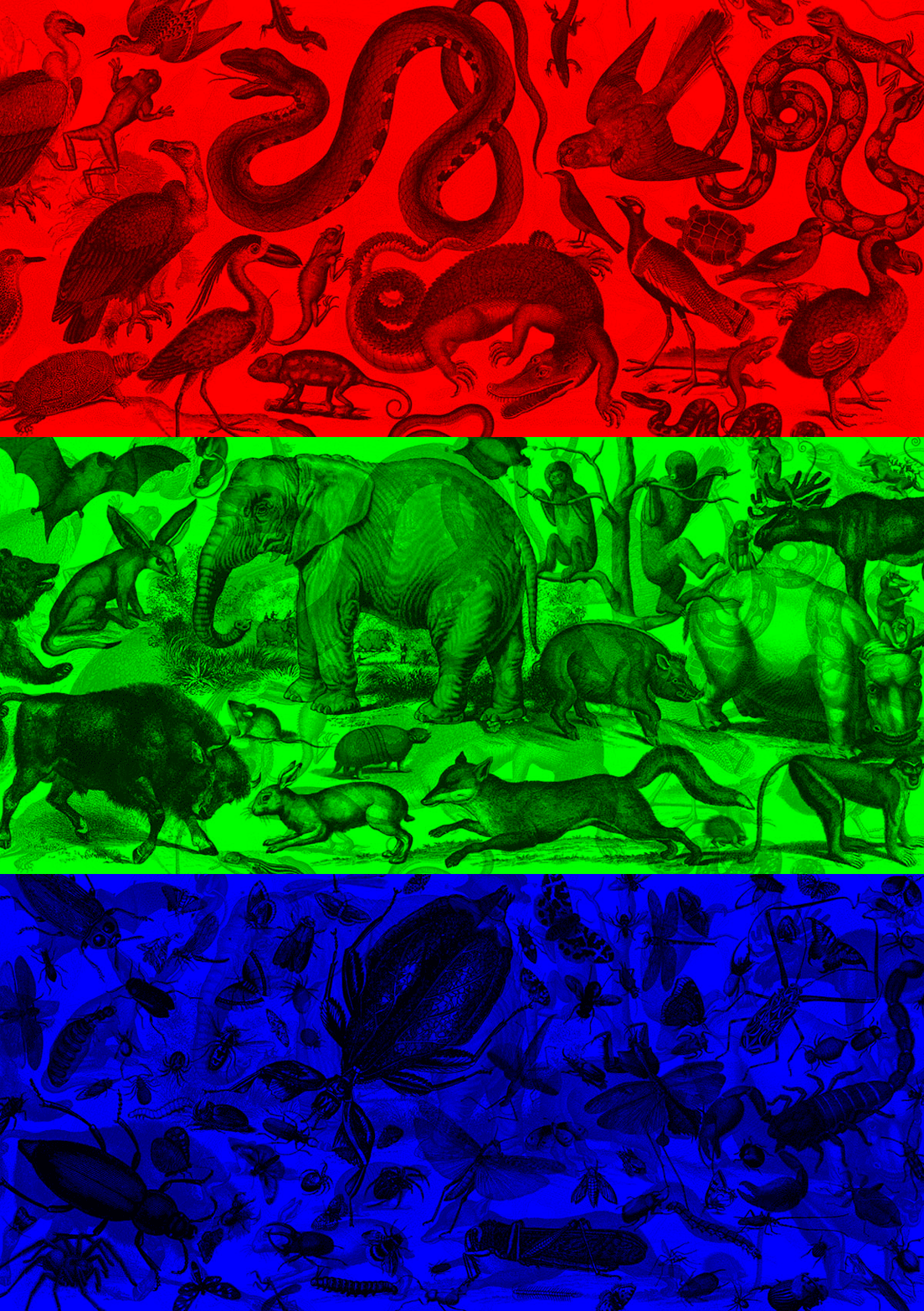

©Animalia n.1 by Carnovsky, 2010

Credit: Champions of Illusion Book