
This article was published in Scientific American’s former blog network and reflects the views of the author, not necessarily those of Scientific American
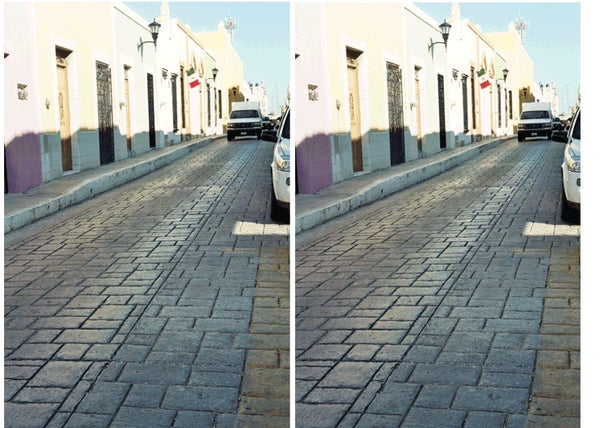
The latest illusion to go viral in social media depicts two side-by-side stretches of a narrow road, receding in the distance. Both images depict the retreating road at an oblique angle, but the right road’s slant is a lot more pronounced than the slant on the left road.

These are two identical photos of a road in Mexico. Credit: Daniel Picon
Or is it?
On supporting science journalism
If you're enjoying this article, consider supporting our award-winning journalism by subscribing. By purchasing a subscription you are helping to ensure the future of impactful stories about the discoveries and ideas shaping our world today.
In fact, both pictures are identical. As user djeclipz put it, upon sharing the soon-to-become global sensation on Reddit: “This is the same photo, side by side. They are not taken at different angles. Both sides are the same, pixel for pixel.”
So why do they look so different?
The illusion, created in 2010 by the French artist Daniel Picon and entitled “Roads in Mexico,” is a powerful variant of an earlier perceptual phenomenon discovered in 2007 by vision scientists Frederick Kingdom, Ali Yoonessi, and Elena Gheorghiu (all of them then at McGill University).
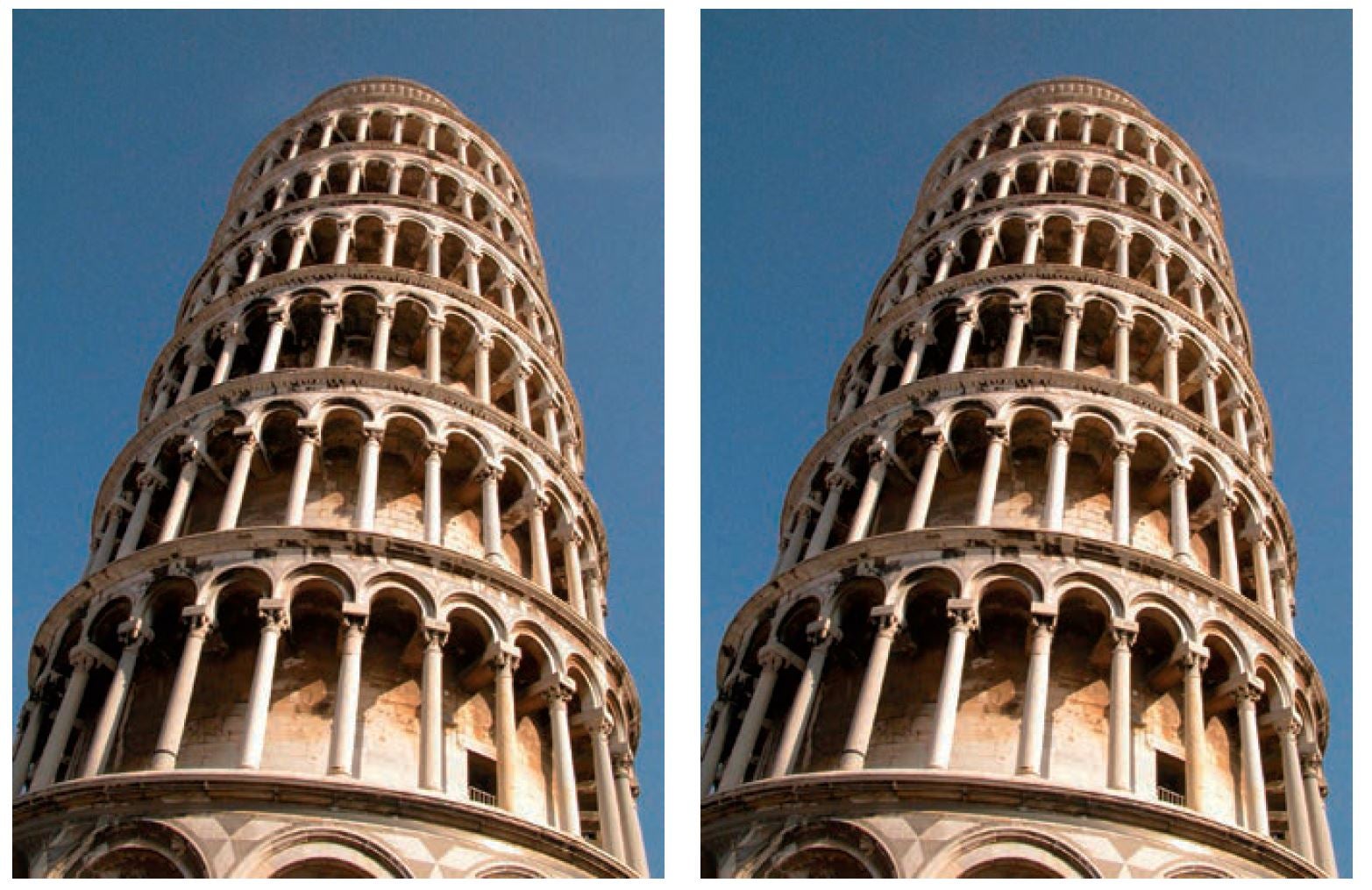
The right tower appears to lean more than the left tower, even though they are two copies of the same image. Credit: Frederick Kingdom
Kingdom and his colleagues dubbed the effect the “Leaning Tower Illusion,” because they first noticed it in a pair of identical photos of the Leaning Tower of Pisa. But, as Kingdom, Yoonesi, and Gheorghiu noted in an excellent Scholarpedia article about their discovery, “the illusion works with any image of a receding object,” including tram lines, train tracks and roads in Mexico.
The Leaning Tower Illusion won First Prize in the 2007 Best Illusion of the Year Contest, and is featured prominently in our recent book about the annual competition, Champions of Illusion. An excerpt of Champions of Illusion follows, concerning the bases of this effect:
Because the two Pisa towers pictured in the paired images do not converge as they recede, as they would if standing side by side in front of our eyes, the brain mistakenly perceives them as diverging. In contrast, when we look at a single photograph showing two actual parallel towers, such as the Petronas Twin Towers in Kuala Lumpur, we see the buildings converge in the distance as they recede, and therefore we perceive them as parallel.

The creator of “Roads in Mexico” kindly provided an additional example of the illusion for this blog post. Credit: Daniel Picon
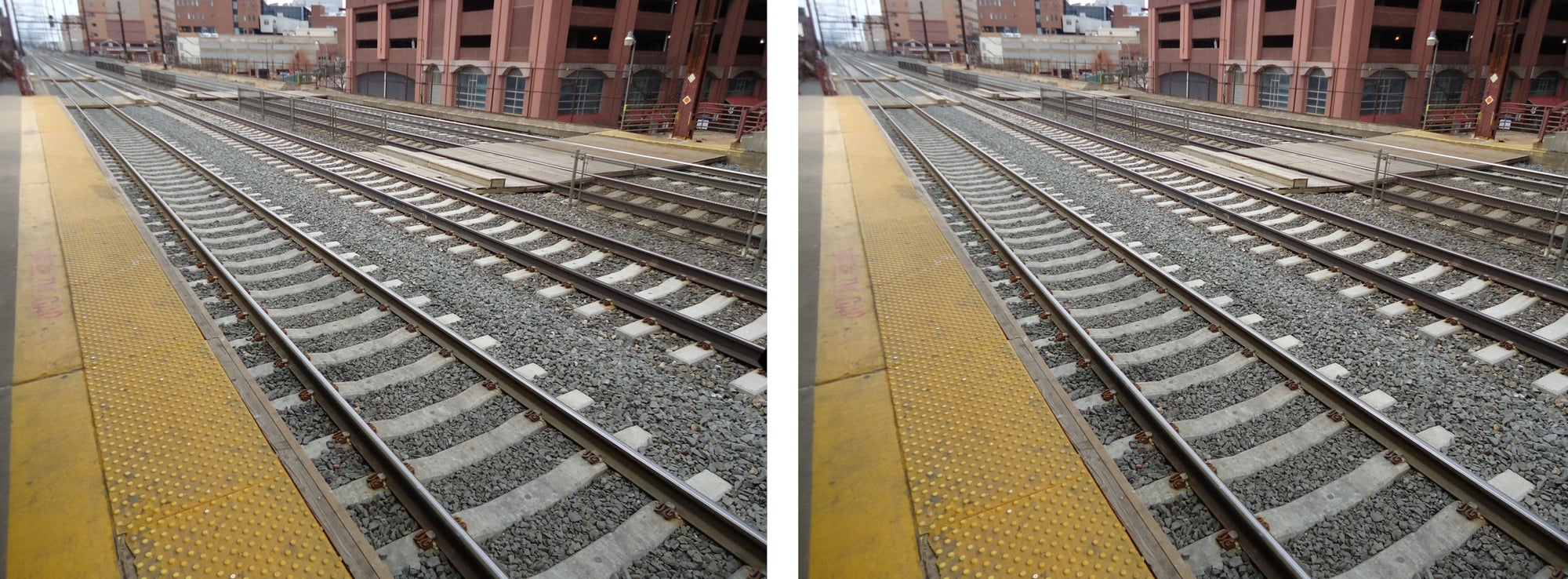
These two identical sets of train tracks appear to run at different angles. Credit: Tomwsulcer Wikimedia

Further analysis of similar images indicates that the phenomenon applies to all sorts of receding objects, not only those that recede in height. It is hard to believe, but these are actually identical images of parallel train tracks. Although the angles of the train tracks are the same in both images, the brain perceives them as being quite different.
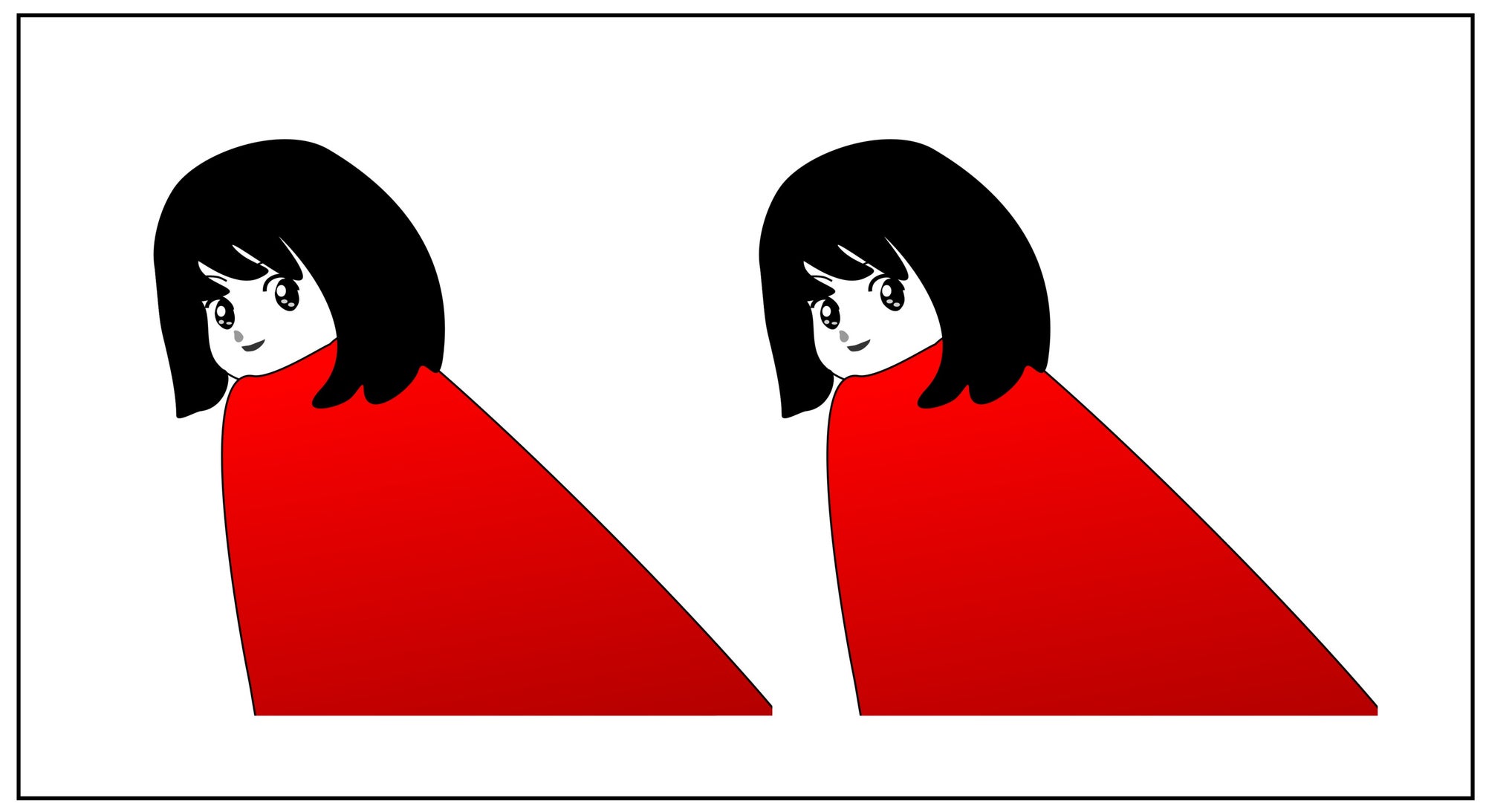
The illusion fails with two identical Manga girl cartoons. The reason is that—unlike the Pisa towers or the Mexican road—the cartoon characters are not receding objects. Credit: Akiyoshi Kitaoka
[…] The Leaning Tower Illusion does not occur when we view two leaning Japanese manga girls, even though the two cartoon images are tilted. The reason is that the cartoon girls do not appear to recede in depth, so our brain does not expect them to converge in the distance. This phenomenon demonstrates that the brain applies its depth-perception toolkit only in specific situations, depending on the object.