

This article was published in Scientific American’s former blog network and reflects the views of the author, not necessarily those of Scientific American
‘Tis the season to be thankful—but what happens in our brains when we experience gratitude?
In a study published last year in Frontiers in Psychology, Glenn R. Fox, Jonas Kaplan, Hanna Damasio and Antonio Damasio, from the University of Southern California, Los Angeles, set out to determine the neural correlates of gratitude, using functional magnetic resonance imaging (fMRI).
A substantial problem the team had to solve before imaging the brains of any experimental participants was the following: to engineer a situation that would engender feelings of gratitude in a laboratory environment.
On supporting science journalism
If you're enjoying this article, consider supporting our award-winning journalism by subscribing. By purchasing a subscription you are helping to ensure the future of impactful stories about the discoveries and ideas shaping our world today.
To accomplish this, the scientists turned to stories from Holocaust survivors, housed in the USC Shoah Foundation Institutes Visual History Archive. The archive’s +50,000 videotaped testimonies include many stories of survival due to the kindness of others. Fox and his colleagues selected a collection of stories in which the narrators’ lives were saved or helped by the provision of food, clothing, or shelter, that produced strong feelings of gratitude in the storytellers. In collaboration with students from the USC School of Cinematic Arts, the research team then produced 2-minute long documentaries of each story’s scenario.
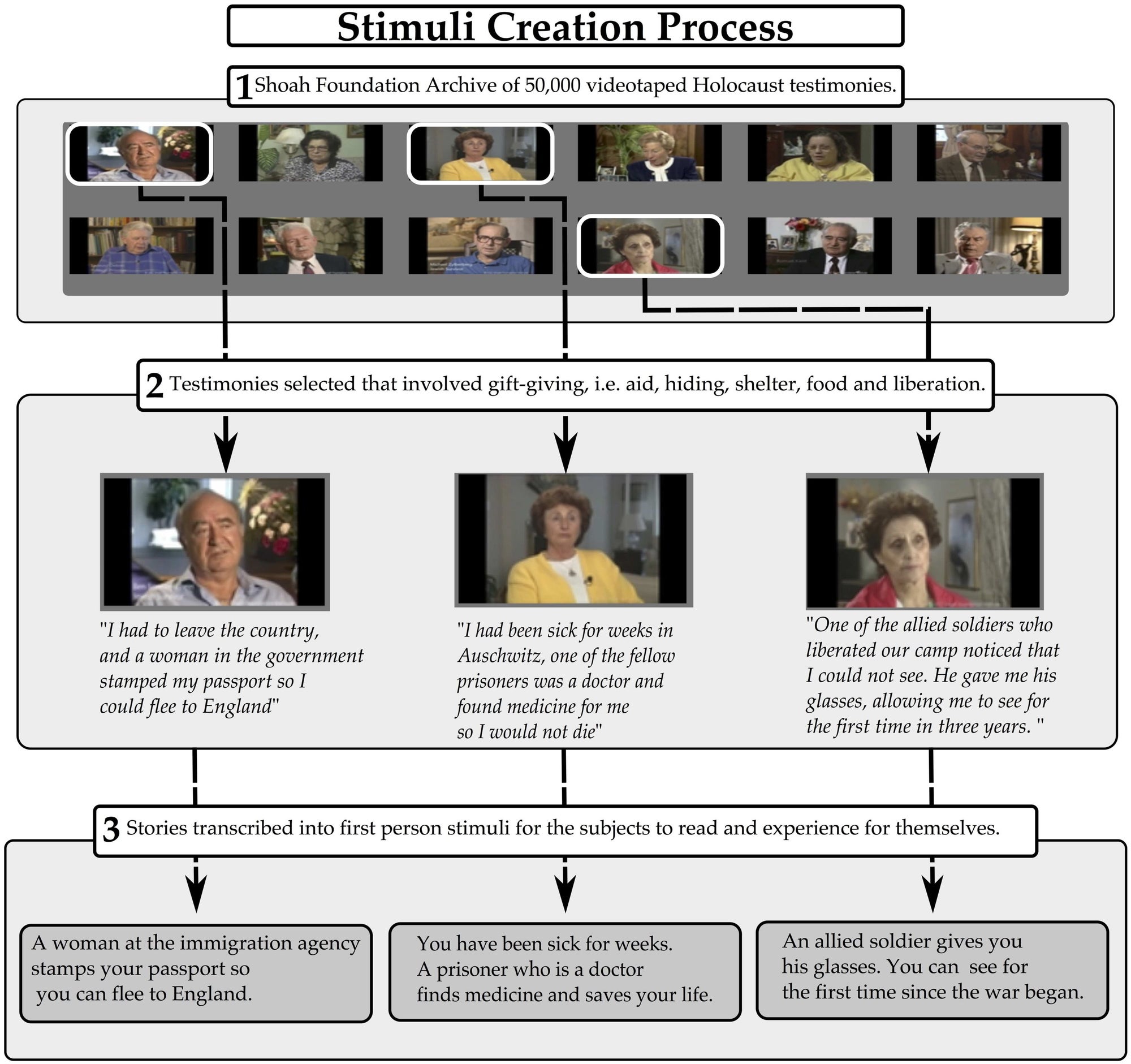
Participants in the experiment viewed the documentaries to immerse themselves in the time period, and were asked to imagine how they would feel if they were in the same situations and received the same gifts. Next, the scientists imaged the brains of the participants. First, they showed them prompts related to each of the documentaries, and then a light blue “reflection screen,” which they presented for 12 seconds. When subjects viewed the reflection screen, they were asked to feel as they themselves would in the situation described, as deeply and realistically as possible. After the reflection period, participants also rated how much gratitude they felt.
High ratings of gratitude were linked to brain activity in the anterior cingulate cortex and medial prefrontal cortex, supporting the authors’ hypothesis that the neural correlates of gratitude include regions associated with moral cognition, value judgment and theory of mind. The study, although limited by the fact that the participants did not receive the gifts themselves—but merely imagined their own reactions to the same scenarios—nevertheless offers one of the first approximations to determining the neural bases of gratitude. The findings also “serve as reminders that in the midst of tragedy there can be acts of compassion, sacrifice, and profound human dignity,” the authors conclude.
It is such acts of kindness—big and small—that will see us through the most uncertain times, and in our everyday lives. Reflecting on the ‘gifts’ of family and friendship that surround us, even for 12 seconds, could help our brains realize that we have much to be grateful for.
Happy Thanksgiving!