
This article was published in Scientific American’s former blog network and reflects the views of the author, not necessarily those of Scientific American
Image of the Week #56, August 20th, 2012:
From:Meet the Martians by David Bressan at History of Geology.
Source: Henrique Alvim Corr a
On supporting science journalism
If you're enjoying this article, consider supporting our award-winning journalism by subscribing. By purchasing a subscription you are helping to ensure the future of impactful stories about the discoveries and ideas shaping our world today.
Humanity’s curiosity about Mars has manifested in many forms, changing with the angst and hope and humor of the age. Brazilian-born artist Henrique Alvim Corr a (1876-1910), no doubt soaked up the mythological dreams and nightmares of the Symbolist period while living in Belgium at the turn of the century. Instead of the paintings of sphinxes and Salome that his contemporaries like Fernand Khnopff and Jean Delville sought as subjects, Corr a turned his artistry to H.G. Wells’ War of the Worlds.
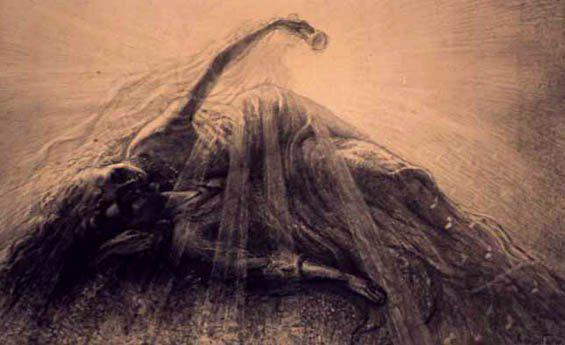
This illustration, of a young woman turned away from us in a landscape seemingly comprised of bedsheets on boulders, has the nightmarish look of many Symbolist works of art. An almost primitive, shapeless tentacled Martian feeds on the woman who looks to be laying in rapture more than pain. Symbolist themes tended toward fear of industrialization, forgotten gods, oceans and women and Corr a gave us an unhealthy dose of the fear of Mars wrapped up in the zeitgeist of his era.
Our curiosity about Mars has thankfully grown healthier than our fear. Read David Bressan’s post, Meet the Martians at History of Geology for more.