
This article was published in Scientific American’s former blog network and reflects the views of the author, not necessarily those of Scientific American
From the earliest days of movies, prehistoric creatures have served filmmakers well as both monsters and villains. Dinosaurs, pterosaurs, marine reptiles, and Ice Age mammals have all had their shot in the spotlight. But, despite the dozens of killer crocodile movies out there, the ancient relatives of today’s snappy ambush predators have been neglected. I can only speak for myself, but I think Prestosuchus would make for an excellent cinema horror.
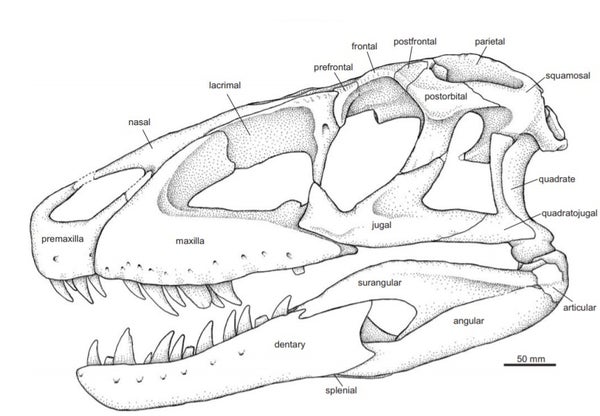
Paleontologists have known of Prestosuchus for a while. This Triassic relative of today’s crocodiles was named by Friedrich von Huene back in 1942. But this carnivore wasn’t really like any of the ambush predators lurking around rivers and swamps today. Prestosuchus was a terrestrial animal, trotting its roughly 20-foot-long self around prehistoric Brazil to snaffle up its neighbors. And thanks to an exquisite specimen described by paleontologist Bianca Martins Mastrantonio, we have a much better idea of what the fearsome skull of Prestosuchus looked like.
The skeleton wasn’t found out in the middle of a desolate desert or other remote locale. This particular Prestosuchus was found near the highway leading into Dona Francisca. And of approximately ten specimens so far, this one has the best skull.
On supporting science journalism
If you're enjoying this article, consider supporting our award-winning journalism by subscribing. By purchasing a subscription you are helping to ensure the future of impactful stories about the discoveries and ideas shaping our world today.
From a simply aesthetic point of view, the skull of this new specimen - known as UFRGS-PV-0629-T - makes Prestosuchus the spitting image of a theropod dinosaur. It’s really the subtle details, and other parts of the skeleton, that confirm that this animal is a crocodile relative (known to experts as a pseudosuchian). And, as Mastrantonio and colleagues found, the brain shape of this Prestosuchus resembles that of predatory theropods. Given that this animal was filling a niche that would later be taken over by sharp-toothed dinosaurs, that makes sense.
But what really stands out about the new skull is that it offers a solution to a mystery paleontologists have been puzzling over. The skull of Prestosuchus is full of anatomical windows - called fenestrae - and previously-discovered specimens showed a slit between two major bones of the upper jaw. What this new skull shows, Mastrantonio and coauthors propose, is that this hole isn’t really a fixed point in the skull. Instead the opening actually represents the ability of those two skull bones - the premaxilla and maxilla - to move. This is an osteological ability called cranial kinesis, and it explains why the opening seems to vary in position and shape in different Prestosuchus specimens.
The question is why Prestosuchus and some of its relatives had this flexibility. Was it left over from their ancestors? Did it have something to do with the way their animals captured, killed, or fed on other animals? How did this structure influence the day to day life of the animal? These questions have yet to be answered, but, thanks to the beautiful new specimen, paleontologists can better dig into some of these queries.