
This article was published in Scientific American’s former blog network and reflects the views of the author, not necessarily those of Scientific American
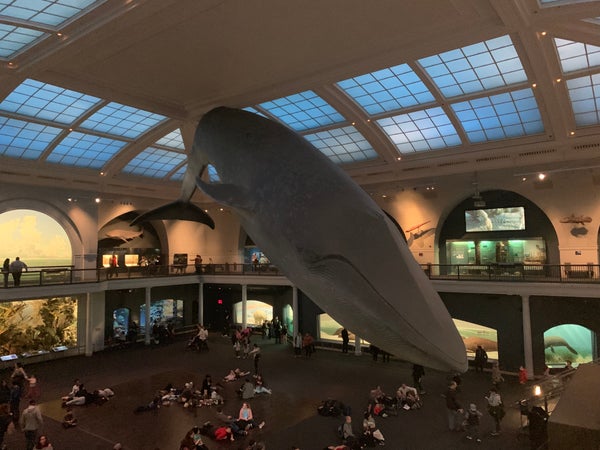
There’s never been an animal as large as the blue whale. While we can certainly quibble that some sauropod dinosaurs were longer, and that life in the water allows whales to get away with body masses that would cause collapse on land, if we’re crunching the numbers there really isn’t a contest. The blue whale can reach over 100 feet long and weigh about 100 tons, and there’s never been a more massive animal on Earth.
But might whales evolve to be larger still?
Up until recently, it seemed that our current surfeit of suspension-feeding giants – not just the blue whale, but others like the fin and sei whales – was a recent development. The biggest modern whales seemed to be far larger than their prehistoric counterparts, hinting that baleen whales have been ballooning (despite the fact that the marks of modern human whaling still marks the world’s oceans). But a paper published earlier this year documented a 1.5 million-year-old blue whale that stretched about 85 feet in life, hinting that the cetacean size boom has deep roots. And, coming at the question from another direction, marine biologist Jeremy Goldbogen and colleagues have outlined what might keep whales from getting larger. Namely, how much food they can sift from the seas.
On supporting science journalism
If you're enjoying this article, consider supporting our award-winning journalism by subscribing. By purchasing a subscription you are helping to ensure the future of impactful stories about the discoveries and ideas shaping our world today.
There are definite upsides to being big. It’s often easier to travel long distances, for example, and big animals can subsist on large amounts of low-quality food instead of having to search out the most energy-efficient morsels. Not to mention that baleen whales have enormous, specialized mouths that allow them to sift huge quantities of food from the sea. While available food may be found only in patches, and may require long migrations to reach feeding grounds, baleen whales are so huge because they can consume truly enormous quantities of food by focusing on dense patches of small organisms instead of trying to catch larger prey one by one.
What Goldbogen and colleagues found by calculating the foraging efficiency of whales – in short, how much return they got for their energetic investments seeking and capturing prey – is that the upper limits of cetacean size may rely on food availability. So far as biologists are aware, whales haven’t hit any kind of biomechanical or physical upper boundary. It’s not as if they’re so big their nerves can’t conduct messages or their bones simply can’t support their frames. Instead, it seems that the main factor keeping big whales from becoming bigger is how much food there is to eat. If the seas suddenly boasted even more krill, copepods, and other baleen whale snacks, the biggest baleen whales might be able to achieve even bigger sizes. It comes down to physiological math, with organisms on the bottom of the food web setting the limits for those near the top.