3 Cosmic Images from 2017: No. 1

One year, so much science. Here's the first of three spectacular, but less widely seen, images from the near and far universe

Join Our Community of Science Lovers!

This article was published in Scientific American’s former blog network and reflects the views of the author, not necessarily those of Scientific American


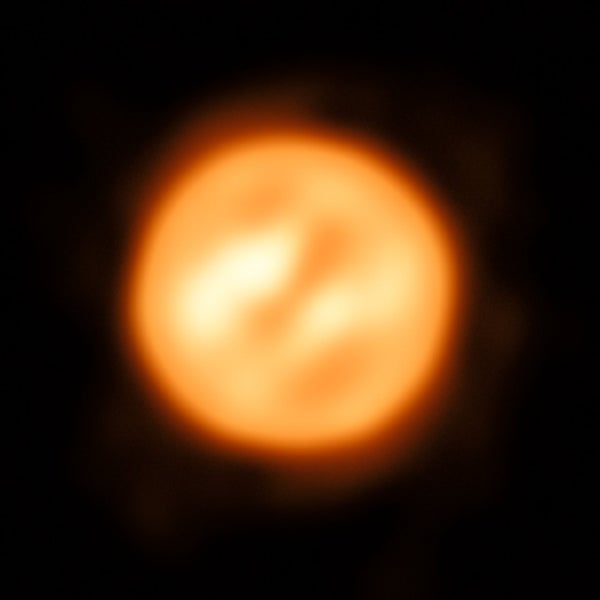
Stars are points of light, right? Not if you have a big enough telescope and some serious technology on hand. The limited resolving power of astronomical instruments usually means that we don't get to see any details on objects like distant stars. But just like our sun, these stellar furnaces can have complex and variable structures visible in their outer layers.

ESO’s Very Large Telescope Interferometer has been able to construct the best image yet of another star - Antares, a red supergiant about 12 times the mass of the Sun, 680 time the solar radius, and about 550 light years away. By combining light from multiple telescopes the effective diameter of the instrument was boosted to about 200 meters, drastically improving the image resolution.


On supporting science journalism

If you're enjoying this article, consider supporting our award-winning journalism by subscribing. By purchasing a subscription you are helping to ensure the future of impactful stories about the discoveries and ideas shaping our world today.


And this inspired the following artist's impression of what Antares might look like if you were up very close and personal.


It’s Time to Stand Up for Science

If you enjoyed this article, I’d like to ask for your support. Scientific American has served as an advocate for science and industry for 180 years, and right now may be the most critical moment in that two-century history.

I’ve been a Scientific American subscriber since I was 12 years old, and it helped shape the way I look at the world. SciAm always educates and delights me, and inspires a sense of awe for our vast, beautiful universe. I hope it does that for you, too.

If you subscribe to Scientific American, you help ensure that our coverage is centered on meaningful research and discovery; that we have the resources to report on the decisions that threaten labs across the U.S.; and that we support both budding and working scientists at a time when the value of science itself too often goes unrecognized.

In return, you get essential news, captivating podcasts, brilliant infographics, can't-miss newsletters, must-watch videos, challenging games, and the science world's best writing and reporting. You can even gift someone a subscription.

There has never been a more important time for us to stand up and show why science matters. I hope you’ll support us in that mission.

Thank you,

David M. Ewalt, Editor in Chief, Scientific American

Subscribe