This article was published in Scientific American’s former blog network and reflects the views of the author, not necessarily those of Scientific American
Since 2006 NASA's Mar Reconnaissance Orbiter (MRO) has been sending a steady flood of imagery back to Earth, mapping and tracking the martian surface in stunning detail. Its HiRISE camera consists of a 0.5 meter diameter reflecting telescope and sensors that can return images of up to 800 megapixels.
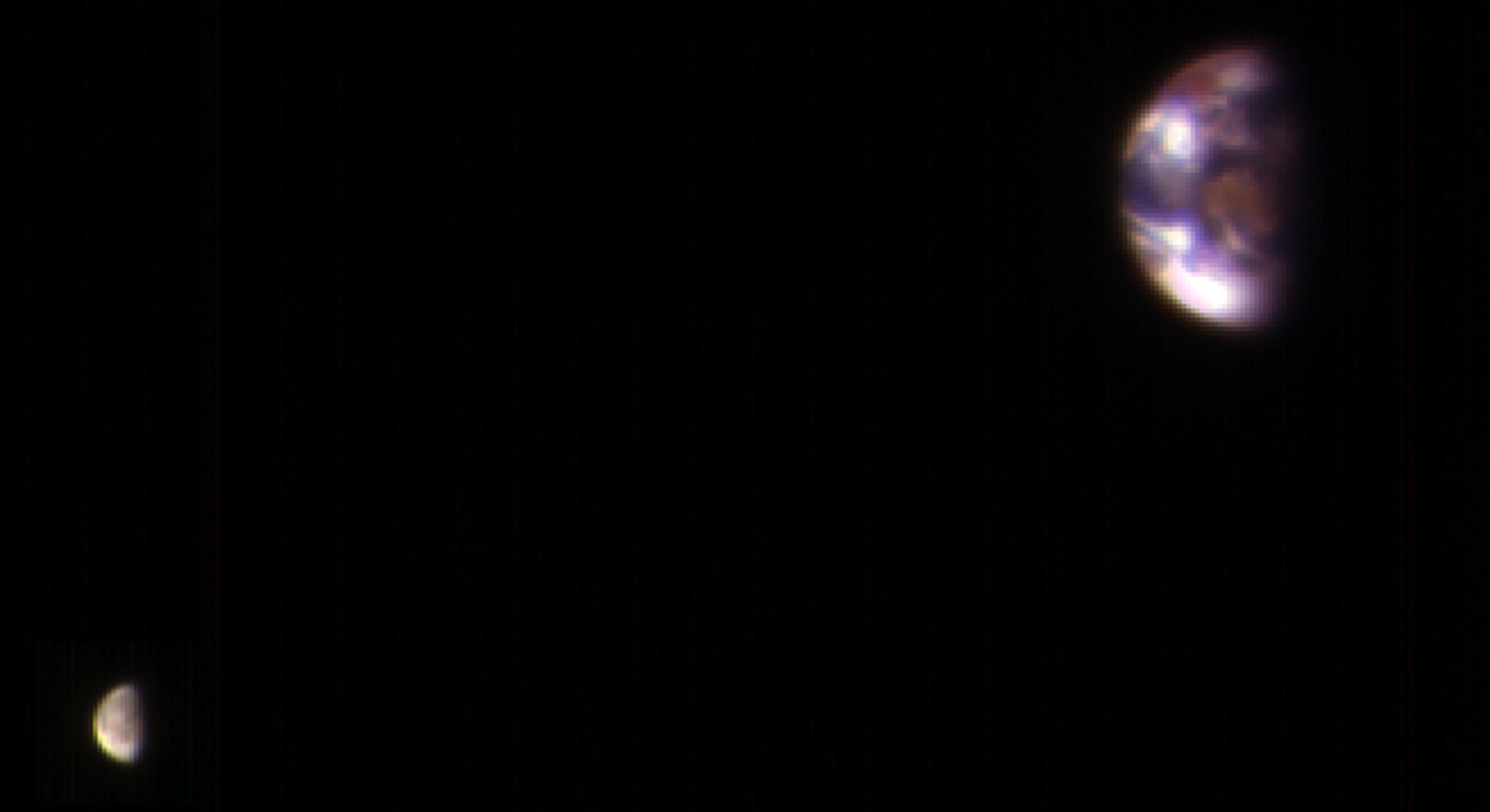
But sometimes you just need to pause and re-calibrate, since over time the efficiency of the camera's doped-silicon detectors can shift, and brightness and color sensitivities change. And what better calibrator in space than the well-known reflectivity of the Earth's Moon?
This HiRISE image, a combination of three color-bands, shows the Earth and Moon in serene repose, from a distance of 205 million kilometers as MRO orbited another world. You can just make out the whiteness of Antarctica and the continent of Australia....from Mars.
On supporting science journalism
If you're enjoying this article, consider supporting our award-winning journalism by subscribing. By purchasing a subscription you are helping to ensure the future of impactful stories about the discoveries and ideas shaping our world today.
(Although strictly speaking the data was obtained in 2016, it got released properly in January 2017.)