3 Cosmic Images from 2017: No. 3

One year, so much science. Here's the third of three spectacular, but less widely seen images from the near and far universe

Join Our Community of Science Lovers!

This article was published in Scientific American’s former blog network and reflects the views of the author, not necessarily those of Scientific American


It may have existed for more than 4 centuries, it's been studied in detail for over 180 years, and it never fails to elicit a sense of awe.

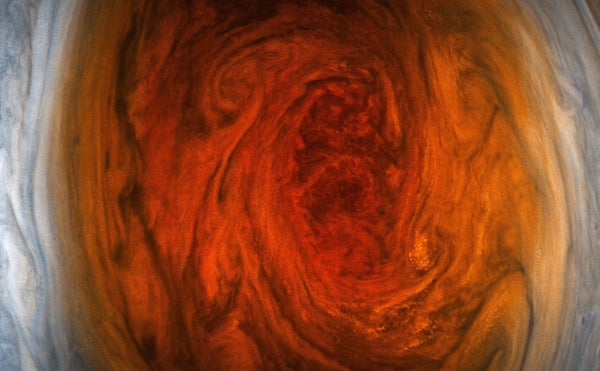
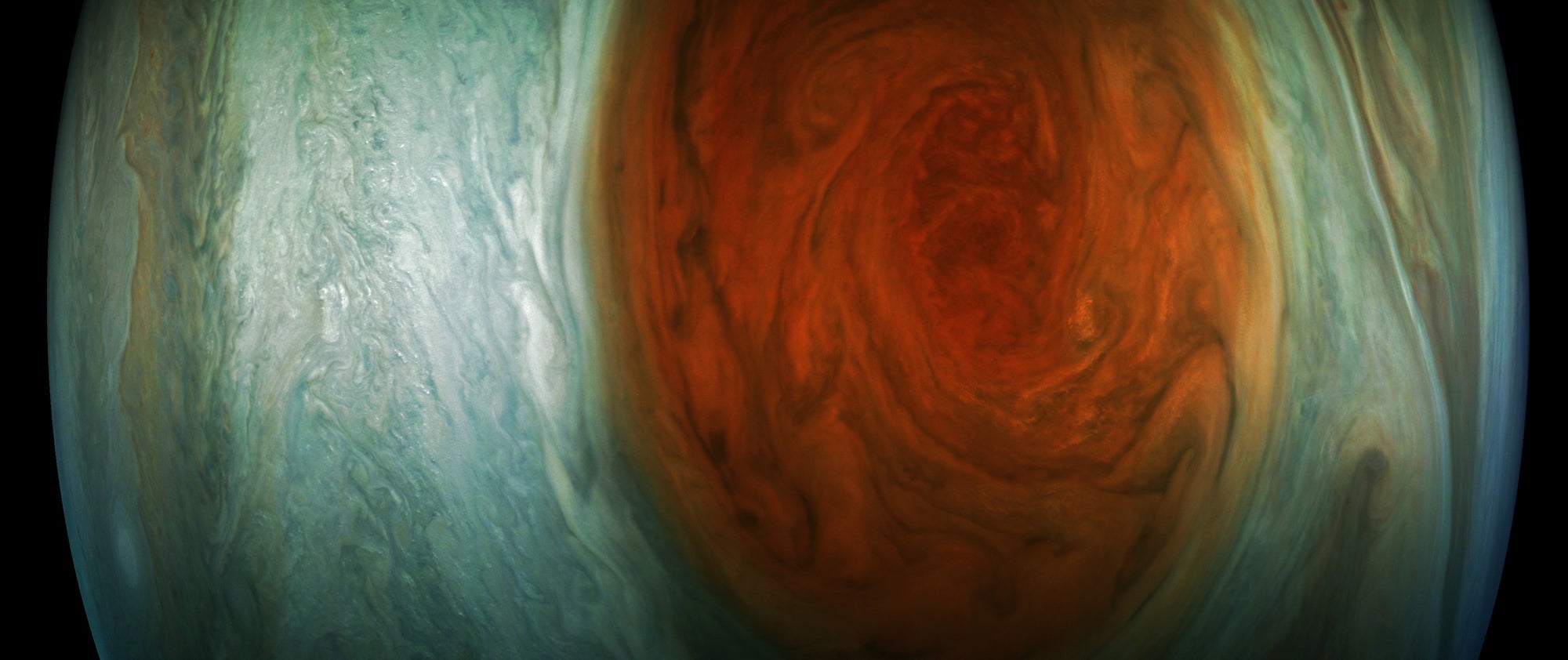
Jupiter's Great Red Spot is a vast, rotating zone of high pressure - a little over 16,000 kilometers wide today, it could handily encompass the entire Earth, with room to spare. We've seen it up pretty close (by cosmic standards) before, with the Galileo mission, and can watch it in good detail even from the Earth.

But NASA's Juno mission has got us closer than ever, delivering this stunning image from a mere 9,000 kilometers above the spot's raised cloud tops. 


On supporting science journalism

If you're enjoying this article, consider supporting our award-winning journalism by subscribing. By purchasing a subscription you are helping to ensure the future of impactful stories about the discoveries and ideas shaping our world today.


As with most of Juno's imagery, the data is made available for anyone to examine and to apply the tools of image enhancement to. Colors are exaggerated, contrasts are tweaked to reveal new features. But what a statement about where our species has got to - a place where, should we choose, our entertainment is to be found in artistic reinterpretation of data from an alien, gas giant world that is hundreds of millions of kilometers away.
 

It’s Time to Stand Up for Science

If you enjoyed this article, I’d like to ask for your support. Scientific American has served as an advocate for science and industry for 180 years, and right now may be the most critical moment in that two-century history.

I’ve been a Scientific American subscriber since I was 12 years old, and it helped shape the way I look at the world. SciAm always educates and delights me, and inspires a sense of awe for our vast, beautiful universe. I hope it does that for you, too.

If you subscribe to Scientific American, you help ensure that our coverage is centered on meaningful research and discovery; that we have the resources to report on the decisions that threaten labs across the U.S.; and that we support both budding and working scientists at a time when the value of science itself too often goes unrecognized.

In return, you get essential news, captivating podcasts, brilliant infographics, can't-miss newsletters, must-watch videos, challenging games, and the science world's best writing and reporting. You can even gift someone a subscription.

There has never been a more important time for us to stand up and show why science matters. I hope you’ll support us in that mission.

Thank you,

David M. Ewalt, Editor in Chief, Scientific American

Subscribe