
This article was published in Scientific American’s former blog network and reflects the views of the author, not necessarily those of Scientific American
In 2020, if all goes to plan, NASA will launch a new rover to Mars. In 2021 the mission should enter the martian atmosphere and deploy a very similar set of techniques to the Mars Science Laboratory for getting the robotic explorer onto the surface.
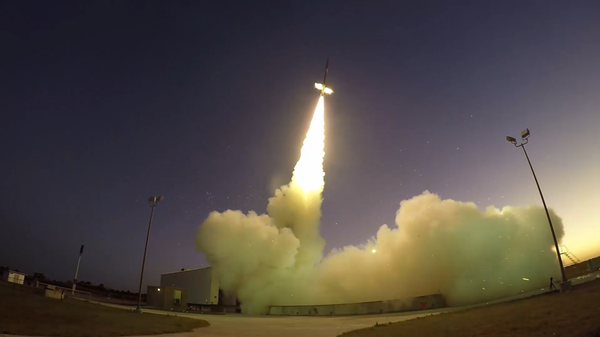
Part of that process involves a supersonic parachute. But testing this isn't so simple. The following, rather wonderful video is a show-and-tell of a recent run-through using a sub-orbital rocket launch (a Black-Brant IX) from Wallops Island in Virginia, USA. The rocket took its payload up to about 32 miles, and then as the experiment plummeted back, at around 26 miles - in the thin stratosphere - it deployed a parachute design used for the Curiosity rover and planned for Mars 2020.
At this altitude the Earth's atmospheric pressure and density are comparable to the surface conditions on Mars.
On supporting science journalism
If you're enjoying this article, consider supporting our award-winning journalism by subscribing. By purchasing a subscription you are helping to ensure the future of impactful stories about the discoveries and ideas shaping our world today.
The chute pops out about Mach 1.8, and if you keep watching (at about 1:20) you'll be treated to a super-slow-motion version of that deployment, showing the somewhat surreal, animal-like, unfurling - great for the engineers to make sure everything worked perfectly.
Credit: Video; NASA, JPL, Wallops