
This article was published in Scientific American’s former blog network and reflects the views of the author, not necessarily those of Scientific American
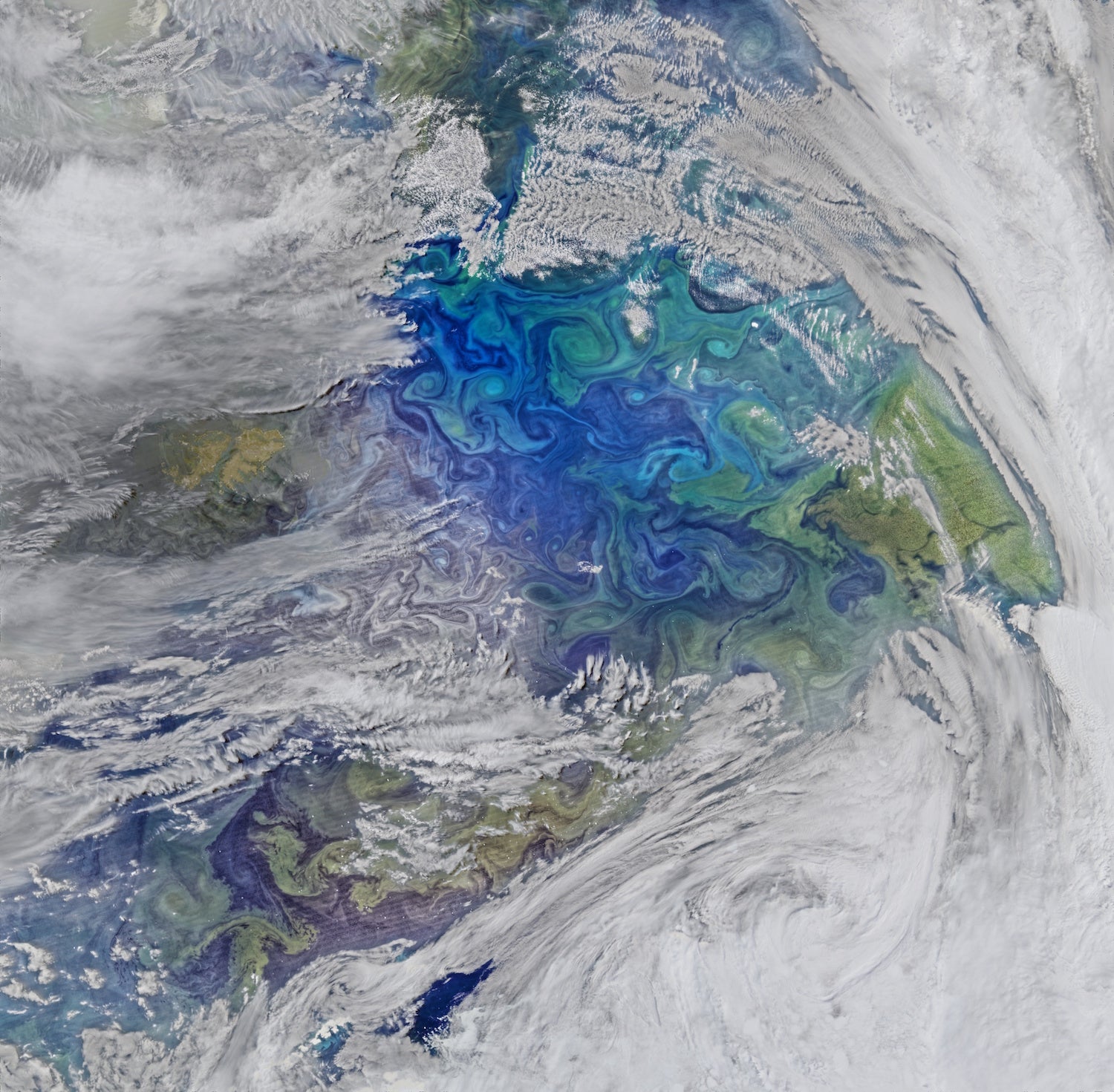
Credit: NASA/Ocean Biology Processing Group, NASA Goddard Space Flight Center
In the 1972 movie 'Solaris' by Andrei Tarkovsky (based on the novel by Stanisław Lem) there are a number of sequences where we're shown the swirling oceans of the namesake alien planet. These shots are highly suggestive (as the plot demands) of something living, something aware. Every time I've watched these scenes in the movie I've felt a few shivers go down my spine.
On supporting science journalism
If you're enjoying this article, consider supporting our award-winning journalism by subscribing. By purchasing a subscription you are helping to ensure the future of impactful stories about the discoveries and ideas shaping our world today.
When I came across the above image I immediately had the same reaction. Except this is no fantasy alien planet, it's the southern Atlantic ocean between the Falkland Islands and South Gerorgia Island, photographed through a set of visible light and near infrared sensors. The data was taken by the Visible Infrared Imaging Radiometer Suite (VIIRS) instrument aboard NASA-NOAA's Suomi NPP satellite just a few weeks ago in November 2015.
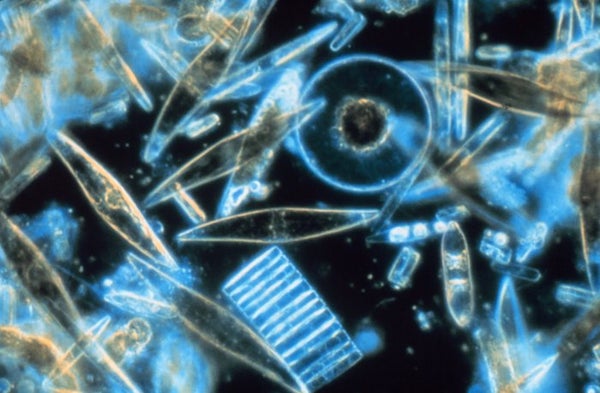
The remarkable green swirls and plumes are southern springtime blooms of phytoplankton. Thousands of species of microscopic marine organisms utilize chlorophyll and other accessory pigments, and use photosynthesis to build organic molecules. They're a key ingredient in the global carbon cycle and food chain, and their populations are highly sensitive to the nutrient content of the upper oceans.
Here's another example, this time in the Pacific to the east of northern Japan. A huge eddy caused from the meeting of a colder, saltier Arctic current and a warmer flow from the south serves to concentrate phytoplankton - producing this great spiral of pigmentation.

The Earth isn't a form of sentience like the planet Solaris, but it most certainly is a world in the grip of a potent phenomenon - life.