
This article was published in Scientific American’s former blog network and reflects the views of the author, not necessarily those of Scientific American
Since 2009 NASA's Lunar Reconnaissance Orbiter (LRO) has been scooting around the Moon once every 2 hours. Among the various onboard instruments is a cluster of imaging cameras: two narrow-angle and one wide-field, with multi-band capabilities on the narrow-angle devices, using a clever 'push-broom' approach as the spacecraft motion sweeps the sensitive sensor arrays over the surface below. Altogether these are referred to as the Lunar Reconnaissance Orbiter Camera, or LROC.
LROC offers a way to peer down on the lunar farside, and to try to catch a glimpse of the CNSA's most recent mission: Chang'e 4, that made it onto the Moon's surface on January the 3rd, 2019.
On February 1st 2019 LRO passed almost directly over the landing site at an altitude of 82 kilometers - where LROC's resolution is about 0.85 meters per pixel. Here's the full image as released:
On supporting science journalism
If you're enjoying this article, consider supporting our award-winning journalism by subscribing. By purchasing a subscription you are helping to ensure the future of impactful stories about the discoveries and ideas shaping our world today.

The larger vertically pointing arrow indicates the location of the main lander itself. The smaller arrow to the left is where the Chang'e 'Yutu-2' rover was at the time the image was made - about 29 meters from the lander.
It's a pretty amazing image, even if the lander and rover barely fill a couple of pixels. But it's not until you zoom out a little that you really begin to appreciate the context. This next image shows the square of the previous picture on the mare basalt plain (a comparatively small feature on the lunar farside). Suddenly the remoteness, and starkness of the environment becomes more apparent.
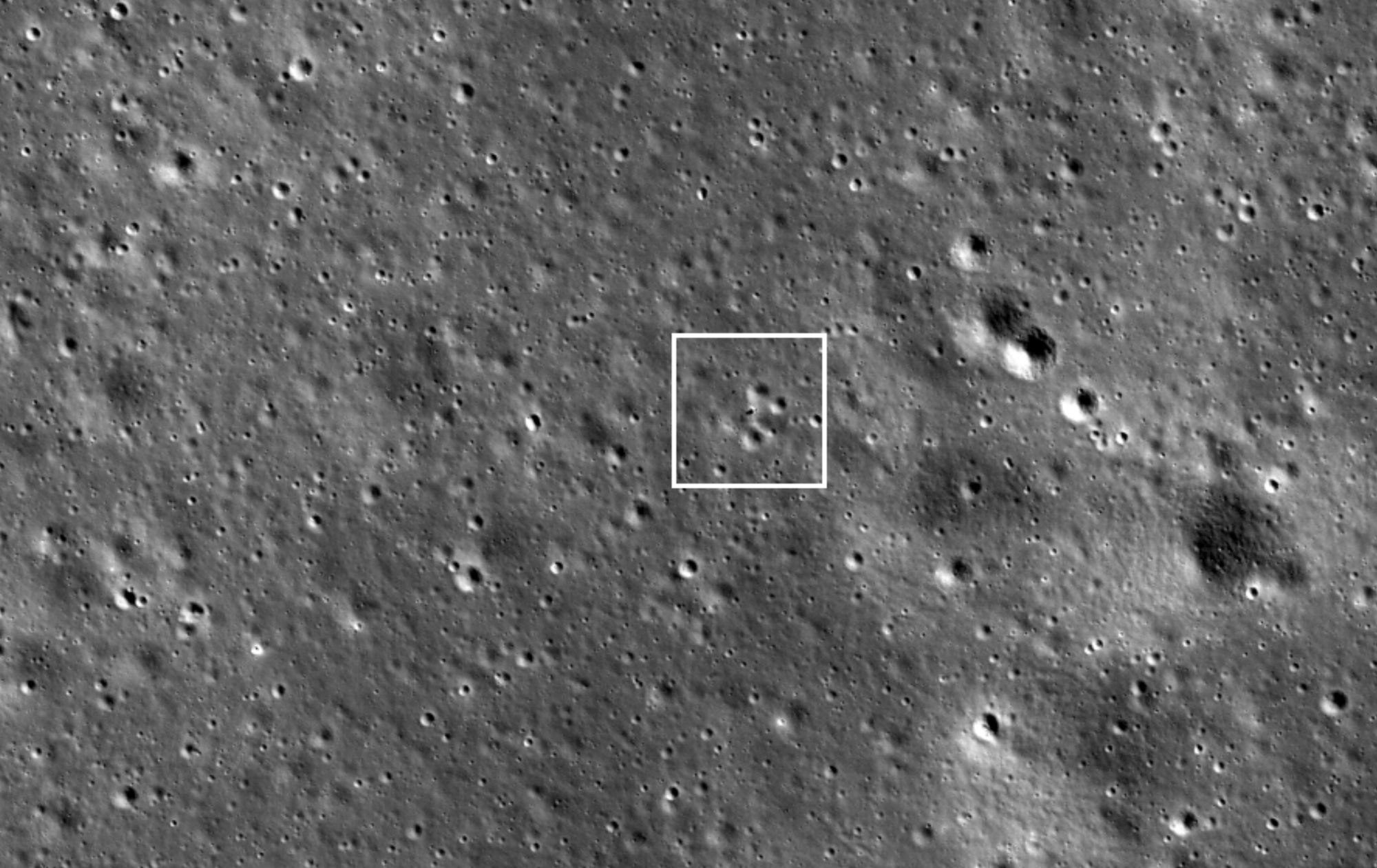
And one more zoom out for good measure (look for the square indicating the original patch in the center):
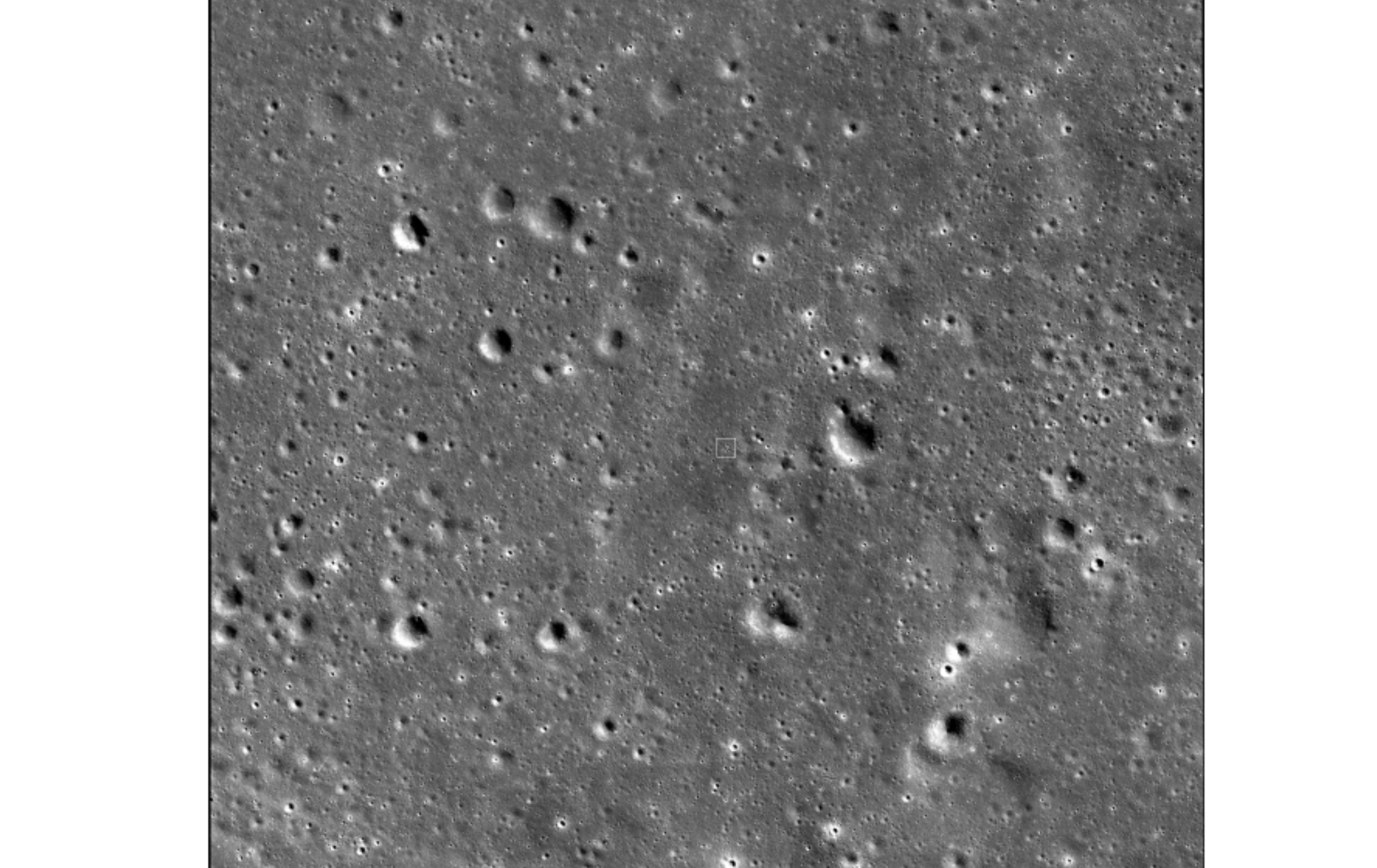
The lander and rover are miniscule specks on a very large, very remote, very alien landscape. As much as we are able to map a place like the Moon with the wonderful capabilities of LROC, and to place our robotic avatars on its surface, this is a vivid reminder of just how microscopically small our exploration footprint remains.
As this is a part of Earth's great, high wilderness - forged from common proto-planetary ancestors - it's pretty astonishing that we've not spent a lot more time here. Perhaps that will change in the future.