
This article was published in Scientific American’s former blog network and reflects the views of the author, not necessarily those of Scientific American
Data continues to beam back from New Horizons' speedy journey through the Pluto-Charon system in July 2015. By contrast to this interplanetary flythrough, the information reaches us at a painful, but necessary rate of no more than 1 kilobit a second. Included in the latest batch are precious images that are the highest physical resolution that we've ever seen of Pluto's surface, or are likely to see again for quite a while.
Here is a close up of the 'shoreline' of the rugged highlands (Krun Macula - an informal name after a lord of the Underworld and dark 'macula' on planetary surfaces) as they meet the icy plains (Sputnik Planum) of Pluto. The first image shows the overall context.
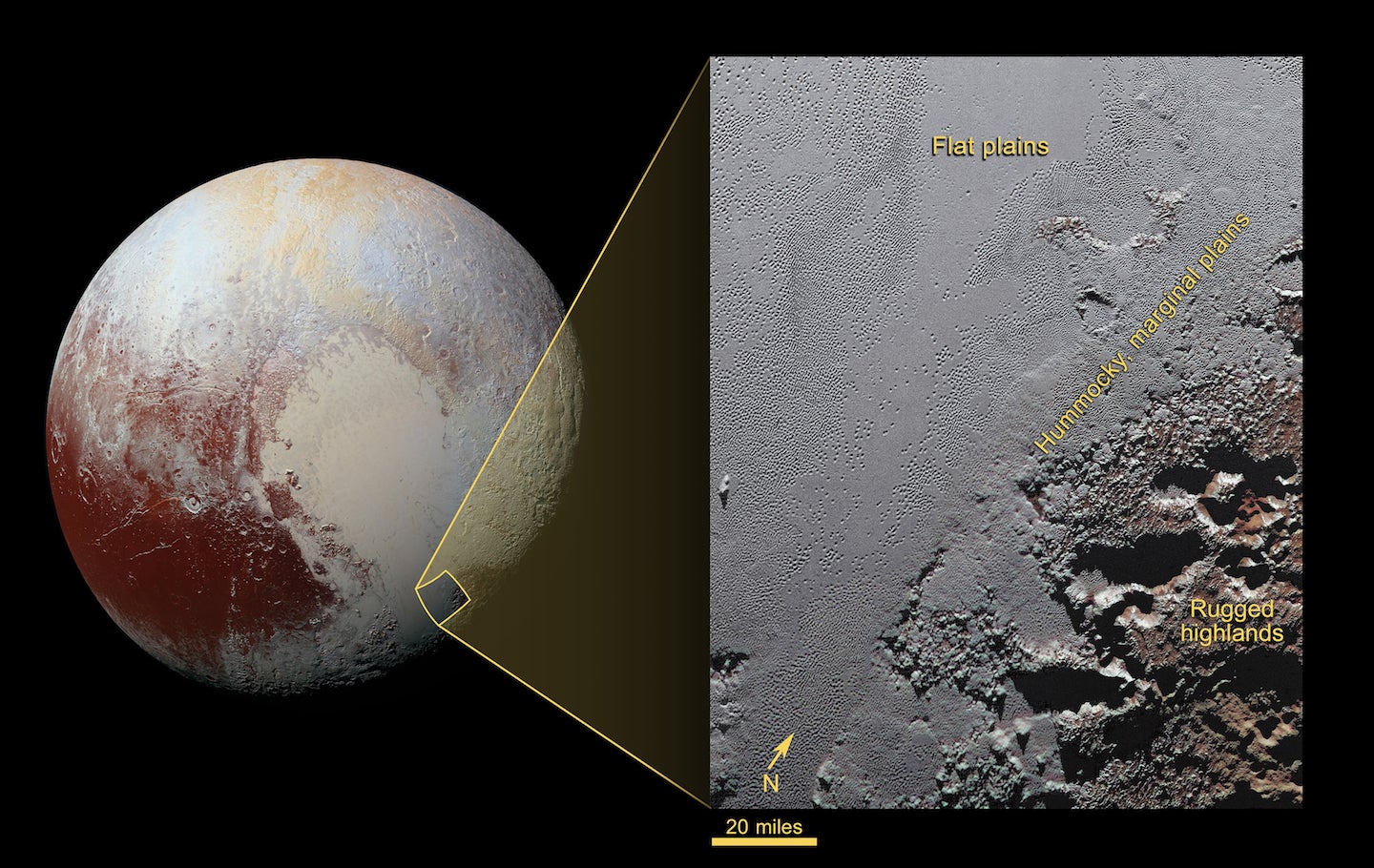
Credit: NASA/Johns Hopkins University Applied Physics Laboratory/Southwest Research Institute

On supporting science journalism
If you're enjoying this article, consider supporting our award-winning journalism by subscribing. By purchasing a subscription you are helping to ensure the future of impactful stories about the discoveries and ideas shaping our world today.
And in detail, reorientated. This combines different resolutions, but the lower half reaches 260 feet (80 meter) per pixel details - the best from New Horizons at Pluto. The deep valleys towards the bottom are up to 25 miles (40 km) long and reach 2 miles (3 km) in depth.
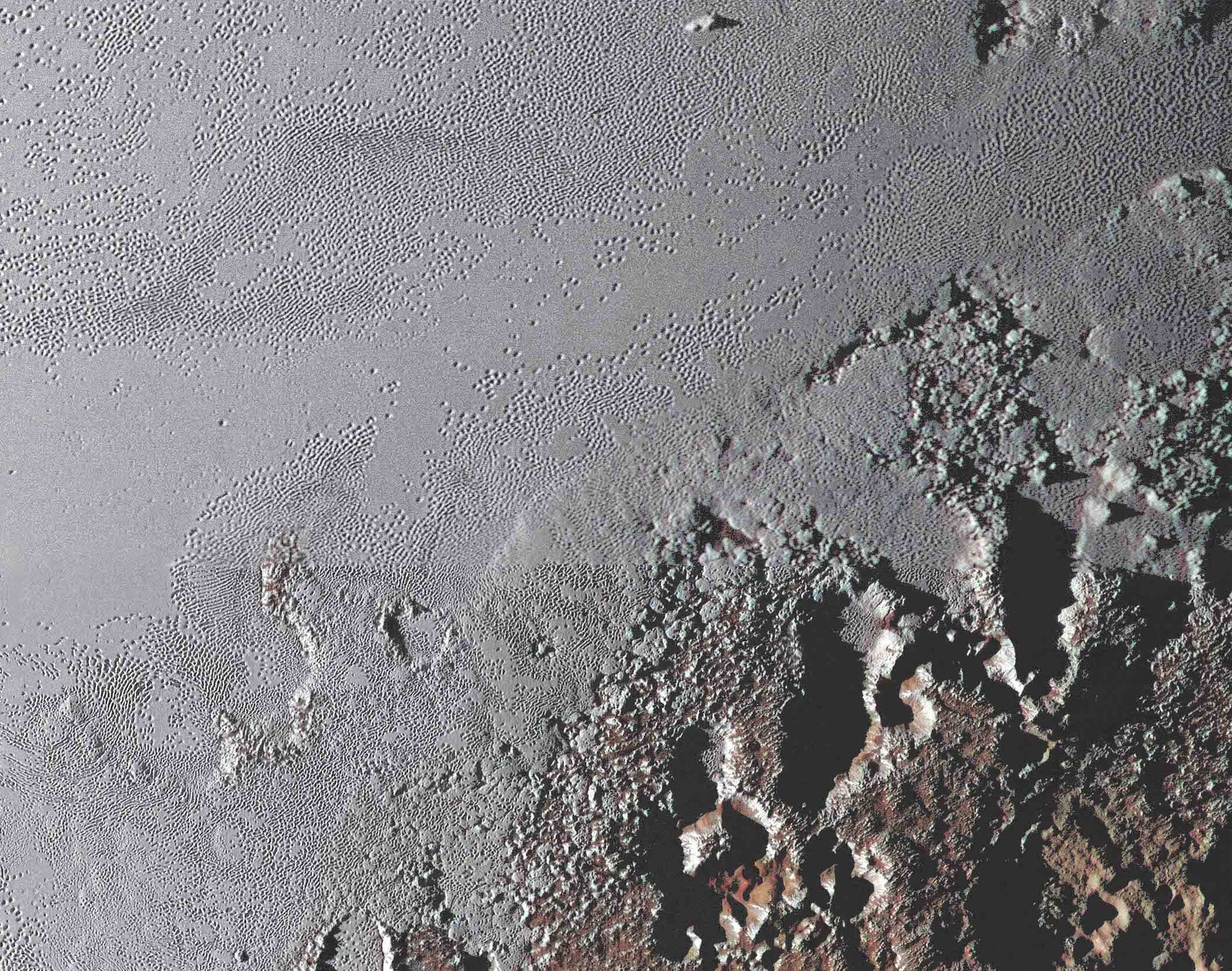
Credit: NASA/Johns Hopkins University Applied Physics Laboratory/Southwest Research Institute
And you can see all of the highest resolution images that New Horizons took, stitched together in this remarkable mosaic - from limb of the world to near the terminator and deep shadow. Here it's been animated for a journey across Pluto's frigid landscape.
Credit: NASA/Johns Hopkins University Applied Physics Lab/Southwest Research Inst.