
This article was published in Scientific American’s former blog network and reflects the views of the author, not necessarily those of Scientific American
Around seven in the evening on a calm September day in 2016 an Atlas V rocket growled its way into space from Cape Canaveral. On board was NASA's OSIRIS-Rex mission to study the carbonaceous asteroid known as "Bennu" and to bring back some 60 grams of material for study on Earth.
Some four years later, having arrived at Bennu in December 2018, the mission is now in a lengthy preparation period for that oh-so-precious grab at a tiny piece of this rubbly, seventy-million ton repository of pristine material from the earliest days of our forming solar system. A critical part of that preparation is making sure the spacecraft can be safely maneuvered down to the asteroid's surface, to a predetermined sampling zone, and be safely maneuvered away again.
On April 14th 2020 the spacecraft made a preparatory descent, dropping to about 65 meters above Bennu's surface and then retreating, all accomplished in about ten minutes. Below is a fantastic time lapse of images taken by OSIRIS-REx. The largest boulder at the point of lowest descent is about 13 meters across. Also at that point you can just see the smoother, darker patch (known as sample site Nightingale) that will be the eventual touchdown target.
On supporting science journalism
If you're enjoying this article, consider supporting our award-winning journalism by subscribing. By purchasing a subscription you are helping to ensure the future of impactful stories about the discoveries and ideas shaping our world today.
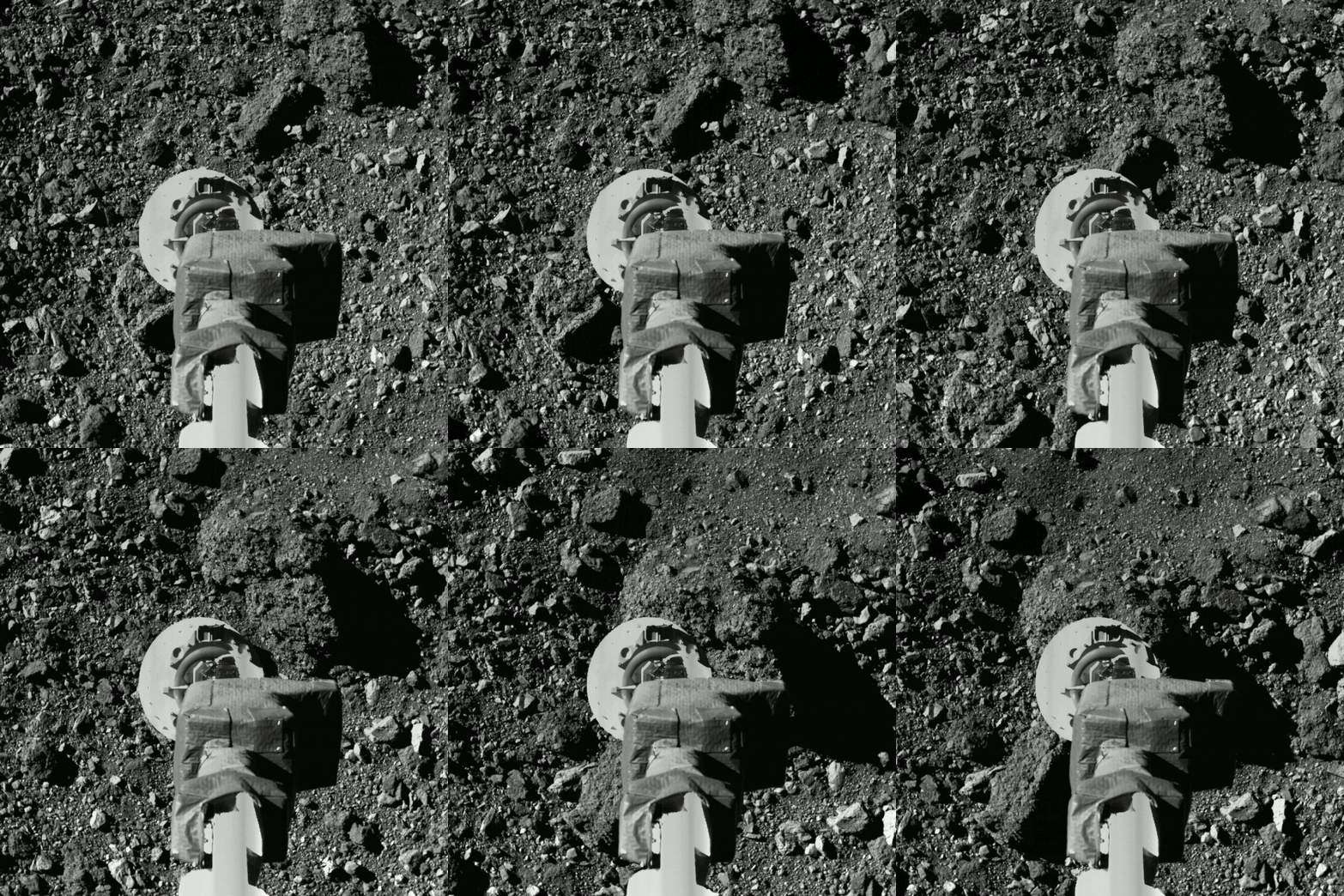
In August 2020 the plan is to descend all the way to the surface to deploy the 'Touch-and-Go' sampling arm (seen in the center of the above images). This device incorporates a system to quickly blast the surface with nitrogen gas to loft material into the sampling head to try to get chunks up to a couple of centimeters across. Meanwhile smaller dust particles will get passively gathered on pads made of finely looped stainless steel.
OSIRIS-REx can make three such attempts if necessary. Once enough of a sample has been captured it will seal it up, and - with a little luck and a lot of engineering - bring that sample back to Earth in September 2023, dropping onto a US Airforce range in Utah on the end of a parachute.
But in addition to the scientific insights to our solar system's history there is a somewhat more sobering motivation for visiting Bennu. In the rankings of asteroids that are potential hazards for the Earth - with orbits that cross our own - Bennu is number 2 in a cumulative system of assessment that includes the potential impact energy yield.
In fact the estimate is that Bennu has a 1-in-2700 chance of hitting the Earth sometime between 2175 and 2199. While that is far from panic-inducing, Bennu's rubbly nature and activity (occasionally spurting out dust and rocks, likely due to thermal changes and volatiles) mean that its orbit may experience a certain amount of random shifting over time, in addition to changes from the Yarkovsky effect. OSIRIS-REx's data will help refine our picture of Bennu's future threat, however unlikely.