
This article was published in Scientific American’s former blog network and reflects the views of the author, not necessarily those of Scientific American
The Nobel Prize in Chemistry goes to Osamu Shimomura of the Marine Biological Laboratory, Woods Hole, Mass., and Boston University; Martin Chalfie, of Columbia University, New York; and Roger Tsien, of the University of California, San Diego, La Jolla, California.
The three men all contributed to the development of green fluorescent protein (GFP), which scientists today use widely "to watch processes that were previously invisible, such as the development of nerve cells in the brain or how cancer cells spread," according to the Nobel Foundation.
Shimomura isolated the protein from a jellyfish, and discovered its bright green glow when held under ultraviolet light. Chalfie attached the protein to material in cells in Caenorhabditis elegans, a roundworm used as a model in biological research, and made the cells glow. Tsien "extended the colour palette beyond green allowing researchers to give various proteins and cells different colours," the Nobel Foundation said. "This enables scientists to follow several different biological processes at the same time."
For example, researchers studying the brain use it to watch the activities of brain cells. Others have used it to study study pregnancy, and it has even inspired new designs for light-emitting diodes (LEDs). And Christmas celebrations.
Tsien, it should be noted, was on Thomson Reuters' annual shortlist of potential winners this year.
Check back at SciAm.com for more in-depth coverage. In the meantime, read our In-Depth Report on the Nobels.
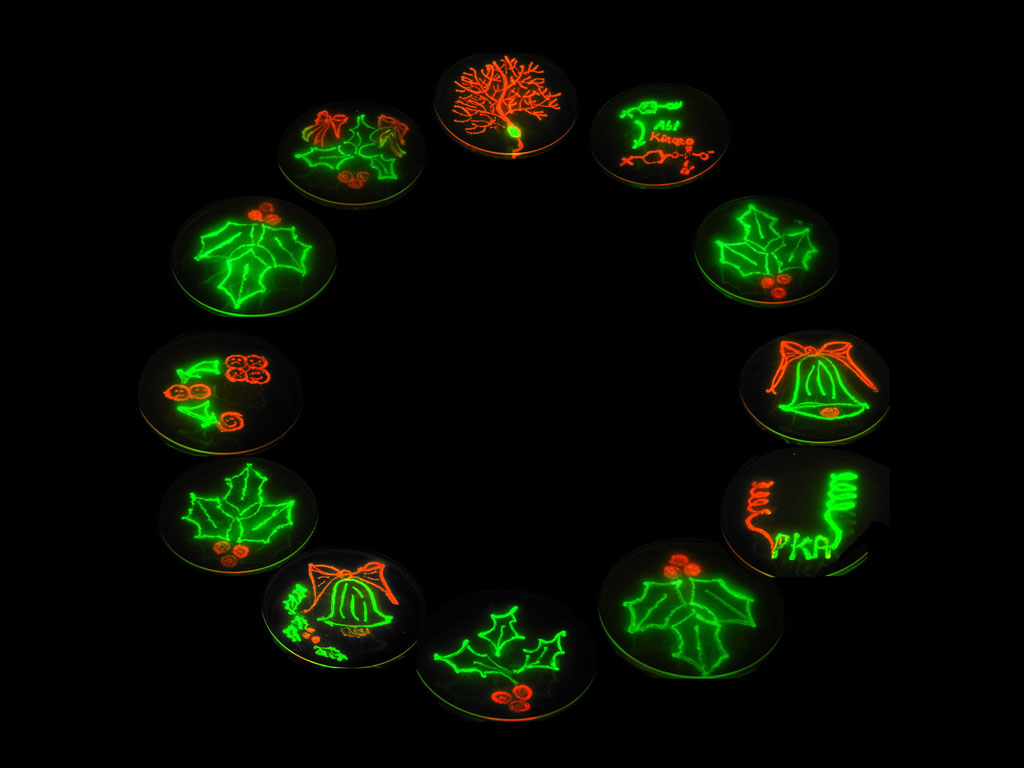
Photo by ereneta via Flickr
On supporting science journalism
If you're enjoying this article, consider supporting our award-winning journalism by subscribing. By purchasing a subscription you are helping to ensure the future of impactful stories about the discoveries and ideas shaping our world today.