
This article was published in Scientific American’s former blog network and reflects the views of the author, not necessarily those of Scientific American
On supporting science journalism
If you're enjoying this article, consider supporting our award-winning journalism by subscribing. By purchasing a subscription you are helping to ensure the future of impactful stories about the discoveries and ideas shaping our world today.
The number of emperor penguins, the elegant stars of the hit film "March of the Penguins," will shrink considerably by the end of this century if levels of Antarctic sea ice continue to fluctuate as frequently as climate experts predict, new research suggests.
There's a 40 to 80 percent chance that the population will become "quasi-extinct," or decline by 95 percent, by the year 2100, according to mathematical modeling published today in the Proceedings of the National Academy of Sciences. The results are based on predicted rises and falls in Antarctic sea ice by the International Panel on Climate Change (IPCC) and the population of emperor penguins in Terre Adelie, which—if you imagine Antarctica as a clock—is located at about 5 o'clock. While there isn’t agreement on how much sea ice levels will vacillate, most climate scientists agree that declines will become more frequent.
"If the future fluctuations in sea ice look anything like the models forecast they'll look like," Hal Caswell, a senior scientist in biology at the Woods Hole Oceanographic Institute, tells ScientificAmerican.com, "by the end of the century the population is likely to have collapsed from 3,000 breeding pairs to 400 or less."
The penguins rely on the sea ice to travel between their breeding colonies and the ocean, where their preferred meals of phytoplankton (unicellular organisms that live in marine waters) and shrimplike krill live. Reductions in sea ice may reduce the amount of available food and the security of the penguins' breeding colonies, Caswell says.
Antarctica is the only place in the wild where emperor penguins live, and their population in the northernmost part of the continent (where temps have increased most) has plummeted from 150 breeding pairs in the 1950s to just a few today, the study notes. In addition to Terre Adelie, the penguins also live near Antarctica's Ross Sea—a region that may be their "last sanctuary," because ice has increased there recently, the authors wrote.
Emperor penguins aren’t officially endangered, and the U.S. Fish and Wildlife Service (FWS) didn’t add them to the federal government's list of threatened species when it proposed amending the list last month.
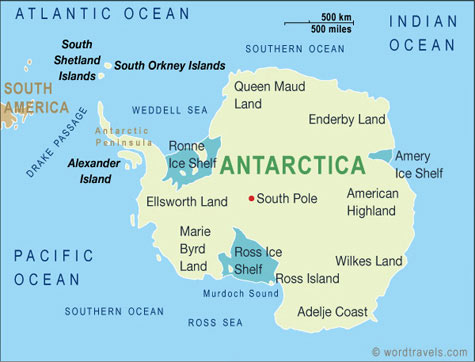
Image courtesy of Samuel Blanc, www.sblanc.com