
This article was published in Scientific American’s former blog network and reflects the views of the author, not necessarily those of Scientific American
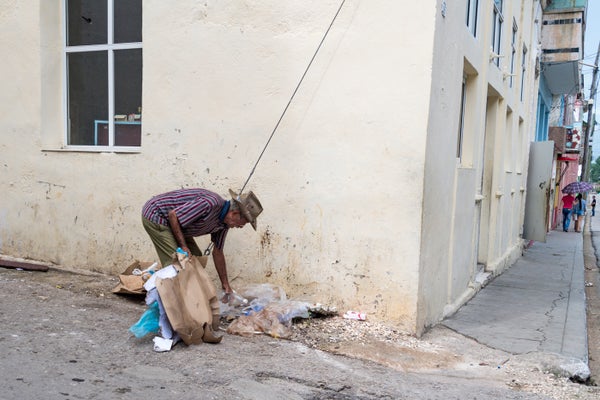
It isn’t until you spot one digging through your trash that you really notice them: Canners. Gleaners. Scrappers.The world has given many names to what are collectively known as “waste pickers.”They collect cans and bottles for deposit as well as a wide range of materials for recycling and reuse. Waste pickers are among the world’s most vulnerable and stigmatized workers. But before turning down your nose at them, consider this: They have a critical role to play in keeping waste out of the world’s oceans.
Waste meets the sea in many ways, and at every juncture, waste pickers are preventing materials from entering waterways.
Around the world, waste pickers and the systems they operate vary widely, ranging from informal pickers collecting in the streets to sophisticated cooperatives with municipal contracts.Organized or not, there are about 20 million waste pickers on the ground globally,and they are filling critical gaps, managing 50 to 100 percent of waste in many cities, where it would likely otherwise fill the sea.
On supporting science journalism
If you're enjoying this article, consider supporting our award-winning journalism by subscribing. By purchasing a subscription you are helping to ensure the future of impactful stories about the discoveries and ideas shaping our world today.
In many cities, waste ends up in waterways from public spaces or informal settlements that lack collection services, either because of streets too narrow for garbage trucks or because the locals can’t afford it. That means two billion people in low- and middle-income countriesare left to discard their waste in open spaces, nearby waterways or other makeshift solutions. Waste pickers are adept at servicing such communitiesbecause they operate smaller collection tools such as pushcarts and tend to be more affordable, helping municipalities justify the subsidization of their work.
Increasingly, waste picker organizations are also making their living preventing waste. Many cooperatives make and sell reusable items such as shopping bags from secondhand textiles,and many more collect and resell secondhand goods. Each day in Paris, waste pickers collect around 20 tons of discarded objects from waste bins to resell in flea markets throughout the city.
That’s right. This isn’t just a global south story; waste pickers are increasingly organizing for visibility in the global north as well, where they are also preventing waste from meeting the ocean.
One of the major ways that places such as the U.S., Europe and Canada contribute to marine waste is through poorly segregated recyclables shipped abroad for processing.Bottle-deposit systems, by contrast, help keep cans and bottles from ever going abroad by generating a large, citizen-sorted, relatively clean stock of materials. Bottle-return materials can be recycled without needing further sorting, making it more affordable to process them domestically than internationally.
Though we don’t know the percentage of drink containers deposited by waste pickers in the U.S., groups that manage these bottle-deposit systems acknowledge their significant contribution. In Montreal, 54 percent of the containers that waste pickers collect come from residential recycling bins. Though some people consider someone digging through their bins on trash day a nuisance, waste pickers are actually cleaning up and localizing the recycling stream.
We don’t tend to think of waste pickers in the U.S. as providing an environmental service, let alone performing an important job. Rather cities point to the small percentage who litter the ground around them to justify locked trash cans and increased legal and social barriers to picking trash.
Some waste pickers in the U.S. and Canada are beginning to gain support, though. In Vancouver, members of the Binners’ Project are hired to improve the segregation of recyclables at events and large facilities. In Portland, Ore., the regional government recently began supportingthe capacity development of a new association called Ground Score, which hires waste pickers to collect litter in hard-to-reach areas along the Willamette River.And municipalities around the U.S. are now looking to the work of New York City–based waste picker organization and deposit center Sure We Can to understand how to start something similar in their citiy.
Waste pickers can increase their contribution and circumstances if supported with training, tools and infrastructure, social protections, legal access to materials and formal contracts. And the more we research and learn about their contributions, the easier it is to justify their inclusion in formal waste-management systems.
Despite their absence from most urban-development plans, waste pickers remain some of the most effective, affordable, and necessary waste managers and recyclers on earth, protecting both land and sea. It’s time governments start working hand in hand with these green armies, who are ready to help solve our global ocean plastics disaster.