
This article was published in Scientific American’s former blog network and reflects the views of the author, not necessarily those of Scientific American
The process of medical research has been likened to searching for a needle in a haystack. With the continued acceleration of novel science and health care technologies in areas like artificial intelligence, digital therapeutics and the human microbiome we have tremendous opportunity to search the haystack in new and exciting ways. Applying these high-tech advances to today’s most pressing health issues increases our ability to address the root cause of disease, intervene earlier and change the trajectory of human health.
Global crowdsourcing forums, like the Johnson & Johnson Innovation QuickFire Challenges, can be incredibly valuable tools for searching the “haystack.” An initiative of JLABS—the no-strings-attached incubators of Johnson & Johnson Innovation—these contests spur scientific diversity through crowdsourcing, inspiring and attracting fresh thinking. They seek to stimulate the global innovation ecosystem through funding, mentorship and access to resources that can kick-start breakthrough ideas.
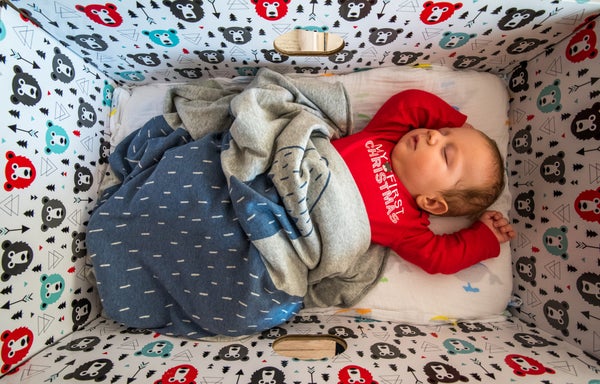
Our most recent challenge, the Next-Gen Baby Box QuickFire Challenge, focused on updating the 80-year-old “Finnish baby box,” a free, government-issued maternity supply kit for new parents containing such essentials as baby clothing, bath and sleep supplies packaged in a sleep-safe cardboard box. Since it first launched, the baby box has, together with increased use of maternal healthcare services early in pregnancy, helped to significantly reduce the Finnish infant mortality rate from 65 in every 1,000 live births in the 1930s to 2.5 per 1,000 today—one of the lowest rates in the world.
On supporting science journalism
If you're enjoying this article, consider supporting our award-winning journalism by subscribing. By purchasing a subscription you are helping to ensure the future of impactful stories about the discoveries and ideas shaping our world today.
Partnering with Finnish innovation and government groups, we set out to see if updating this popular early parenting tool with the power of personalized health technology might one day impact Finland’s unparalleled high rate of type 1 diabetes. We issued the call globally to help create “the Baby Box of the future” as part of the Janssen and Johnson & Johnson Innovation vision to create a world without disease by accelerating science and delivering novel solutions to prevent, intercept and cure disease. The contest brought together entrepreneurs, researchers and innovators to focus on ideas with the potential to promote child health, detect childhood disease earlier and facilitate healthy parenting.
Incentive challenges like this award participants who have most effectively met a predefined objective or task. It’s a concept that emerged well before our time—as far back as the 18th century—from Napoleon’s Food Preservation Prize, meant to find a way to keep troops fed during battle, to the Longitude Prize for improved marine navigation.
Research shows that prize-based challenges that attract talent across a wide range of disciplines can generate greater risk-taking and yield more dramatic solutions. They not only motivate the scientific community, but also students, journalists, the public and governments, encouraging improved awareness of some of the most challenging health risks of our time and greater appreciation for the need to accelerate progress. And now, with the rise of social networking, there is an opportunity to extend this idea of “collaborative innovation” even further.
In the Next-Gen Baby Box QuickFire Challenge, some 135 applicants from 17 countries applied, all competing for the chance to be included in “the Baby Box of the future.” The winning ideas ranged from a multi-use diagnostic diaper that can detect type 1 diabetes, to an app that acts as a personal, on-call digital midwife, to technology that can help improve babies’ quality of sleep through rhythm and relaxation. The winners’ creative ideas and blend of technology and science to maintain health early in life, represent the kind of thinking we seek and look to foster.
At the core of these innovation challenges lies the knowledge that great science happens in every corner of the globe, and we must actively seek and nurture it. Scientific ingenuity, bold thinking and dynamic collaboration will speed the haystack search, lead to unique solutions to prevent, intercept and cure disease and ultimately enable us to eliminate disease and dramatically improve the trajectory of human health for future generations.