
This article was published in Scientific American’s former blog network and reflects the views of the author, not necessarily those of Scientific American
The items below are highlights from the newsletter, “Smart, useful, science stuff about COVID-19.” To receive newsletter issues daily in your inbox, sign up here.
Tanya Lewis at Scientific American provides this update on the most widely discussed drugs and treatments for COVID-19 currently being tested for their effectiveness and safety in humans (4/15/20). Doctors already may give these treatments to patients under special authorizations issued by the U.S. Food and Drug Administration. I have seen televised interviews with hospital doctors saying they often try everything they can with COVID-19 patients in hopes that they respond — anti-viral drugs, blood plasma injections, interleukin-6 blockers, or chloroquine/hydroxychloroquine.
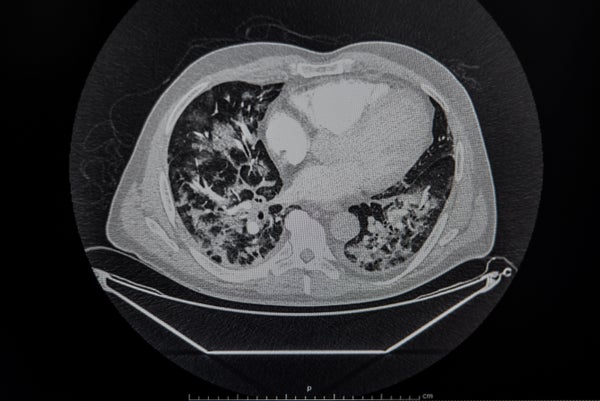
“Coronavirus destroys lungs. But doctors are finding its damage in kidneys, hearts and elsewhere,” reads the headline of a 4/15/20 story in The Washington Post. COVID-19 is thought of as primarily a respiratory disease, but health care workers also report early evidence of “heart inflammation, acute kidney disease, neurological malfunction, blood clots, intestinal damage and liver problems,” report Lenny Bernstein, Carolyn Y. Johnson, Sarah Kaplan, and Laurie McKinley. And this is not all due to “cytokine storm” reactions, the story states. “I think it’s very possible that the virus attaches to the kidney cells and attacks them,” a Yale University School of Medicine nephrologist tells The Post.
On supporting science journalism
If you're enjoying this article, consider supporting our award-winning journalism by subscribing. By purchasing a subscription you are helping to ensure the future of impactful stories about the discoveries and ideas shaping our world today.
A 4/14/20 story in The New York Times by journalist Wudan Yan discusses the ways that pre-print servers (e.g. bioRxiv and medRxiv) publishing research on the novel coronavirus are trying to inhibit the spread of misinformation among researchers, the media who report on pre-print studies, and the public. Pre-print servers publish research online that has not been scrutinized by experts for weaknesses, flaws, and authors’ potential conflicts of interests (such scrutiny is typical of research published in highly regarded or prestigious journals). The story reports that new approaches to quality control and encouraging more skepticism among pre-print readers include yellow warning banners on coronavirus papers, some level of expert review of submitted coronavirus papers, and rejection of papers proposing treatments based solely on computer modeling.
A short piece by Alex Hogan in STAT (4/14/20) explains what is known about the infectious dose, or the amount of new coronavirus necessary to make you sick. The main thing I took away from this piece: “The minimum infectious dose of SARS-CoV-2…is unknown so far, but researchers suspect it is low. ‘The virus is spread through very, very casual interpersonal contact,’” an infectious disease professor at Johns Hopkins University School of Medicine told STAT.
When U.S. university campuses and primary and secondary schools for children started closing in early March to control the outbreak, I saw some researchers tweeting concerns about how they would manage to work from home with kids present. I wanted to write a story about that. Nature magazine liked the idea and asked me to internationalize it. Here’s the result: “Six ways to juggle science and childcare at home” (4/9/20).
Here’s a list of types of serology (antibody) tests for SARS-CoV-2 and of serology tests approved for diagnosis. By the Johns Hopkins Bloomberg School of Public Health’s Center for Health Security.
The Iceland Forestry Service says you should hug a tree, possibly for up to five minutes, to experience a sense of comfort during this time of social distancing. By Larissa Kyzer for Iceland Review (4/10/20).