
This article was published in Scientific American’s former blog network and reflects the views of the author, not necessarily those of Scientific American
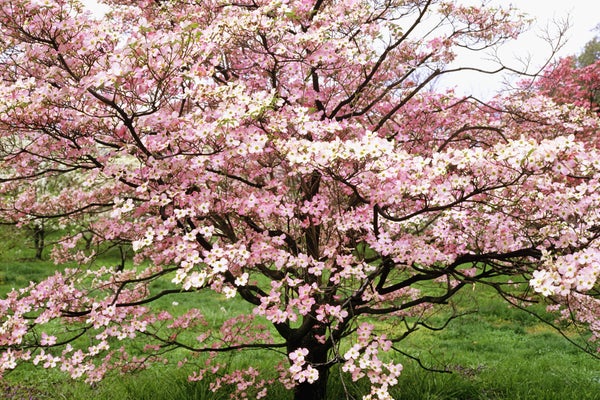
A professor of mine—a photographer with a zoology degree—introduced me to the term “dogwood winter,” a brief cold snap that interrupts the warming spring weather. It happens for a few days around the time when dogwood trees bloom, or according to my Tennessean professor, when the flowers change into leaves. Dogwood winter isn’t alone. Depending on whom you ask, there are anywhere from three to five miniature winters, each with its own corresponding event, that occur throughout the spring in Appalachia.
Locust and redbud winters are usually cited as the first cold snaps of early spring, followed by the colder dogwood and blackberry winters of mid-April to mid-May. Farmers and gardeners traditionally understood that dogwood winter, which falls around the same time as blackberry winter, signals the final frost. So, they would know not to plant until after the dogwoods bloomed. Whip-poor-will winter, a harbinger of summer, refers to the whip-poor-will’s migration north from Mexico in late May. Linsey-woolsey britches winter, whose name includes the charmingly outdated term for long johns, is less precise, simply defined as the last period you need your winter clothes before swapping them out for summer ones.
These days, farmers and meteorologists rely on more technological methods of predicting the weather. I had never heard of dogwood winter or even noticed if a cold snap accompanied the blooming of dogwood trees outside my childhood home in Maryland. Besides these spring winters, there are countless forgotten, historical, or little-used phrases and words from around the world that describe weather and climate. Looking back, they hint at everything from the language and culture of a region to local scientific understanding and the relationship between a people and their natural environment.
On supporting science journalism
If you're enjoying this article, consider supporting our award-winning journalism by subscribing. By purchasing a subscription you are helping to ensure the future of impactful stories about the discoveries and ideas shaping our world today.
One example of vivid, poetic dialect is “toad-strangler,” which is used in the southern United States to describe a heavy downpour. Or consider the implications of “queen’s weather,” a 19th century term stemming from the observation that Queen Victoria’s public appearances were usually blessed with sunny weather. For indigenous Australians, freezing cold nights were called “three dog nights” because they would sleep huddled up with their pet dingoes in order to keep warm. Fans of classic rock will make the connection to the band Three Dog Night, who named themselves after the Australian custom.
Some weather terms, like New England’s “mud season,” when melting snow turns roads and trails to a semiliquid state, are self-explanatory. Others, like “sugaring weather,” the ideal conditions for harvesting maple sap, are practical. But still others are less obvious in origin. Everyone knows about the “dog-days” of summer, for example. Well, the “dog” is actually the star Sirius, Alpha Canis Majoris, also known as the Dog Star. The Greeks knew that Sirius rose during the hottest days of summer. Homer remarks in the Iliadhow “Sirius rises late in the dark, liquid sky / On summer nights…an evil portent, bringing heat / And fevers to suffering humanity.”
I feel you, Homer.
Lots of us have also heard of “Indian summer,” a period of unseasonably warm weather in autumn. Emily Dickinson called Indian summer “a blue and gold mistake.” But why Indian Summer? It’s possible that the term was coined in reference to a Native American hunting season that fell during that time of year. But the term also stems from the romanticizing and dehumanization of native peoples throughout the time of American westward expansion. In other words, if Indians were just a part of the landscape, or a part of the weather, it was easier to envision them being swept to the side as a tree yields to the saw or a mountain to dynamite.
Digging up the origins of these weather words reveals a lot about our history. But what does their disappearance from the common tongue tell us about our present moment? The loss of terms like “dogwood winter” is a casualty of urbanization. More of us live in climate-controlled cities or suburbs and less of us are farmers or gardeners. Flowering dogwood, Cornus florida, are still common in the United States, but most people now encounter them, not in the woods, but as ornaments in lawns or parks. In other words, our lives tend to be less linked to the rural ecosystem which the existence of “dogwood winter” depends on.
But that doesn’t mean that weather and environment terms have disappeared from the lexicon. For example, instead of “Linsey-woolsey britches winter” we have “sweater weather.” September marks the onset of “Pumpkin Spice Season.” A mysterious Mandarin Duck that appeared in Central Park was dubbed the “hot duck.” On a darker note, CNN hosted its climate town hall for 2020 Presidential candidates recently using the more urgent “climate crisis” in place of “climate change.” New language will always crop up to suit the times, and though words and phrases fall out of use, language never becomes less vigorous. Speakers will continue to invent. Still, “dogwood winter,” “mud season,” “gray Goldenrod,” and “purple coneflower” have much to say about where we come from—and where we might go in the “Anthropocene.”