Slime Molds Are Smarter Than You Think

Not a high bar, admittedly, but they're still pretty amazing creatures...or...whatever

Join Our Community of Science Lovers!

This article was published in Scientific American’s former blog network and reflects the views of the author, not necessarily those of Scientific American


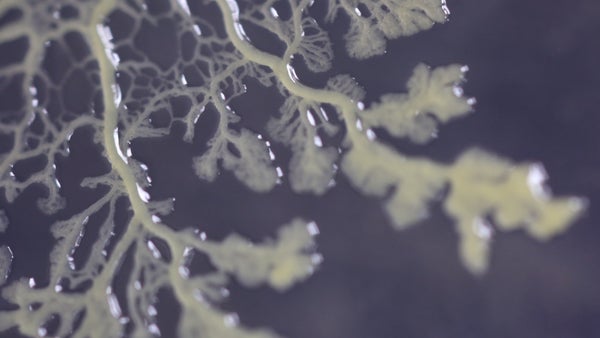
Meet the amazing slime mold. It is not an animal, a fungus or a plant. It's not even entirely solid or liquid. Yet it pulses, moves, dances and works out mazes.

In this pair of stories the PBS Digital Channel Deep Look partnered with another PBS YouTube channel to take stock of slime molds. We see how these multinuclear, unicellular organisms pulse, grow and move. Narrator/writer Amy Standen explains how those movements are caused by calcium sloshing and streaming inside the slime mold. She wonders whether this kind of chemistry-based locomotion might someday move robots or medical devices.

DEEP LOOK


On supporting science journalism

If you're enjoying this article, consider supporting our award-winning journalism by subscribing. By purchasing a subscription you are helping to ensure the future of impactful stories about the discoveries and ideas shaping our world today.


Co-host Joe Hanson (host of "It’s Okay to Be Smart") slips in for a guest appearance and takes it a step further in his channel’s video, "Are You Smarter Than A Slime Mold?" Slime molds have no brain, yet they can figure out mazes.

Even more amazing, when they sexually reproduce they break into individual amoebalike cells and organize themselves into beautiful stalks and knobby spore-containing tops; the spores live but stalk cells altruistically sacrifice themselves.

ARE YOU SMARTER THAN A SLIME MOLD?

Eliene Augenbraun is a multimedia science producer, formerly Nature Research's Multimedia Managing Editor and Scientific American's senior video producer. Before that, she founded and ran ScienCentral, an award-winning news service providing ABC and NBC with science news stories. She has a PhD in Biology.

More by Eliene Augenbraun

It’s Time to Stand Up for Science

If you enjoyed this article, I’d like to ask for your support. Scientific American has served as an advocate for science and industry for 180 years, and right now may be the most critical moment in that two-century history.

I’ve been a Scientific American subscriber since I was 12 years old, and it helped shape the way I look at the world. SciAm always educates and delights me, and inspires a sense of awe for our vast, beautiful universe. I hope it does that for you, too.

If you subscribe to Scientific American, you help ensure that our coverage is centered on meaningful research and discovery; that we have the resources to report on the decisions that threaten labs across the U.S.; and that we support both budding and working scientists at a time when the value of science itself too often goes unrecognized.

In return, you get essential news, captivating podcasts, brilliant infographics, can't-miss newsletters, must-watch videos, challenging games, and the science world's best writing and reporting. You can even gift someone a subscription.

There has never been a more important time for us to stand up and show why science matters. I hope you’ll support us in that mission.

Thank you,

David M. Ewalt, Editor in Chief, Scientific American

Subscribe