
This article was published in Scientific American’s former blog network and reflects the views of the author, not necessarily those of Scientific American
“When we try to pick out anything by itself, we find it hitched to everything else in the universe,” wrote conservationist John Muir in his 1911 tome My First Summer in the Sierra. Eight decades later, Disney’s animated classic The Lion King captured that idea of connectedness with a simple anthem, “Circle of Life,” and a script that passionately expanded upon that message.
As the live-action version of this popular film comes to theaters now, a century after Muir’s book, the “circle of life” is even more important and relevant than ever.
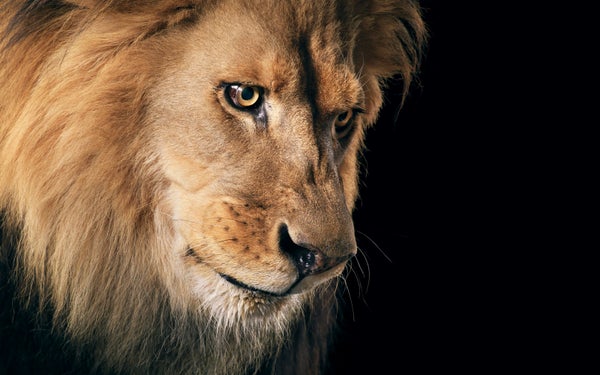
Since the release of the first Lion King film, nearly half of all lions have been lost. These magnificent big cats are now believed to be locally extinct in 16 African nations where they once thrived, and it may not be long before we have no lions left. They face many threats, top among them habitat loss and degradation, and conflict with people and their livestock.
On supporting science journalism
If you're enjoying this article, consider supporting our award-winning journalism by subscribing. By purchasing a subscription you are helping to ensure the future of impactful stories about the discoveries and ideas shaping our world today.
Just as economists now recognize that economic systems are linked globally—especially after the 2008 financial collapse—conservationists recognize a global connectedness between ecosystems and the biodiversity they support. As an apex predator, lions depend upon many more living things than just lions. They are inextricably linked to a multitude of savannah habitats and species: prey species such as antelope, zebra and gazelle, as well as herders’ livestock that cross lions’ paths.
The story of the collapse and reemergence of North America’s apex predator the gray wolf in Yellowstone National Park serves as both a cautionary tale and an optimistic reminder of what can happen when we keep our eye on carnivores’ broader connections to the world.
After people killed off wolves in Yellowstone in the early 1900s, the elk population surged, dramatically reducing the number of willow trees, which the elk fed on. This in turn forced beavers that relied on the willows to move out. Without the beavers building dams, the hydrology of the system changed, lowering the water table, which affected all the other species—terrestrial and aquatic—that had adapted to live in this system.
When wolves were reintroduced in 1995, we gained a special view into this connectedness. The wolves preyed on elk, which allowed the willows to rebound. Beavers returned, building new dams that helped fish, birds, reptiles and amphibians to rebound as well. This well-documented ecological cascade reinforces another important element of connectivity: diverse, intact ecosystems have greater resilience to the severe weather events, droughts and fires associated with climate change.
In Africa, the interconnectedness between lions and the larger landscapes they occupy illustrates the magnitude of the challenge. One recent study suggests that if we want lions to recover to levels similar to those in place when the first Lion King movie was produced, it will take an investment of roughly a billion dollars a year, primarily to better manage the severely underfunded national parks and other protected areas where lions survive.
For example, funds are desperately needed to reduce poaching inside protected areas, as this can dramatically improve lions’ prey availability. We also know that altering grazing and fire management in savannah habitats can significantly reduce carbon emissions and increase carbon storage in plants and soils. More carbon in soils can also improve water storage, nutrient cycling, forage quality and other important ecosystem processes that are good for people and for nature.
Since the industrial revolution, habitat loss and degradation due to land conversion and poor management practices have contributed nearly as much carbon to the atmosphere as all fossil fuel combustion. That’s why France proposed a global initiative to improve soils. A tiny improvement (0.4 percent) in soil carbon sequestration would go a long way toward addressing climate change. A similar message is found in this week’s new IPCC Special Report on Climate Change and Land.
It follows that in Africa, improving land management is not only important for lions but also one of the most important priorities in combating climate change. In The Lion King, Mufasa imparts a similar bit of wisdom to his young son Simba when he describes the relationships among lions, gazelles, plants and soil.
If lions are to survive in Africa, the global community must take bolder, more holistic approaches to land management. We must see this not solely as conservation of a single species but as a global development imperative. Additional investments could generate multiple benefits: protection of the environment (good for lions), job creation (good for people), stimulated economies (good for nations) and a reduced amount of carbon in the atmosphere (good for the planet).
From development aid officers to conservationists to individual consumers to investors, we all have a role to play. Working to save lions is “hitched,” in Muir’s words, to demand for the earth’s bounty. But whether we are speaking of saving big cats or saving the planet, this is not Africa’s problem to solve alone. It is all of ours, as the story of the African lion has made it even clearer that we are all linked to the planet in our own “circle of life.”