
This article was published in Scientific American’s former blog network and reflects the views of the author, not necessarily those of Scientific American
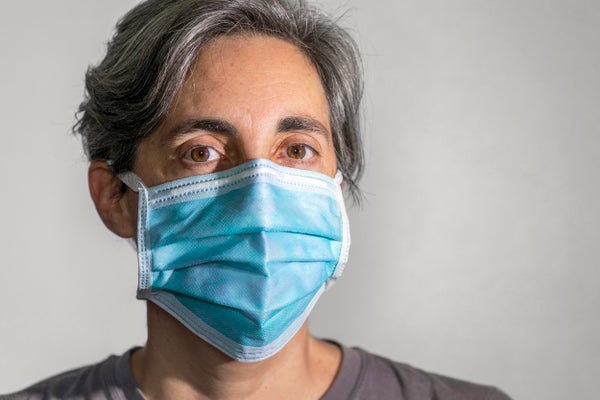
Health care workers across the country are battling against COVID-19 with dwindling access to personal protective equipment (PPE), including masks. For hospitals reaching crisis capacity, the CDC has recommended that nonrespirator masks (surgical or procedural) be worn during select procedures and prolonged contact with potentially infectious patients. But guidance for health care workers on wearing these masks in other common areas of the hospital—outside of a patient room—is not well-developed.
As a result, some health care workers are facing the threat of disciplinary action for wearing masks in the hallways, elevators and shared clinical and nonclinical areas of hospitals—in some instances even if they come from the worker’s own supply.
And a number of doctors and nurses are distraught over this, says Megan Ranney, associate professor of emergency medicine, Brown University. “I have heard multiple anecdotes from colleagues in other states who report they were personally disciplined or lectured when seen wearing procedural masks in the halls of their hospitals,” she remarks.
On supporting science journalism
If you're enjoying this article, consider supporting our award-winning journalism by subscribing. By purchasing a subscription you are helping to ensure the future of impactful stories about the discoveries and ideas shaping our world today.
For many health care workers, this crosses the line. “Doctors and nurses won’t feel safe to work in hospitals without autonomy to wear facemasks throughout the hospital,” says Elaine Yeung, chief of medicine at Scarborough Health Network, Canada. Ranney agrees, saying “yes we should absolutely be able to wear procedural masks outside of patient rooms. We are all potential sources of infection and protecting our healthcare workforce is critical. Of course, we are likely to need to reuse these masks—but forbidding their use seems, to me, misguided,” she remarks.
On the flip side, some hospitals will be hit harder by the PPE shortage than others and may, understandably, have unique considerations when it comes to resource capacity and keeping their workers and patients safe.
Kevin Readel, a veteran nurse in Oklahoma, told me that he put on the procedural mask on while inserting an intravenous line in a patient’s room. The mask was one that he had kept with him from months earlier. Within 30 minutes, Readel said, his supervisor called him with a warning; don’t wear a mask again because it will cause fear for patients and nurses. Readel said he was adamant that he couldn’t be told not to wear a mask, ever.
“I was sent home that same day and told to show up to human resources two days later. When I showed up, they told me I would be terminated immediately. They claimed it was about insubordination and not about refusing to take off the mask, but I can tell you the entire discussion we had centered around me causing hysteria by wearing a mask.” Readel has since filed a lawsuit that is ongoing. “I’ve worked very hard for all my life and I don’t change jobs. This really took me by surprise.” (The hospital that Readel worked at provided a statement earlier stating that they are “following CDC guidelines on infection prevention and infection control including the proper use of face masks and personal protective equipment.”)
Most public health experts agree that the general public should not routinely wear facemasks. It’s not helpful and is in fact detrimental to our ability to save resources for hospitals in need. And though there are differing opinions on whether health care workers should wear masks in all areas of the hospital, some experts suggest they should if resources permit.
Many hospitals worldwide have already mandated that health care workers wear a mask at all times while working, even when not in a patient’s room, and there are examples to suggest it works. Queen Mary Hospital in Hong Kong reported zero health care worker COVID-19 infections and zero cases of hospital-acquired infections during the first 42 days of the outbreak, despite treating numerous COVID-19 patients in the hospital. According to researchers, a key part of the successful preventive strategy involved health care workers wearing procedural masks at all times while in hospital—in addition to good hand hygiene and the proper use of more elaborate PPE in select situations. Of note, they also aggressively tested for the virus.
Some hospitals in the United States have also told health care workers to wear masks upon entry to the hospital. Northwell Health in New York, where I work, instituted such a policy recently. “We are doing this to help preserve our workforce. We can build ventilators, but we can’t build health care workers. They can’t get sick. We also want our workforce to feel comfortable and safe working,” says David Battinelli, senior vice president and chief medical officer of Northwell Health. Partners Healthcare in Boston, which includes Brigham and Women’s Hospital and Massachusetts General Hospital, has also announced mandatory facemasks while on facility premises.
As we all do our best to keep up with constantly changing infection control recommendations and resource availability, healthcare workers and hospitals will undoubtedly have to adapt on a weekly basis. But one thing is clear: for us to weather this storm, we desperately need more PPE now and a sustained flow of it thereafter. We can’t let up. As Readel told me, asking healthcare workers to work without masks is like “asking a firefighter to fight a fire naked.”
Read more about the coronavirus outbreak here.